

UgandaToday: Uganda’s Traders Versus URA: The Tax Dispute That Government Can No Longer Afford To Ignore
By Uganda Today Reporter
A commercial dispute with implications for the entire economy
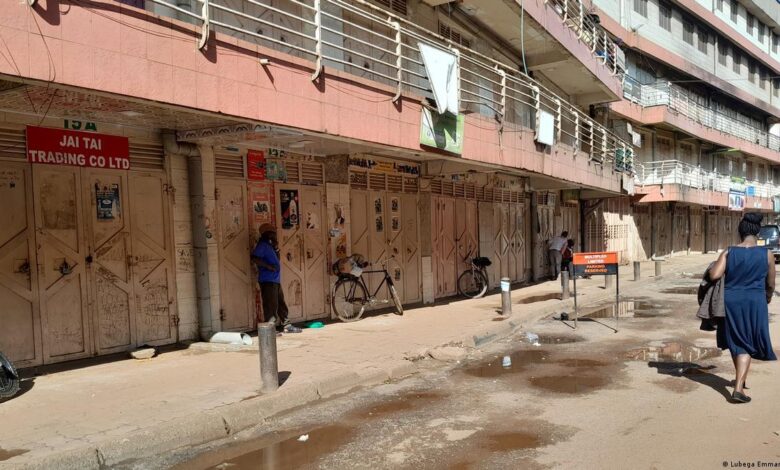
The recent shop closures by Kampala traders have exposed a deeper disagreement between Uganda’s business community and government over taxation, customs administration and the cost of doing business.

What began as a protest by traders under the Kampala City Traders Association (KACITA) has developed into an important national economic debate: how can government raise the revenue it needs without undermining the businesses that generate that revenue?
On November 17, 2026, traders closed their shops in protest against what they described as excessive taxation on textiles and garments, delays in customs clearance and enforcement practices by the Uganda Revenue Authority (URA).
The dispute attracted government attention, prompting President Yoweri Kaguta Museveni to ask traders to suspend their industrial action as discussions continued to find a solution.
Prime Minister Robinah Nabbanja informed Parliament on November 19 that government officials had engaged traders and URA representatives in efforts to resolve the disagreements.
The customs clearance controversy

One of the most serious complaints concerns the time taken to clear imported merchandise.
The Federation of Uganda Traders Associations (FUTA), which also presented its concerns before Parliament’s Committee on Trade and Tourism, complained that some imported containers had remained in customs custody for months, with others reportedly approaching a year.
According to FUTA President John Kabanda, prolonged delays expose traders to accumulating storage charges, bank loan obligations and depreciation of merchandise.
For traders dealing in clothing, electronics, household goods and other imported commodities, time is money.
Goods that remain trapped in warehouses cannot be sold, yet the financial obligations associated with their importation continue accumulating.
The resulting pressure can push otherwise viable businesses into financial distress.
Government’s revenue dilemma
Government faces a legitimate responsibility to collect taxes, prevent revenue leakage, protect local industries and ensure compliance with customs regulations.
However, taxation becomes economically counterproductive when its administration creates excessive costs, uncertainty and unnecessary delays.
Uganda’s trading community plays an important role in employment creation, distribution of essential commodities and the movement of goods from importers to consumers.
A hostile business environment could therefore affect more than shop owners. It could undermine employment, reduce consumer choice and eventually weaken the very tax base government seeks to expand.
The challenge is finding a balance between revenue mobilisation and business survival.
The wider economic implications

The traders’ complaints come at a time when Uganda is already experiencing increased economic pressure.
The Ministry of Finance’s October 2026 economic performance report, published on November 22, indicates that annual headline inflation increased to 5.8 per cent from 4.6 per cent in September.
The report also records a 7.8 per cent depreciation of the Shilling against the US dollar during October.
These developments have implications for importers, particularly businesses whose operations depend on foreign currency to finance merchandise purchases.
When exchange rates, transport expenses, customs costs and taxation rise simultaneously, the pressure is eventually transferred to consumers.
What government should do
The solution should not be a confrontation between URA and traders.
Government should consider a transparent review of customs clearance procedures, improve communication with importers, establish effective mechanisms for resolving disputed assessments and introduce clear timelines for handling imported goods.
URA, on its part, must be able to enforce the law without creating the impression that legitimate traders are being treated as tax evaders.
Traders must equally recognise their responsibility to declare goods correctly, maintain proper records and pay lawful taxes.
A test of economic leadership
The dispute provides government with an opportunity to demonstrate that revenue collection and private-sector growth can complement each other.
The success of Uganda’s industrialisation ambitions will depend not only on factories and infrastructure but also on the efficiency of the trading environment connecting producers, suppliers and consumers.
A country cannot build a strong economy by weakening the businesses that keep its commercial engine running.
The next engagement between government and traders should therefore produce practical reforms rather than temporary assurances.
Uganda needs a tax system that collects revenue without suffocating enterprise.
#UgandaToday #UgandaEconomy #KACITA #URA #Taxation #BusinessEnvironment