
The Most Famous Africans Who Ever Lived: The Icons Who Changed History And Shaped The World
+256 702 23 93 37: Yet the story of Africa's most famous people is not simply a catalogue of celebrated individuals. It is also a story about the continent's contributions to human civilisation, its struggle against slavery and colonialism, and its continuing influence on global politics, culture, sport and economic development.

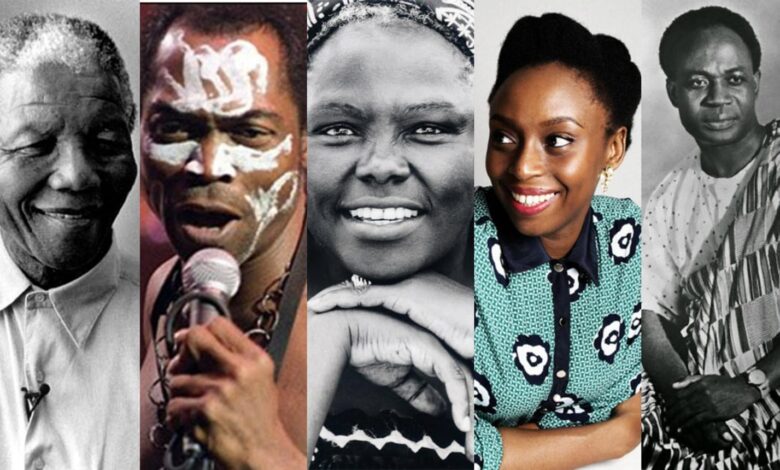
UgandaToday: The Most Famous Africans Who Ever Lived: The Icons Who Changed History And Shaped The World

From ancient African kingdoms and freedom fighters to Nobel laureates, global music legends and modern innovators, these are the men and women whose achievements have carried Africa’s name across the world.


By Uganda Today Features Desk
Africa has given the world some of its most influential leaders, thinkers, warriors, artists, scientists and humanitarians. Their stories span thousands of years, from the magnificent civilisations of ancient Egypt and the kingdoms of West Africa to the liberation struggles of the 20th century and the global cultural movements of the modern era.
Some became famous for conquering empires. Others challenged injustice, transformed music, advanced scientific knowledge or inspired millions through their courage and sacrifice.
Yet the story of Africa’s most famous people is not simply a catalogue of celebrated individuals. It is also a story about the continent’s contributions to human civilisation, its struggle against slavery and colonialism, and its continuing influence on global politics, culture, sport and economic development.
There is no universally accepted ranking of the most famous Africans who have ever lived. Fame changes across generations, cultures and continents. Nevertheless, a number of historical and contemporary figures stand out for their extraordinary achievements and lasting international recognition.
Here is a journey through some of the Africans whose names have become part of world history.
1. Nelson Mandela: The Man Who Became A Global Symbol Of Freedom

Few Africans have achieved the international recognition enjoyed by Nelson Mandela.
Born in 1918, Mandela became one of the principal leaders of the struggle against apartheid, South Africa’s system of institutionalised racial segregation and white-minority rule.
His involvement in the liberation movement led to his imprisonment in 1962. In 1964, he received a life sentence in the Rivonia Trial. He spent 27 years in prison before his release in February 1990.
Rather than allowing his imprisonment to define his entire legacy, Mandela became a central figure in negotiations that helped dismantle apartheid. In 1994, he became South Africa’s first democratically elected president following the country’s first fully inclusive national elections.
Mandela’s international influence extended beyond politics. His emphasis on reconciliation, human dignity and peaceful coexistence made him an enduring symbol of the possibility of overcoming historical injustice.
He received the Nobel Peace Prize jointly with former South African president F.W. de Klerk in 1993.
Mandela died in December 2013, but his name continues to inspire movements for freedom, equality and accountable leadership throughout the world.
2. Cleopatra: The African Queen Whose Story Still Fascinates The World

More than two thousand years after her death, Cleopatra VII remains one of the most famous women in history.
She ruled Egypt from 51 to 30 BC during a period when Rome was expanding its power across the Mediterranean world.
Cleopatra was not merely a romantic figure, as popular films and literature sometimes portray her. She was a politically sophisticated monarch who navigated the competing interests of powerful Roman leaders, including Julius Caesar and Mark Antony.
Her reign was marked by diplomatic manoeuvring, military conflict and attempts to preserve Egypt’s independence in an increasingly Roman-dominated world.
Following her defeat by Octavian’s forces, Cleopatra died in 30 BC, and Egypt became a Roman province.
Cleopatra was a member of the Greek-speaking Ptolemaic dynasty, established after Alexander the Great’s conquest of Egypt. Her identity and place within African history continue to attract debate, but her rule over Egypt firmly situates her within the continent’s political history.
Her enduring fame demonstrates how ancient African states were deeply connected to the wider Mediterranean world and how the lives of African rulers continue to shape global historical imagination.
3. Mansa Musa: The African Emperor Whose Wealth Astonished The World

When discussions turn to the wealthiest rulers in history, the name of Mansa Musa inevitably enters the conversation.
Mansa Musa ruled the Mali Empire in West Africa during the 14th century, when the empire controlled important gold-producing regions and trans-Saharan trading networks.
His pilgrimage to Mecca in 1324 became legendary. Contemporary accounts describe a vast entourage and lavish distribution of gold along the journey, including in Cairo. The quantities involved have become part of his enduring reputation, although precise modern estimates of his personal wealth are impossible to establish reliably.
But Musa’s significance went beyond gold.
His reign is associated with the expansion of Islamic scholarship, architecture and commerce. Timbuktu developed into an important centre of learning, while his patronage helped reinforce the cultural and intellectual influence of the Mali Empire.
His fame challenges the misleading notion that Africa before European colonialism was economically insignificant or lacked sophisticated political institutions.
Mansa Musa remains one of the most recognisable African rulers in world history, remembered for the extraordinary resources and cultural achievements of a powerful West African civilisation.
4. Kwame Nkrumah: The Visionary Who Put African Unity On The Global Agenda

In March 1957, Ghana became the first sub-Saharan African country to gain independence from British colonial rule in the post-war era. At the centre of this historic transformation was Kwame Nkrumah.
Nkrumah believed that political independence was only the beginning of Africa’s liberation. He argued that African countries needed to work together economically and politically to resist external domination and accelerate development.
As Ghana’s first prime minister and later president, he supported liberation movements across the continent and became one of the leading advocates of Pan-Africanism.
His influence helped shape the intellectual and political environment that culminated in the establishment of the Organisation of African Unity in 1963, the predecessor of today’s African Union.
However, his legacy also contains contradictions. His government increasingly restricted political opposition, and he was overthrown in a military coup in 1966 while abroad.
Nevertheless, Nkrumah’s ideas about continental solidarity, economic self-determination and African political cooperation continue to influence debates about the African Union, regional integration and the continent’s position in the global economy.
For many Africans, he remains a defining figure in the struggle to transform independence into genuine economic and political sovereignty.
5. Wangari Maathai: The Kenyan Woman Who Turned Tree Planting Into A Global Movement

Africa’s most influential figures have not all been presidents, military commanders or wealthy monarchs. Some have changed the world by protecting the environment.
One of them was Wangari Maathai.
Born in Kenya in 1940, Maathai became a distinguished academic and environmental campaigner. In 1977, she founded the Green Belt Movement, which mobilised communities, particularly women, to plant trees and address deforestation.
Her work connected environmental degradation with poverty, food security, access to natural resources and the position of women in society.
In 2004, she became the first African woman to receive the Nobel Peace Prize. The Nobel Committee recognised her contribution to sustainable development, democracy and peace.
Maathai’s international recognition helped demonstrate that environmental conservation was not simply a matter of protecting forests and wildlife. It was also about protecting people’s livelihoods and giving communities a greater say in decisions affecting their futures.
Her legacy remains particularly relevant to Africa, where climate change, deforestation, soil degradation and pressure on natural resources continue to threaten livelihoods.
She died in 2011, but her message remains powerful: ordinary people can achieve extraordinary change when environmental responsibility becomes a collective undertaking.
6. Miriam Makeba: The Voice That Carried Africa Across The World

Known affectionately as Mama Africa, Miriam Makeba helped introduce African music to audiences across the world.
Born in Johannesburg in 1932, Makeba rose to international prominence through a distinctive musical style that blended African traditions with jazz and other influences.
Her music reached audiences far beyond South Africa, but her career was inseparable from the country’s apartheid system. After the government revoked her passport in 1960, she spent decades in exile and used her international profile to speak against racial discrimination.
She appeared before the United Nations and advocated international pressure against apartheid. Her performances demonstrated that music could communicate political realities and cultural identity in ways that conventional diplomacy sometimes could not.
Makeba returned to South Africa after Mandela’s release from prison in 1990. She continued performing and supporting humanitarian causes until her death in 2008.
Her achievement was not simply that she became a globally recognised African entertainer. She helped establish African musical expression as an important part of international popular culture while reminding audiences that artistic success could coexist with a commitment to justice.
7. Haile Selassie: The Ethiopian Emperor With A Global Legacy

Haile Selassie occupies a distinctive place in African and international history.
As emperor of Ethiopia from 1930 until his overthrow in 1974, he became a prominent advocate of African sovereignty and collective security. His country was invaded by Fascist Italy in 1935, forcing him into exile before Ethiopia was liberated during the Second World War.
His appeal to the League of Nations in 1936 exposed the weakness of international opposition to aggression and became one of the defining episodes of the pre-war era.
After returning to power, Selassie supported African cooperation and hosted the founding conference of the Organisation of African Unity in Addis Ababa in 1963.
His influence also extended into the Caribbean, where he became a central spiritual figure for the Rastafari movement. For many Rastafari adherents, his identity carried religious significance beyond his political position.
Yet his reign was also marked by profound social inequalities, political centralisation and unresolved demands for reform. He was deposed in 1974 amid widespread unrest.
His historical importance therefore lies in both his role as a symbol of African independence and the complicated realities of governing a changing society.
8. Chinua Achebe: The Writer Who Changed How The World Read Africa

Africa’s global influence has also been shaped by writers who challenged the way the continent was portrayed to international audiences.
Chinua Achebe was among the most influential.
Born in Nigeria in 1930, Achebe achieved international recognition with his 1958 novel Things Fall Apart. The book depicts the life of an Igbo community and the disruption caused by colonialism and missionary activity.
Its importance lay partly in presenting African society as a complex world of institutions, beliefs, social relationships and internal debates, rather than as a place without meaningful history before European arrival.
Achebe became one of the most widely read African authors, and his work helped shape modern African literature and postcolonial literary criticism.
His writing also challenged fellow Africans to examine the failures of leadership and the responsibilities of independent states.
For generations of readers, Things Fall Apart became an introduction to the richness and complexity of African societies. Achebe demonstrated that the struggle over Africa’s image was also a struggle over who had the authority to tell its stories.
9. Kofi Annan: The Ghanaian Who Led The United Nations

Kofi Annan became one of Africa’s most internationally recognised diplomats, serving as United Nations secretary-general from 1997 to 2006.
When Kofi Annan became secretary-general of the United Nations in 1997, he assumed one of the most prominent diplomatic positions in the world.
Born in Ghana in 1938, Annan spent decades working within the UN system before becoming its seventh secretary-general.
His tenure focused on international cooperation, peacekeeping, development, human rights and the reform of the United Nations. In 2001, he and the United Nations jointly received the Nobel Peace Prize for their work towards a better-organised and more peaceful world.
Annan’s career also attracted criticism and scrutiny, particularly over the international community’s failures to prevent or adequately respond to humanitarian catastrophes. His experience illustrated both the potential and the limitations of international diplomacy.
After leaving office, he continued working on peacebuilding and governance initiatives through the Kofi Annan Foundation.
His legacy offers an important lesson for Africa: the continent’s influence on global affairs is not limited to natural resources, military power or political confrontation. It also comes through diplomacy, institution-building and the ability to bring conflicting parties to the negotiating table.
10. Fela Kuti: The Musician Who Challenged Power

Fela Anikulapo Kuti was more than a musician. He became an internationally recognised cultural figure whose music confronted political authority, corruption and social inequality.
Born in 1938, Fela developed Afrobeat by combining Nigerian musical traditions with jazz, funk and other influences. His long compositions frequently incorporated sharp political commentary, making his music a powerful instrument of dissent.
His confrontations with Nigerian authorities, including the destruction of his communal compound during a military raid in 1977, helped establish his reputation as an uncompromising critic of state power.
Fela’s influence extended well beyond Nigeria. Afrobeat inspired musicians across Africa and the diaspora, while his work continues to influence contemporary African popular music.
His significance rests on his insistence that African artists could create internationally influential work without abandoning local languages, political concerns and cultural identities.
His life also raises questions about the responsibilities of artists, the relationship between celebrity and political resistance, and the personal costs of challenging powerful institutions.
11. Thomas Sankara: The Revolutionary Who Wanted A Different Africa

In Burkina Faso, the name Thomas Sankara remains associated with a radical vision of African self-reliance.
Sankara came to power in 1983 and introduced ambitious programmes aimed at reducing dependency on foreign assistance, combating corruption, expanding public services and improving women’s rights.
He renamed the country Burkina Faso, commonly translated as the Land of Upright People, and promoted campaigns involving vaccination, education, environmental protection and local production.
His emphasis on reducing elite privilege and challenging the structures of dependency made him influential among young Africans and political activists worldwide.
However, his government also restricted political freedoms, and his revolutionary programme operated within an authoritarian political environment.
Sankara was assassinated in October 1987 during a coup led by Blaise Compaoré.
Decades later, his image continues to inspire debate about African leadership, economic sovereignty and whether governments can pursue radical social transformation while protecting democratic rights.
12. Other Africans Whose Names Deserve A Place In World History
The list of globally influential Africans extends far beyond these eleven figures. Several others have left exceptional legacies in politics, science, literature, sport and the struggle for human dignity.

Patrice Lumumba — The voice of Congolese independence
Lumumba became the first prime minister of independent Congo in 1960. His political career was brief, ending with his assassination in January 1961, but his opposition to colonial domination and his insistence on national sovereignty made him a lasting symbol of African liberation.

Desmond Tutu — The moral voice against apartheid
The Anglican archbishop won the 1984 Nobel Peace Prize for his non-violent opposition to apartheid. After South Africa’s transition to democracy, he chaired the Truth and Reconciliation Commission, which investigated abuses committed during the apartheid era.

Cheikh Anta Diop — The scholar who challenged historical narratives
Diop devoted his work to African history, ancient Egypt and the continent’s contributions to civilisation. His ideas remain influential in debates about African identity and historiography, although some of his historical interpretations remain contested by scholars.

Ellen Johnson Sirleaf — A pioneering African woman leader
Sirleaf became Liberia’s president in 2006 and was the first elected female head of state in Africa. She shared the 2011 Nobel Peace Prize with Leymah Gbowee and Tawakkol Karman for their work promoting women’s safety and women’s participation in peacebuilding.

Didier Drogba — An African football icon
The former Ivory Coast international achieved worldwide recognition through his football career, particularly at Chelsea. His public appeal also became associated with calls for peace during periods of political conflict in his home country.

Eliud Kipchoge — A symbol of African sporting excellence
Kipchoge became one of the greatest marathon runners of all time, winning Olympic marathon gold medals in 2016 and 2021. His sub-two-hour marathon exhibition in Vienna in 2019, achieved under controlled conditions, captured global attention, although it was not an official world-record race.
These figures represent only a small selection of the continent’s historical and contemporary achievements. Africa’s intellectual, political and cultural history includes thousands of other people whose contributions are documented in scholarly resources such as Harvard University’s Dictionary of African Biography.
Why These Africans Became Famous Beyond Their Borders
Several themes connect the lives of these extraordinary people.
First, they transformed the political imagination. Mandela, Nkrumah, Lumumba and Sankara challenged systems of domination and forced the world to confront questions about freedom, sovereignty and the distribution of power.
Second, they changed global culture. Makeba and Fela carried African musical traditions onto international stages, while Achebe helped reshape the way readers encountered African societies and colonial history.
Third, they expanded humanity’s understanding of leadership. Maathai connected environmental protection with democracy and social justice. Annan demonstrated the role African diplomats could play in international institutions.
Finally, they challenged stereotypes. Their achievements provide evidence of Africa’s long history of political organisation, intellectual creativity, artistic innovation and scientific and social contributions.
Their legacies are not beyond criticism. Some were authoritarian leaders, some made controversial political choices, and others faced unresolved debates about their ideas or actions. Recognising their importance does not require presenting them as flawless heroes.
Rather, it means examining their lives honestly and understanding how they helped shape the world.
Africa’s Next Generation Of Global Icons
The story of Africa’s most famous people is not finished.
The continent’s future influence will depend on the scientists developing new technologies, entrepreneurs building sustainable businesses, writers telling African stories, athletes breaking sporting barriers, environmentalists protecting ecosystems and public servants strengthening accountable institutions.
For Uganda and the wider East African region, this legacy offers a particularly important message. The achievements of Africa’s past and present can inspire new generations to build institutions, expand educational opportunities, invest in creativity and develop solutions to the challenges facing their communities.
The world should not remember Africa only through the history of colonialism, conflict, poverty or political instability. It should also recognise the continent’s kingdoms, scholarship, innovations, cultural achievements and individuals who have helped change humanity’s course.
The most enduring African icons are those whose influence reaches beyond their own lifetimes — inspiring people to question injustice, pursue knowledge, protect human dignity and imagine a better future.
Africa’s greatest legacy may ultimately be not the fame of its most celebrated individuals, but the opportunities their stories create for the generations that follow.
Suggested Featured Image And Publication Package
#AfricanIcons #AfricanHistory #AfricanGreatness #UgandaToday #PhoenixNewsFeeds #OperaNewsFeeds