Former URA Employee’s ‘Human Carpet’ Testimony Revives Debate On Miracle Preachers
+256 702 23 93 37: In a narration shared on a Makerere University alumni WhatsApp group, Percy Mulamba Munwankyo recounts how the threat of losing his job in 2005 led him and several colleagues to seek spiritual intervention at the ministry of Pastor William Muwanguzi, popularly known as Pastor Kiwedde, in Namulanda along Entebbe Road.

UgandaToday: Former URA Employee’s ‘Human Carpet’ Testimony Revives Debate On Miracle Preachers
UGANDA TODAY | RELIGION, SOCIETY AND ACCOUNTABILITY
Percy Mulamba Munwankyo recounts how fear of losing his job during the 2005 Uganda Revenue Authority restructuring drove him and other employees to Pastor Kiwedde’s Namulanda ministry, raising fresh questions about faith, desperation and accountability.
The ongoing controversy surrounding social commentator Frank Gashumba’s criticism of miracle-selling preachers has prompted a deeply personal testimony from a former Uganda Revenue Authority (URA) employee who says he once surrendered his dignity in the hope of securing divine intervention during a period of uncertainty.
In a narration shared on a Makerere University alumni WhatsApp group, Percy Mulamba Munwankyo recounts how the threat of losing his job in 2005 led him and several colleagues to seek spiritual intervention at the ministry of Pastor William Muwanguzi, popularly known as Pastor Kiwedde, in Namulanda along Entebbe Road.
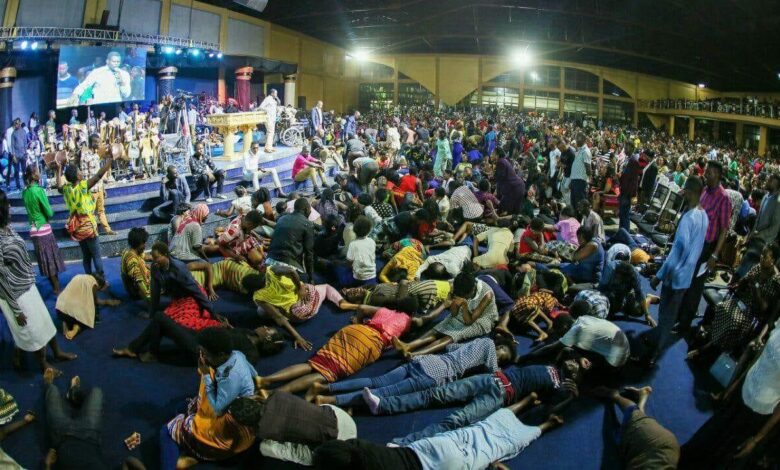
His most striking recollection is of a day when congregants were reportedly instructed to lie flat on the ground so that the pastor could walk over their backs as he moved from his vehicle towards the altar.
Munwankyo says he complied, despite being an educated professional who understood tax administration and revenue collection.
Nearly two decades later, he looks back on the experience with regret, humour and a renewed determination to question religious practices that may take advantage of vulnerable believers.
His account comes amid a nationwide debate about miracle claims, spiritual authority and the responsibility of religious leaders towards the people who trust them.

Gashumba’s Challenge Puts Miracle Claims Under Scrutiny
Gashumba has recently attracted national attention after challenging preachers who claim to possess miraculous healing powers to demonstrate those abilities under independently verifiable conditions.
His challenge, which was initially reported at Shs200 million before being raised to Shs500 million, has provoked sharp exchanges between the media personality and several prominent Pentecostal leaders. Gashumba maintains that his criticism targets preachers he accuses of exploiting vulnerable believers, rather than Christianity itself.
The controversy has exposed a difficult question for Uganda’s religious community: how can believers distinguish genuine spiritual guidance from practices that may manipulate their fears, financial struggles or hopes for a better life?
Munwankyo’s testimony adds a personal dimension to that debate. Rather than approaching the subject as an outsider, he describes himself as someone who once participated in the very practices he now questions.
His account suggests that the search for miracles is not always driven by blind belief. Sometimes, it begins with a practical crisis for which an individual sees no immediate solution.
The 2005 URA Restructuring That Sent Employees Searching For Hope
According to Munwankyo, the events unfolded in 2005, when restructuring at URA created anxiety among employees who feared that their jobs and financial security could be at risk.
At the time, he says, he had neither land nor a house of his own. His most prized personal possession was a Toyota Trueno, a car he remembers as a symbol of his modest achievements.
The uncertainty was particularly painful because he felt responsible for meeting the expectations of his father, who had placed considerable hope in him.
Munwankyo recalls that one of his colleagues, Robert Okech, popularly known as Fox, chose to resign before the restructuring process could determine his future.
For Munwankyo and others who remained uncertain about their employment, the search for answers extended beyond the workplace.
He says he began visiting Pastor Kiwedde’s ministry at Namulanda almost every morning for an entire month, joining other URA employees who were seeking prayers, job security and financial breakthroughs.
The experience illustrates how economic insecurity can drive even highly educated people towards extraordinary promises when conventional solutions appear uncertain.
The central issue is not whether people should pray when facing difficulties. It is whether their vulnerability can be exploited by individuals who claim to possess special spiritual powers.

‘We Became A Human Carpet For A Pastor’
The most dramatic part of Munwankyo’s account concerns the manner in which Pastor Kiwedde reportedly arrived at the ministry.
He recalls that congregants would arrive early, spend hours praying and singing, and wait for the pastor, who, according to his recollection, often appeared in the afternoon.
When the pastor eventually emerged, Munwankyo says, the congregation responded with enthusiastic ululations and praise.
But one particular occasion remains etched in his memory.
He alleges that ushers instructed worshippers to lie flat on the ground so the pastor could walk over their backs from his vehicle to the altar.
Munwankyo says he and his colleagues obeyed.
In retrospect, he questions how a group of educated public servants could have accepted such an arrangement in the hope that it would improve their circumstances.
His description of the incident is laced with humour, but the underlying message is serious: people experiencing fear and uncertainty can become willing participants in practices they might otherwise question.
The story also raises concerns about the relationship between spiritual leadership and human dignity. Religious leaders occupy positions of trust, and the exercise of that authority should not depend on humiliating followers or discouraging independent thought.
The alleged incident remains Munwankyo’s personal recollection; it should not be taken as evidence that every worshipper shared his interpretation or experienced the ministry in the same way.
What Happened To Pastor Kiwedde?
Pastor Kiwedde’s subsequent legal history gives the testimony a wider context.
A report published by Daily Monitor on September 18, 2018, said William Paul Muwanguzi, popularly known as Pastor Kiwedde, had been released after completing his prison sentence.
The newspaper reported that he had been arrested in Rakai District in 2013 while impersonating a Kenyan Catholic priest who conducted prayers and healing services. He was sentenced for impersonation and later received an additional sentence following a prison escape and a case involving possession of a fake passport.
Earlier, Daily Monitor reported in October 2015 that Muwanguzi had escaped from Mutukula Government Prison, with authorities believing he had crossed into Tanzania. The report said prison warders were being investigated over the escape.
These are documented historical reports, distinct from Munwankyo’s personal recollections of attending the ministry in 2005.
The distinction matters because public discussion about religious accountability should be grounded in verifiable records rather than allowing individual experiences, rumours and established legal facts to become indistinguishable.
For Munwankyo, however, the significance of the story is deeply personal. He says the experience changed how he approached faith and spiritual leadership.
‘You Will Never Walk On My Conscience Again’
Munwankyo says he eventually made a personal decision to remain within his traditional Anglican Church rather than continue searching for quick solutions through ministries promising extraordinary breakthroughs.
He does not present his experience as a rejection of prayer. Instead, he argues that faith should not require people to abandon their judgement.
His closing message is a warning against judging spiritual authority by outward appearances, including expensive vehicles, dramatic entrances, elaborate robes, powerful microphones or promises of instant wealth.
A preacher’s popularity, he suggests, should not automatically be interpreted as proof of divine authority.
His account also challenges believers to ask difficult questions: What exactly is being promised? Is money being demanded in exchange for a breakthrough? Are followers being encouraged to seek appropriate medical, legal or professional assistance when necessary? Can a religious leader be questioned without the believer being threatened or shamed?
These questions do not invalidate religious belief. Rather, they address the responsibility that comes with the trust placed in spiritual leaders.

The Vulnerable Should Not Become A Business Opportunity
One of the strongest points in Munwankyo’s testimony is his reminder that people who seek spiritual assistance often arrive carrying burdens that are invisible to others.
Some are unemployed. Others are struggling with medical bills, school fees, debt, housing insecurity or troubled family relationships.
For such people, a promise of immediate relief can be enormously attractive.
The danger arises when promises of divine intervention are used to demand money, obedience or humiliating acts without adequate accountability.
Uganda’s religious sector is diverse, encompassing established churches, independent ministries and numerous Pentecostal congregations. Many provide valuable spiritual guidance, community support and charitable assistance.
It would therefore be unfair to treat the conduct of an individual religious leader as representative of every pastor or church.
Nevertheless, extraordinary claims made in public should be open to reasonable scrutiny, particularly when they influence decisions about money, health or personal welfare.
Religious freedom protects the right to believe, worship and preach. It does not automatically place every action undertaken in the name of religion beyond ethical or legal examination.
The responsibility is shared: religious leaders should exercise their authority responsibly, congregations should be encouraged to ask questions, and relevant authorities should investigate credible allegations of wrongdoing through lawful procedures.
A National Conversation Beyond Frank Gashumba
The exchange between Gashumba and religious leaders has become more than a disagreement over miracles. It has opened a broader conversation about religious credibility, the commercialisation of faith and the accountability of people who claim extraordinary spiritual abilities.
In an October 15, 2026, commentary, Daily Monitor contributor Val Kalende also raised questions about who holds miracle workers accountable, arguing that the problem begins when religious leaders present themselves as indispensable intermediaries between believers and God.
Munwankyo’s story brings that discussion down to the individual level.
He remembers being a young employee whose future appeared uncertain, seeking help from a place where he believed hope might be found. He remembers waiting, singing and submitting to a practice that he now views with regret.
His account is a reminder that people can reconsider their past decisions without abandoning their faith.
It is also a reminder that public scrutiny should focus on conduct, evidence and accountability, rather than blanket condemnation of entire religious communities.
For believers, the challenge is to preserve the comfort and strength that faith can provide while retaining the ability to question those who claim to speak or act on God’s behalf.
For religious leaders, it is an opportunity to demonstrate that spiritual authority is accompanied by integrity, humility and respect for human dignity.
And for the public, the lesson is that desperation should never be mistaken for consent to exploitation.
The Final Word: The Footsteps That Remain
Munwankyo ends his testimony with a pointed message to the pastor whose ministry he once attended: he may eventually forgive him, but he has not forgotten the day he became a human carpet.
The statement is humorous, memorable and deeply revealing.
Beneath the humour lies a man reflecting on a period when fear of losing his livelihood influenced his decisions, and when his search for certainty led him to accept something he now questions.
His story should not be read as a verdict on every believer who seeks miracles, nor as proof that every dramatic religious experience is fraudulent.
Instead, it offers a reason to examine the boundaries between faith and manipulation, spiritual guidance and personal control, generosity and financial exploitation.
As Uganda continues to debate Gashumba’s challenge, perhaps the more enduring question is not simply whether a preacher can perform a miracle.
It is whether religious leadership can inspire hope without exploiting fear, offer guidance without demanding humiliation, and command respect without discouraging accountability.
For Munwankyo, the lesson from Namulanda is unmistakable: faith may guide the conscience, but it should never require a person to surrender it.
Editorial note: This article is based on Percy Mulamba Munwankyo’s personal testimony shared in a Makerere University alumni WhatsApp group, alongside published reports on Pastor Kiwedde’s legal history and the current public debate over miracle claims. His recollections are attributed to him; historical legal details are drawn from the cited reporting.
#UgandaToday #FrankGashumba #ReligiousAccountability #FaithAndDignity #UgandaNews #ConsumerProtection