Baguma Precedent, Identity Narratives, and the Politics of Allegiance in Western Uganda
+256 702 239 337: Historians widely acknowledge that colonial boundaries did little to separate communities with shared ancestry, particularly among Banyarwanda and Banyankore populations.

UgandaToday: Baguma Precedent, Identity Narratives, and the Politics of Allegiance in Western Uganda
By Uganda Today Editorial Desk
Revisiting the Baguma Claim
An earlier fact-check by Uganda Today titled “FACT-CHECK: Viral Claim Linking Former CPS DPC Aaron Baguma to Rwanda Army Decoration Debunked” firmly dismissed widely circulated claims that former Kampala Central Police Station commander Aaron Baguma had been decorated within Rwanda’s military establishment.
The report concluded:
“Based on available evidence… the claim is false.”
Uganda Today established that:
- There was no credible proof linking Baguma to the Rwanda Defence Forces
- Viral images and claims could not be independently verified
- The narrative was part of misinformation circulating online
This finding is critical in contextualising renewed debates that continue to draw on the “Baguma precedent” as supposed evidence of cross-border security allegiances.
Identity, Power, and Political Interpretation
Recent commentary—largely emanating from social media spaces—has revived deeper questions about identity, belonging, and political influence in the Great Lakes region.
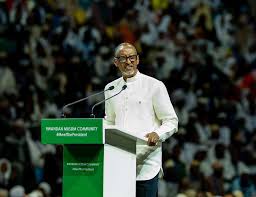
At the centre of this discourse is Paul Kagame, whose historical and cultural ties to western Uganda, particularly the Ankole sub-region, have long attracted both scholarly and political attention. Statements attributed to Kagame in public discussions—such as “Abanyankore tibakumanya orujungu”—continue to be interpreted in different ways:
- As cultural critique
- As political messaging
- Or as part of a broader identity narrative However, these interpretations remain
The Historical Context: A Shared Heritage
Regions such as the Kigezi Highlands, Ntungamo District, and Sembabule District have historically been characterised by:
- Cross-border migration
- Intermarriage
- Deep cultural linkages between Ugandans and Rwandans
Historians widely acknowledge that colonial boundaries did little to separate communities with shared ancestry, particularly among Banyarwanda and Banyankore populations.
As such, claims about Rwandan heritage among populations in these areas should be understood within this historical and anthropological context, rather than as evidence of divided national loyalty.
Military Links and Public Speculation
The debate has also drawn in references to prominent Ugandan figures, including:
The discussion also revives longstanding speculation regarding cross-border military affiliations. Claims—are not independently verified—that relatives of high-ranking Ugandan officials, including former Inspector General of Police Kale Kayihura, have served in foreign armies, continue to circulate in political discourse.
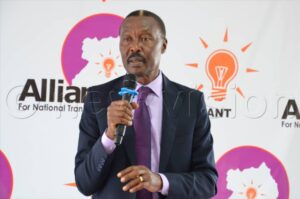
Similarly, the case of Mugisha Muntu, a former army commander, is often cited in discussions about identity and allegiance. Reports suggest that during Uganda’s constitutional amendment debates, Muntu contemplated returning to Rwanda but ultimately remained in Uganda after conditions reportedly set by Kagame.
While these accounts remain part of public conversation rather than verified state records, they underscore the enduring complexity of identity in the region.
- Such claims remain largely speculative
- There is no official record publicly confirming these assertions
- Responsible reporting requires clear distinction between fact and opinion
Ankore and the Question of Identity
Assertions that “all in Ankore are Banyankore” reflect a broader ideological position that has sparked debate among scholars and cultural commentators.
Critics argue that:
- The Ankole region is diverse, not monolithic
- Simplistic identity narratives risk erasing minority identities
- Politicising identity can fuel unnecessary tensions
Phrases like “Ankore vorongoto”—used in informal discourse to suggest fragmentation—highlight the emotional weight such debates carry, but remain non-academic and subjective expressions.
Separating Fact from Emotion
Some of the circulating commentary includes strong personal opinions and emotionally charged language. While these reflect genuine public sentiment in certain quarters, Uganda Today underscores the importance of:
- Fact-based reporting
- Responsible public discourse
- Avoiding defamatory or inflammatory language
The Baguma story itself serves as a cautionary example of how unverified claims can gain traction and shape broader narratives.
Conclusion: A Region Beyond Simplistic Narratives
The intersection of identity, history, and politics in Uganda’s western region—and its relationship with Rwanda—remains complex and deeply layered.
The Baguma fact-check reminds us that:
- Not all widely shared narratives are factual
- Identity in the Great Lakes region is historically fluid
- Political interpretations must be grounded in verified evidence
As Uganda and Rwanda continue to navigate their shared history and diplomatic relations, a commitment to truth, nuance, and responsible storytelling remains essential.
#UgandaToday #PhoenixNewsFeeds #OperaNewsFeeds #FactCheckUG #GreatLakesPolitics #IdentityDebate