
ULS Leadership Crisis Deepens As Vice President Demands Suspension Of December Elections
+256 702 23 93 37: The letter, written on behalf of the ULS Council and Chief Executive Officer, challenges the Committee’s November 20 electoral notice, arguing that the process was launched without adequate consultation, proper Council direction and sufficient consideration of the Society’s governing law and electoral regulations. The dispute threatens to complicate an already contentious leadership transition within Uganda’s legal fraternity, as competing interpretations of court orders, statutory powers and electoral timelines collide.

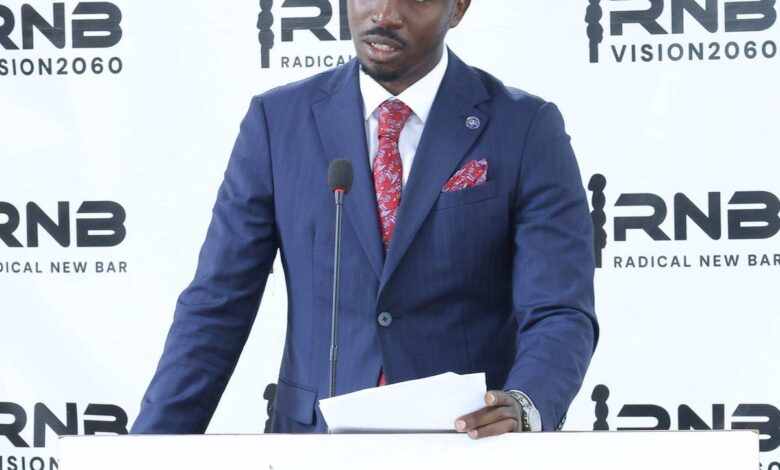
UgandaToday: ULS Leadership Crisis Deepens As Vice President Demands Suspension Of December Elections
Uganda Today | Legal Affairs & Governance
The Uganda Law Society (ULS) is facing a fresh institutional confrontation over its proposed December leadership elections, with Vice President Asiimwe Anthony formally demanding that the Elections Committee suspend its electoral programme and reconsider the process, warning that the exercise could expose the Society to further litigation, financial losses and a deeper governance crisis.
In a strongly worded letter dated November 23, 2026, and addressed to Elections Committee Chairperson Moses B. Mwase, Asiimwe questions the legality, authority, timing and transparency of the Committee’s decision to convene an Extraordinary General Meeting (EGM) on December 18, 2026, at Speke Resort Munyonyo.
The letter, written on behalf of the ULS Council and Chief Executive Officer, challenges the Committee’s November 20 electoral notice, arguing that the process was launched without adequate consultation, proper Council direction and sufficient consideration of the Society’s governing law and electoral regulations.

The dispute threatens to complicate an already contentious leadership transition within Uganda’s legal fraternity, as competing interpretations of court orders, statutory powers and electoral timelines collide.
Asiimwe Questions Elections Committee’s Authority
At the heart of the dispute is the question of whether the ULS Elections Committee has the legal authority to independently convene a general meeting, select its venue and commit the Society to an electoral programme without direction from the Council or a properly convened general meeting.
Asiimwe argues that the Uganda Law Society Act, Cap. 305, places the responsibility for convening general meetings with the Council, while the Elections Committee operates within powers delegated to it under the Elections Regulations.
He cites Section 15 of the Uganda Law Society Act, which provides for the Council to convene general meetings, and Section 16, which provides for a general meeting to be requisitioned by 15 members.
The Vice President further points to Regulation 4(1)(e) of the Uganda Law Society (Elections) Regulations, 2016, arguing that the Elections Committee’s residual responsibilities are limited to functions directed to it by the Council or a general meeting.
According to Asiimwe, the Committee’s November 20 notice was therefore issued without the necessary institutional authority and in disregard of the Council’s earlier position.
The Elections Committee’s position, however, has been presented as arising from the High Court order directing the Society to organise elections within a specified period.
December 18 Election Date Under Legal Scrutiny
The Elections Committee had announced that the Extraordinary General Meeting would take place on December 18, 2026, at Speke Resort Munyonyo, with elections for the ULS Council and the Society’s representatives to the Judicial Service Commission.
The proposed exercise followed a High Court order issued on November 17, 2026, in Miscellaneous Application No. 0879 of 2026, directing the Society to convene a meeting and conduct elections within 14 days.
However, Asiimwe argues that the court-directed timeline presents serious legal and procedural difficulties, particularly regarding the statutory nomination period.
He cites Regulation 16(1) of the Elections Regulations, which requires the determination of candidates for elective offices at least 21 days before the general meeting.
The letter argues that the 14-day court directive and the statutory election timetable cannot be reconciled without risking a breach of the regulations.026.
Council Says Earlier Orders And Statutory Requirements Were Ignored
The letter recalls a Council statement issued on November 17, the same day the impugned court orders were made.

According to Asiimwe, the Council had raised concerns that the orders were issued ex parte, without proof that all parties had been served and without their full participation.
He also explains that he had been outside Uganda on official Universal Periodic Review business under the auspices of the United Nations Office of the High Commissioner for Human Rights at the time, and that his affidavit in response had been prepared but was not signed or filed because of his official assignment.
The Council, according to the letter, considers the orders problematic because they allegedly conflict with earlier court orders, the Uganda Law Society Act and the Society’s regulations.
It had reportedly indicated that it would return to court to seek an opportunity to be heard and have the orders vacated or appropriately varied.
The letter argues that proceeding with the electoral programme before these objections are resolved could deepen the legal uncertainty surrounding the process.
Member Intervention Raises Fresh Questions About Electoral Timetable
The letter also reveals that concerns over the election timetable had already been raised by a member of the Society before the Elections Committee published its notice.
On November 18, advocate Kenneth Muhangi reportedly wrote to the Chief Executive Officer, copying the ULS President, Elections Committee Chairperson and the Society’s legal counsel, questioning the timetable in light of Regulation 16(1).
Muhangi reportedly proposed January 9, 2027, as an alternative election date and urged the Society to return to court for a variation of the orders.
The letter says the communication was received by the ULS Secretariat on November 19, but that the Elections Committee proceeded to publish its November 20 notice without addressing the concerns raised by the Council or the member.
Asiimwe argues that this demonstrates that the risk of further litigation is already real, rather than merely a possibility.
Speke Resort Munyonyo Venue And Electoral Costs Questioned

The choice of Speke Resort Munyonyo as the venue for the proposed EGM has also become a point of contention.
Asiimwe questions how the Elections Committee acquired the capacity to commit the Society to the venue, alleging that, to his knowledge, there was neither a Council resolution nor a budgetary appropriation authorising the arrangement.
He raises questions about the source of funding for the venue and electoral roadmap, and whether any undisclosed third party could be assisting in the process.
The letter does not establish that an external financier exists, but raises the possibility of third-party involvement and argues that any such arrangement could compromise the autonomy of the Uganda Law Society.
It invokes National Objective II(vi) of the Constitution, which provides that civic organisations should retain their autonomy in pursuing their declared objectives.
The Vice President further warns that an electoral programme involving venue hire, electoral roll preparation, nomination administration, polling logistics and security could generate substantial costs.
His concern is that the Society could incur expenses on an election whose results or process could later be challenged or nullified.
Asiimwe Declares November 17 Orders Null And Void

One of the strongest aspects of the letter is Asiimwe’s challenge to the validity of the court orders themselves.
He argues that the November 17 orders purportedly directed the Uganda Law Society Electoral Commission and Chief Executive Officer to convene and conduct an Annual General Meeting within 14 days, yet the law does not independently vest those powers in the Elections Committee or the CEO.
The Vice President relies on established judicial principles, particularly:
-
Makula International Ltd v His Eminence Cardinal Nsubuga & Another — cited for the principle that courts cannot sanction illegality.
-
Macfoy v United Africa Co. Ltd — cited for the principle that a void act is a legal nullity and that proceedings founded upon it may consequently collapse.
Drawing from these decisions, Asiimwe argues that if the orders were issued contrary to the governing law, the electoral notice, roadmap, venue commitments, nominations and any polling conducted under them could also be vulnerable to legal challenge.
He therefore describes the orders as “nul and void” and maintains that the Society should not proceed on what he considers an unlawful foundation.
Important editorial distinction: These are legal arguments and positions advanced in Asiimwe’s letter. The letter itself does not constitute a court ruling setting aside the November 17 orders.
Complaints Over Committee Composition And Nomination Restrictions
Beyond the court orders and election dates, Asiimwe identifies additional concerns which he says must be addressed before the electoral process can proceed.
He says some members have complained about the composition of the Elections Committee, with questions being raised about whether it was properly constituted.
The letter also raises concerns about the Committee allegedly proceeding without harmonising its activities with other relevant stakeholders, including the Election Appeals Committee.
Another contested issue is paragraph 6(c) of the published Electoral Guidelines and Road Map 2026/2027, which Asiimwe says introduces an in-person nomination requirement that is not expressly contained in the Elections Regulations.
He demands that the Committee explain the legal basis for introducing the restriction and why it was imposed without prior direction from the Council or a properly convened general meeting.
According to the letter, the concerns raise questions about whether the process is sufficiently democratic, transparent, fair and capable of commanding acceptance among candidates and members.
What Asiimwe Wants The Elections Committee To Do
The Vice President has outlined five formal demands to the Elections Committee:
-
Suspend the electoral programme: Halt all activities arising from the November 20 notice, including venue commitments, electoral roll preparation, nominations and logistical arrangements.
-
Account for the venue and funding: Provide a written explanation of the authority and financial source under which Speke Resort Munyonyo and the electoral roadmap were committed.
-
Address the outstanding complaints: Respond in writing to concerns regarding the Committee’s composition and the restriction on in-person nominations.
-
Cooperate with the Society’s legal team: Support the proposed application to the High Court seeking to have the November 17 orders vacated or appropriately varied.
-
Respect the governing law: Ensure that future actions are undertaken in accordance with the Uganda Law Society Act, the Elections Regulations and valid directions of the Council or a properly convened general meeting.
The letter gives the Elections Committee until 3:00pm on Wednesday, November 25, 2026, to provide a written response.
The deadline places the Committee under pressure to address the concerns before the nomination process and other scheduled electoral activities proceed.
The 21-Day Nomination Rule: A Critical Legal And Calendar Question
One of the most important issues in this dispute is the relationship between the court’s 14-day directive and Regulation 16(1) of the ULS Elections Regulations, which requires the nomination process to be conducted at least 21 days before the general meeting.
The original court-directed deadline and the subsequent electoral timetable appear to create two separate timing questions.
The November 17 court order reportedly required the meeting within 14 days, while the Elections Committee subsequently scheduled the EGM for December 18. The published roadmap reportedly places nominations on November 26.
Interestingly, November 26 is 22 days before December 18, meaning the published nomination date appears to satisfy the 21-day interval if the December 18 meeting proceeds. The central dispute, therefore, is not simply the spacing between the published nomination and election dates, but also the legal authority for the timetable, its relationship with the original court order, and whether the process was validly initiated.
This distinction could become significant if the matter returns before the High Court.
A Bar Association At A Crossroads

The Uganda Law Society is more than a professional association responsible for the welfare of lawyers. It occupies a critical place in Uganda’s justice system, particularly in matters involving constitutionalism, accountability, access to justice, professional independence and the rule of law.
Consequently, a disputed election within the Society carries implications beyond the choice of its next President and Council.
The ongoing disagreement raises fundamental questions about how a professional body should resolve internal leadership disputes while maintaining public confidence in its independence, democratic processes and institutional integrity.
Asiimwe’s letter essentially calls for restraint, legal clarity and institutional consultation before the Society commits itself to an electoral process that could become the subject of another court battle.
Whether the Elections Committee will suspend its programme, defend its position or seek further clarification from court remains a critical question.
With the November 25 response deadline approaching, the Uganda Law Society appears to be heading into another consequential legal and institutional confrontation—one that could determine not only the timing of its next elections but also the boundaries of authority between its Council, Elections Committee, membership and the courts.
The ultimate test will be whether the Society can resolve its leadership crisis through a process that is lawful, transparent, inclusive and acceptable to its members.