Today In History: The Night Portuguese Commandos Stormed Conakry — And Failed To Bring Down Sékou Touré
+256 702 23 93 37: Operation Green Sea was designed around several interlocking objectives. Portuguese forces wanted to rescue their captured servicemen, attack PAIGC infrastructure and military assets, and support a political overthrow of Touré's government by Guinean exile opponents.

UgandaToday: Today In History: The Night Portuguese Commandos Stormed Conakry — And Failed To Bring Down Sékou Touré

The Uganda Today Historical Perspective
22 November 2026 | 56 Years Ago
In the early hours of November 22, 1970, a Portuguese-led force landed in Guinea’s capital in a daring amphibious operation aimed at freeing prisoners, destroying liberation movement assets and overthrowing President Ahmed Sékou Touré. The raid achieved some of its military objectives, but the coup failed — and its aftermath unleashed a wave of repression that left thousands arrested.
Before dawn on November 22, 1970, the waters around Conakry, the capital of Guinea, became the entry point for a secret military operation that would shake West Africa’s anti-colonial struggle and expose the dangerous intersection of foreign intervention, liberation movements and authoritarian power.
The operation, known by its Portuguese codename Operação Mar Verde — Operation Green Sea — involved Portuguese naval and military personnel, alongside Guinean exiles seeking to overthrow President Ahmed Sékou Touré.
The United Nations Security Council’s subsequent investigation estimated that between 350 and 400 men had been landed from a force of five or six vessels. The mission’s objectives included overthrowing Guinea’s government, attacking the headquarters of the African Party for the Independence of Guinea and Cape Verde (PAIGC), and freeing Portuguese prisoners held in Guinea.
It was a mission with ambitions extending far beyond a prison rescue.
Portugal was fighting independence movements in Angola, Mozambique and Portuguese Guinea, now Guinea-Bissau. Guinea, under Touré, had become an important sanctuary and supporter of the PAIGC, led by Amílcar Cabral, which was fighting Portuguese colonial rule.
The raid was intended to strike at that support network and potentially change the political leadership in Conakry.
But by the time the raiders withdrew, the government of Sékou Touré remained in power, the anticipated coup had failed, and the operation had set in motion consequences that would haunt Guinea long after the guns fell silent.
A Raid With Three Objectives

Operation Green Sea was designed around several interlocking objectives.
Portuguese forces wanted to rescue their captured servicemen, attack PAIGC infrastructure and military assets, and support a political overthrow of Touré’s government by Guinean exile opponents.
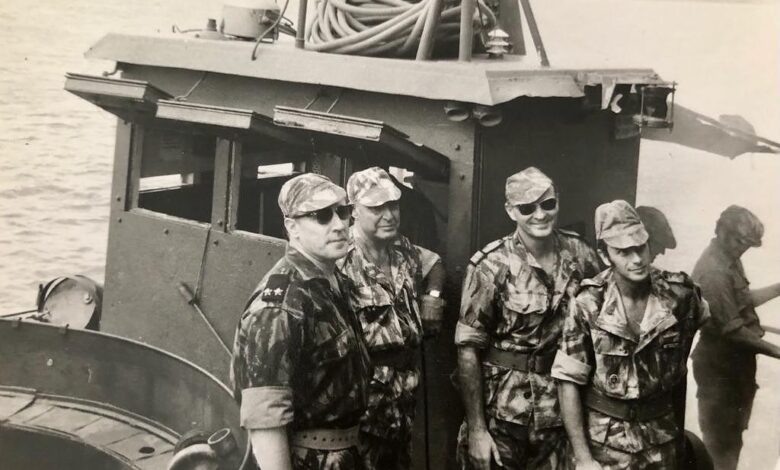
The operation was led by Portuguese naval officer Guilherme Alpoim Calvão, with backing from António de Spínola, then Portugal’s military governor in Portuguese Guinea.
The raiding force approached Conakry by sea and deployed landing parties against selected military and strategic targets.
The attackers struck facilities associated with the PAIGC, destroyed or damaged vessels, attacked military installations and moved to free Portuguese prisoners.
The Portuguese-led force reportedly succeeded in freeing its detained servicemen, although accounts differ over the precise number. Several sources give 26, while other records report lower figures.
The raid demonstrated the ability of Portuguese forces to mount a surprise attack deep inside a neighbouring sovereign country. However, military success at selected targets did not translate into the political victory the operation’s planners sought.
The Prisoners Were Freed, But The Coup Failed

The most successful element of the operation was the rescue of Portuguese prisoners.
The raiders also inflicted damage on military and PAIGC assets, but their broader objective of destabilising or overthrowing the Guinean government failed.
Touré was not captured, and Amílcar Cabral, the PAIGC leader the attackers sought, was not in Conakry at the time.
The attempted seizure of communication facilities also failed to deliver the intended political broadcast that would have announced a new government and encouraged a popular uprising.
Without the expected collapse of the government or a mass revolt, the attackers eventually withdrew.
The raid therefore produced a complicated military outcome: a successful prisoner rescue and damaging strikes against selected targets, but a failed coup and an unsuccessful effort to remove Touré.
The distinction is important because Operation Green Sea was not simply a rescue mission. It was also an intervention designed to influence the political leadership of an independent African state.
Portugal Denied Responsibility, But The United Nations Investigated
Portugal initially denied responsibility for the operation.
Guinea brought the matter before the United Nations Security Council, which responded with Resolution 289 on November 23, 1970. The Council unanimously demanded the cessation of the armed attack and withdrawal of external forces and agreed to send a special mission to investigate.
The United Nations Special Mission visited Guinea, examined the situation and interviewed witnesses. Its report concluded that the force had been assembled in Portuguese Guinea and comprised naval and military units of the Portuguese armed forces.
The findings helped establish the international record of the invasion, despite Portugal’s denials.
On December 8, 1970, the Security Council adopted Resolution 290, strongly condemning the Portuguese Government for the invasion, demanding compensation and warning that colonialism in Africa posed a threat to peace and security on the continent.
The resolution was adopted by 11 votes to none, with four abstentions — France, Spain, the United Kingdom and the United States.
The diplomatic response underscored the seriousness with which African states and the international community viewed attacks on the sovereignty of an independent African country.
Africa Responded With Solidarity
The raid became more than a military confrontation between Portugal and Guinea.
It was interpreted across much of Africa as a warning that colonial wars could spill across borders and threaten newly independent states.
The Organisation of African Unity (OAU) mobilised against the invasion, and its Council of Ministers met in Lagos in December 1970 to consider the crisis.
Nigeria and Algeria offered support to Guinea, while African leaders called for stronger assistance to the liberation movements fighting Portuguese rule in Guinea-Bissau, Angola and Mozambique.
The episode reinforced the argument that African independence was not secure if colonial military operations could be extended into neighbouring sovereign states.
The solidarity that followed also exposed the limits of international diplomacy. Condemnations and resolutions could document aggression and rally support, but they did not immediately dismantle Portugal’s colonial military presence or end its wars in Africa.
The struggle for independence continued for several years, until political change in Portugal in 1974 helped bring the colonial wars to an end.
The Dark Aftermath: Thousands Arrested
The failure of the invasion did not bring relief to Guinea’s population.
President Sékou Touré’s government used the attack and allegations of internal collaboration to intensify its campaign against suspected opponents.
Amnesty International later documented that approximately 3,500 people were arrested following the November 1970 attack, including government ministers, provincial governors and senior military officers.
The crackdown involved detention, allegations of torture, unfair proceedings, executions and disappearances. Many detainees were accused of participating in conspiracies against the state, while the credibility and fairness of the proceedings were deeply questioned.
The attack had been an actual armed assault on Guinea. But the scale of the repression that followed raises an important distinction between defending national sovereignty and using a security crisis to punish political opponents.
Not everyone swept into the crackdown was established to have participated in the invasion.
That distinction is crucial in understanding the tragedy: an external military operation failed to topple the government, but the internal consequences helped create a climate of fear and persecution for thousands of Guineans.
Why The Story Matters To Uganda And Africa Today
Operation Green Sea remains an important historical warning about the vulnerability of African sovereignty, the dangers of cross-border military intervention and the consequences of political instability.
For Uganda and other African states, the episode raises two questions that remain relevant to national security and governance:
-
How can African countries protect their sovereignty against foreign military interference?
-
How can governments respond to genuine security threats without turning the crisis into a justification for indiscriminate repression?
The two questions must be considered together.
Defending a country against external aggression is a legitimate responsibility of the state. But national security cannot become a blanket justification for arbitrary detention, torture, disappearances or punishment without credible evidence and due process.

The Guinea raid also illustrates the importance of African collective action. The OAU’s response showed that solidarity between independent states was not merely a diplomatic slogan, but a practical concern in a continent still confronting colonial military power.
Uganda’s own history, and that of the wider East African region, makes these questions particularly relevant. The protection of sovereignty, the rule of law, civilian safety and political accountability are not competing ideals; they are essential elements of lasting national stability.
A Failed Coup, A Lasting Historical Warning
On November 22, 1970, the Portuguese-led force entered Conakry with ambitious military and political objectives.
It rescued prisoners, damaged military assets and demonstrated the reach of Portuguese military operations.
But it failed to remove Ahmed Sékou Touré, failed to capture Amílcar Cabral and failed to produce the political uprising its planners hoped to trigger.
The operation’s lasting significance lies not only in the raid itself, but also in the international reaction, the African solidarity it provoked and the repression that followed within Guinea.
Fifty-six years later, Operation Green Sea remains a reminder that military operations can produce consequences far beyond their immediate objectives.
A raid may end within hours.
Its political consequences, however, can last for decades.
Today In History: The Uganda Today Historical Perspective — One Date, One Story, A Fresh Historical Lens.