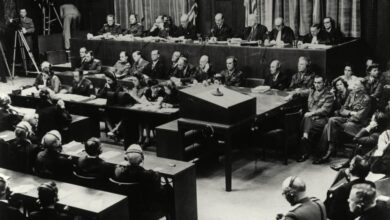
Today In History: The Five-Year Promise That Became A 32-Year Rule: How Mobutu Seized Power In Congo
+256 702 23 93 37: Uganda shares a long border with the Democratic Republic of Congo, and instability in eastern Congo has repeatedly affected Uganda's national security, trade, refugee movements and relations with neighbouring countries. A particularly important connection emerged during the 1996–1997 campaign that removed Mobutu from power.

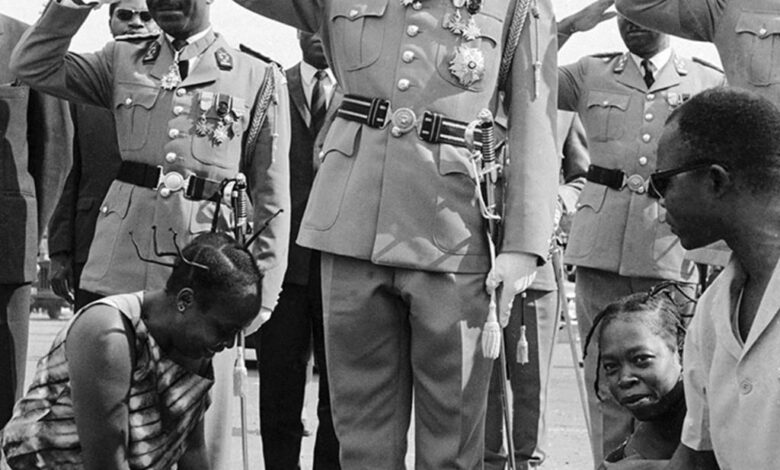
UgandaToday: Today In History: The Five-Year Promise That Became A 32-Year Rule: How Mobutu Seized Power In Congo

Today In History: The Uganda Today Historical Perspective
Tuesday, 24 November 2026 | 61 Years Ago
On November 24, 1965, fourteen senior military officers gathered in Léopoldville, now Kinshasa, under the leadership of General Joseph-Désiré Mobutu. Their decision would end Congo’s fragile First Republic and launch one of Africa’s longest personal presidential regimes. Mobutu promised a temporary five-year intervention. He remained in power for more than three decades.
On this day, 24 November 1965, the future of the Democratic Republic of Congo was effectively decided in a military meeting that changed the country’s political direction for more than three decades.
General Joseph-Désiré Mobutu, then commander-in-chief of the Congolese National Army, convened senior military officers in Léopoldville amid an increasingly bitter confrontation between President Joseph Kasa-Vubu and the country’s political leadership.
The meeting produced a decision to remove the civilian leadership and transfer power to the military.
By the following day, the army had announced that Kasa-Vubu and Prime Minister-designate Évariste Kimba had been removed, and Mobutu had been named head of state.
The takeover was presented as a necessary intervention to rescue the country from political paralysis and prevent further instability. Mobutu announced that the new arrangement would last five years, during which his government would restore order and rebuild the country.
But the promised temporary intervention became a personal political system that survived until May 1997.
The anniversary is particularly significant because it illustrates how a military intervention justified as a short-term solution to a national crisis can fundamentally alter a country’s institutions and political future.
The Political Crisis That Opened The Door

Congo had gained independence from Belgium on 30 June 1960, but its early years were marked by mutinies, secessionist conflicts, political assassinations, foreign interventions and struggles over control of the new state.
The first years of independence were particularly turbulent following the dismissal and subsequent killing of Prime Minister Patrice Lumumba, the secession of Katanga and the emergence of armed rebellions in different parts of the country.
By 1965, the country was still struggling to establish stable institutions capable of resolving political disagreements without resorting to military intervention.
The immediate crisis involved President Kasa-Vubu and Prime Minister Moïse Tshombe, whose relationship had deteriorated over political appointments and control of government.
In the March 1965 parliamentary elections, Tshombe’s political alliance, the Convention Nationale Congolaise (CONACO), won 122 of the 167 seats in Parliament.
However, on 13 October 1965, Kasa-Vubu dismissed Tshombe and appointed Évariste Kimba to form a new government.
Kimba’s appointment was rejected by Tshombe’s parliamentary supporters, creating a constitutional deadlock. Kasa-Vubu nevertheless maintained his position on Kimba, while the country faced the prospect of further political confrontation.
The military, under Mobutu, increasingly presented itself as the institution capable of ending the impasse.
Fourteen Military Officers Made A Decision That Changed Congo

The historical significance of November 24 lies in the meeting of fourteen members of the Congolese National Army’s high command.
According to the Library of Congress publication Zaire: A Country Study, the officers gathered with Mobutu in Léopoldville for an emergency meeting.
The following day, the military announced the removal of Kasa-Vubu and Kimba and declared Mobutu head of state.
Colonel Léonard Mulamba was appointed prime minister of the new government of national union.
The takeover was largely bloodless, and Mobutu justified it as an intervention to end the political struggle among civilian leaders.
However, a declassified United States diplomatic telegram dated 26 November 1965 acknowledged that the seizure of power was unconstitutional, even while noting that Mobutu’s supporters argued it was necessary to prevent further instability.
The diplomatic record is particularly valuable because it captures the immediate reaction of foreign governments rather than relying solely on accounts written decades later.
The Five-Year Emergency That Became A Personal Presidency

One of Mobutu’s central assurances was that his government would remain in office for five years under a state of emergency.
He promised to maintain national institutions, including Parliament, and said citizens’ rights and property would be protected.
The new government also promised to replace political manoeuvring with national reconstruction, economic rehabilitation and unity.
Initially, the intervention received considerable support or cautious acceptance from sections of the Congolese political establishment and foreign governments that feared the country might descend into another civil war.
But the military government gradually dismantled the institutions that had existed before the coup.
Political activity by parties was suspended, executive power became increasingly concentrated in the presidency, and Parliament’s authority was reduced.
The 1967 Constitution strengthened presidential control, while Mobutu’s Popular Movement of the Revolution (MPR), established that year, became the central instrument of his political system.
By 1970, the MPR had become the country’s sole legal political party. In October 1971, Mobutu renamed the country the Republic of Zaire, while promoting his programme of Authenticité and a new national identity.
The five-year emergency had become a much longer system of personal rule.
The Man Who Promised To Restore Order Stayed Until 1997
Mobutu’s rule survived for more than three decades, supported at different times by a powerful security apparatus, patronage networks and foreign alliances.
During the Cold War, Western governments regarded him as an important anti-communist ally in Central Africa.
His government maintained close relationships with the United States and other Western powers, even as opposition groups, human rights organisations and critics increasingly questioned its political repression, corruption and economic management.
The country’s vast mineral wealth did not translate into broadly shared prosperity. State institutions became heavily dependent on the presidency, while the economy deteriorated and political opposition was restricted.
By the 1990s, Mobutu faced mounting internal opposition and international pressure to introduce multiparty politics.
His announcement on 24 April 1990 that Zaire would move towards political pluralism came after years of resistance and demands for reform.
But the transition remained deeply contested.
In 1996, an armed rebellion began in eastern Zaire. The Alliance of Democratic Forces for the Liberation of Congo (AFDL), supported by several neighbouring countries, advanced towards Kinshasa.
Mobutu’s government collapsed in May 1997, bringing his more-than-three-decade rule to an end.
The country reverted to the name Democratic Republic of Congo under Laurent-Désiré Kabila.
Why Mobutu’s Rise Still Matters To Uganda
The events of November 1965 may have taken place in Léopoldville, but their consequences eventually reached the wider Great Lakes region.
Uganda shares a long border with the Democratic Republic of Congo, and instability in eastern Congo has repeatedly affected Uganda’s national security, trade, refugee movements and relations with neighbouring countries.
A particularly important connection emerged during the 1996–1997 campaign that removed Mobutu from power.
Human Rights Watch documented that Uganda supported the AFDL campaign partly because of concerns about armed anti-Ugandan groups operating from bases in eastern Congo and launching attacks towards the Kasese area.
Rwanda and other regional governments also supported the campaign for their own security and political reasons.
This demonstrates how prolonged weakness in a neighbouring state can create security challenges that extend beyond its borders and draw several countries into the same conflict.
For Uganda, the history offers a lesson about the importance of stability, accountable institutions and effective security cooperation with the DRC.
It also demonstrates that political developments in Kinshasa can have consequences far beyond the capital, particularly for communities living along the Uganda–Congo frontier.
The Warning Behind The Anniversary
Mobutu’s seizure of power is not simply a story about one ambitious general.
It is a story about institutions weakened by political rivalry, a military establishment that assumed the role of political arbiter, and a promise of temporary rule that gradually became an enduring system of personal power.
The initial crisis was real. Congo was experiencing severe political and security challenges, and many citizens welcomed the prospect of stability.
But the removal of one political deadlock did not resolve the deeper institutional problems. Instead, power became concentrated around one individual, and the country spent decades struggling with the consequences.
The historical lesson is not that every military intervention produces the same outcome. It is that a government which claims extraordinary powers to solve an emergency must still be judged by whether it restores constitutional government, strengthens institutions and eventually returns authority to the people.
On November 24, 1965, Mobutu’s officers believed they were ending a political crisis.
They could hardly have imagined that the decision would shape Congo’s destiny for the next 32 years.
A five-year promise became a generation-long presidency — and the consequences remain part of Central Africa’s history.