Today In History: Suriname Won Independence In 1975 — But 40,000 People Left For The Netherlands That Year
+256 702 23 93 37: Suriname Won Independence In 1975 — But 40,000 People Left For The Netherlands That Year

UgandaToday: Today In History: Suriname Won Independence In 1975 — But 40,000 People Left For The Netherlands That Year

Uganda Today Historical Perspective
Wednesday, 25 November 2026 | 51 Years Ago Today
The South American republic’s independence ended nearly three centuries of Dutch colonial rule. Yet the birth of the new nation was accompanied by political disagreement, uncertainty over citizenship and a remarkable wave of migration. Its story offers an unusual perspective on the relationship between sovereignty, identity and the diaspora.
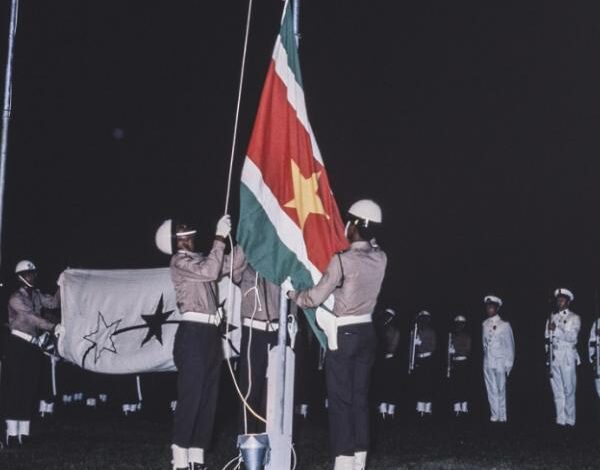
On 25 November 1975, Suriname became an independent republic, ending nearly three centuries of Dutch colonial rule.
In Paramaribo, the capital, the transfer of sovereignty was marked by official ceremonies, national celebrations and the emergence of a new state under President Johan Ferrier and Prime Minister Henck Arron.
For the people gathered to witness the historic moment, it was the fulfilment of a long struggle for self-government. The new republic was now responsible for its own political future, international relations and national development.
But beneath the celebrations lay a more complicated story.
Independence had not united every section of Surinamese society behind the same political timetable. Some citizens feared that the country was not economically or politically prepared to stand alone. Others worried about the future of their citizenship, livelihoods and freedom to travel to the Netherlands.
The result was a remarkable historical contradiction: while Suriname celebrated the birth of its sovereign state, tens of thousands of its people were moving to the former colonial power.
Statistics published by the Netherlands’ Central Bureau of Statistics (CBS) show that approximately 39,700 people moved from Suriname to the Netherlands in 1975 alone.
The story of Suriname’s independence is therefore not just about a flag being raised. It is also about the difficult choices that followed the end of colonial rule.
Nearly 300 Years Under Dutch Colonial Rule
Suriname is situated on the northern coast of South America, bordering Guyana, French Guiana and Brazil.
Its colonial history dates back to the 17th century. The Netherlands took control of the territory in 1667, and Suriname remained a Dutch colony, apart from a relatively brief period of British control, until independence in 1975.
The country’s population and cultural identity were shaped by slavery, colonial plantation agriculture and later systems of contract labour.
Enslaved Africans were forcibly transported to work on plantations. Some escaped and established independent communities in the interior, whose descendants became known as Maroons. Other Afro-Surinamese communities developed from the descendants of enslaved people who remained in plantation and urban society.
After the abolition of slavery in 1863, colonial authorities brought in contract workers from India and later Indonesia to sustain plantation production.
Consequently, Suriname developed a complex society that includes African-descended communities, Hindustani people, Javanese, Indigenous peoples and people of mixed ancestry.
Its independence was therefore not simply the creation of another postcolonial government. It was the political transition of a society with several distinct historical experiences and identities.
This African connection is particularly important. Although Suriname is geographically in South America, the history of its Afro-Surinamese and Maroon communities forms part of the wider African diaspora created by the transatlantic slave trade.
Independence Was Not An Uncontested Decision

The road to independence was gradual.
In 1954, the Charter for the Kingdom of the Netherlands gave Suriname greater autonomy over its internal affairs, while defence and foreign relations remained responsibilities of the Kingdom.
However, political opinion within Suriname remained divided over whether the country should pursue complete independence immediately or retain its existing constitutional arrangement.
Some nationalists wanted full sovereignty without delay. Others preferred a slower transition, fearing that the new country might struggle economically or that political competition could intensify ethnic tensions.
A significant political turning point came after the 1973 general election.
The National Party Combination, led by Henck Arron, won the election and formed the government. Arron subsequently announced that Suriname would become independent before 1 January 1976.
The announcement surprised some citizens because independence had not been a central issue in the election campaign.
The National Archives of the Netherlands records that the announcement generated enthusiasm among supporters but also anger and concern among opponents who felt the decision was being accelerated without sufficient public consensus.
Nevertheless, negotiations between Paramaribo and The Hague gathered pace, eventually producing the agreement that brought independence on 25 November 1975.
Johan Ferrier Became The First President

Johan Ferrier, who became the first President of independent Suriname on 25 November 1975. Archival photograph recommended for identification against the National Archives collection.The independence ceremony established a new political order.
Johan Ferrier became the first President of the Republic of Suriname, while Henck Arron served as its first prime minister.
The formal Act of Sovereignty, issued at an extraordinary session of the Surinamese Parliament in Paramaribo, declared that the country possessed the status of an independent and sovereign state from that date.
The Netherlands formally recognised the new republic through the signing of the Act of Recognition.
The two countries also concluded an agreement on development cooperation on the same day, establishing a framework for continued economic assistance after the colonial relationship ended.
The Dutch military presence, known as the Troepenmacht in Suriname, departed, while arrangements were made for the development of an independent Surinamese armed force.
The political transition was therefore accompanied by the practical task of establishing the institutions required to operate a sovereign state.
The Independence Celebration And The Great Migration

The CBS reported in November 2025 that approximately 39,700 people moved from Suriname to the Netherlands in 1975, the year of independence.
The migration did not begin on independence day. It had been increasing since the early 1960s, partly because of economic difficulties in Suriname, stronger employment opportunities in the Netherlands and family networks that encouraged relatives to join those already abroad.
But the uncertainty surrounding independence accelerated the movement.
A special nationality arrangement allowed Surinamese people to make choices concerning Dutch citizenship during a five-year transitional period. As that arrangement approached its end in 1980, another major migration peak occurred.
According to CBS figures, approximately 256,000 people moved from Suriname to the Netherlands between 1975 and 2024.
By September 2025, the Netherlands had approximately 181,000 residents who had been born in Suriname. A further 189,000 people born in the Netherlands had one or two parents born in Suriname.
These figures demonstrate how independence transformed the geographical distribution of Suriname’s population and helped create a large community whose identity and family relationships span two countries.
It would, however, be inaccurate to attribute the entire migration wave to independence alone. Economic conditions, education, family reunification, citizenship arrangements and political uncertainty all played important roles.
The Price And Promise Of Sovereignty
Independence also came with a substantial development cooperation package.
The Netherlands and Suriname agreed on a package reported by the Netherlands Institute for Military History as worth 3.5 billion Dutch guilders over 15 years.
The arrangement was intended to support the new country’s economic and social development after independence.
A formal development cooperation treaty was concluded in Paramaribo on 25 November 1975.
The arrangement reflected the complicated relationship between former colonies and their former colonial powers: political sovereignty had been achieved, but economic development still required resources, expertise and international partnerships.
Suriname’s experience illustrates a challenge that many newly independent countries have faced. Ending colonial administration is a defining political achievement, but building a productive economy, creating employment and establishing effective institutions are longer-term responsibilities.
The country’s subsequent history was not without difficulty. In February 1980, a military coup overthrew the government of Prime Minister Arron, ushering in a period of military influence and political instability.
In December 1982, the killing of 15 opponents of the military regime became one of the most notorious episodes in the country’s modern history.
Those later events should not diminish the significance of independence, but they demonstrate that sovereignty alone cannot guarantee democratic stability or economic prosperity.
What Suriname’s History Means For Uganda And Africa
Suriname’s independence is especially interesting to African readers because it connects the history of European colonialism in the Americas with the African diaspora.
The descendants of Africans forcibly transported across the Atlantic helped shape Suriname’s culture, language, social institutions and political identity. Their story sits alongside the experiences of Indian and Indonesian descendants, Indigenous communities and other groups that make up the country.
For Uganda and other African countries, the anniversary raises questions about what sovereignty should ultimately deliver.
Political independence is a necessary foundation, but citizens also expect functioning institutions, economic opportunity, security, social inclusion and confidence in their country’s future.
Suriname’s migration experience also invites reflection on the relationship between national development and the diaspora.
Migration can provide families with income, education and international connections. At the same time, sustained outward movement can raise questions about employment opportunities, the retention of skills and the confidence citizens have in their country’s future.
The lesson is not that citizens should be prevented from seeking opportunities abroad. Rather, it is that a successful independent state should create conditions in which people can build meaningful lives at home while maintaining productive links with the wider world.
Uganda’s own relationship with its diaspora makes this a relevant conversation.
Fifty-One Years After The Flag Was Raised
On 25 November 1975, Suriname formally ended its constitutional relationship with the Netherlands and became a sovereign republic.
The achievement was the culmination of a long colonial history and a political struggle that had involved competing ideas about national identity, self-government and the country’s readiness for independence.
But the migration figures reveal another side of the story: a significant number of citizens were uncertain enough about the future to relocate to the former colonial power.
Fifty-one years later, Suriname remains a reminder that independence is not a final destination. It is the beginning of the demanding work of building a country that its citizens can believe in, invest in and confidently call home.
The flag marked the end of colonial rule. The real test was what the new nation would build beneath it.
Today In History: The Uganda Today Historical Perspective — One Date, One Story, A Fresh Historical Lens.