Today In History: Mauritania’s 1960 Independence: The African State That Waited 333 Days For UN Membership
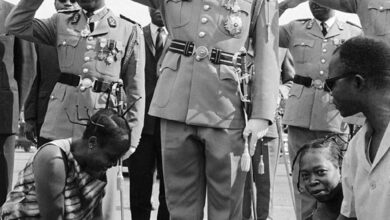
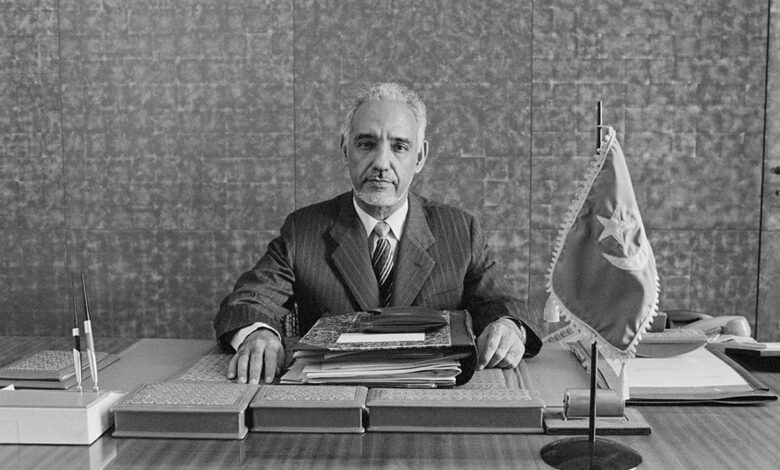
+256 702 23 93 37: On 28 November 1960, the Islamic Republic of Mauritania proclaimed its independence in Nouakchott, ending decades of French colonial rule. The announcement was led by the country’s Prime Minister, Moktar Ould Daddah, who became the central figure in the birth of the new state.

UgandaToday: Today In History: Mauritania’s 1960 Independence: The African State That Waited 333 Days For UN Membership

On 28 November 1960, the Islamic Republic of Mauritania proclaimed its independence in Nouakchott, ending decades of French colonial rule. The announcement was led by the country’s Prime Minister, Moktar Ould Daddah, who became the central figure in the birth of the new state.
The date marked a significant moment in Africa’s decolonisation. Yet Mauritania’s experience was unusual: while the country had declared itself independent, its application to join the United Nations was blocked days later by a Soviet veto.
The episode offers a revealing historical lesson about the difference between declaring independence, securing recognition and establishing an accepted place in the international community.
The Last Of Africa’s 1960 Independence Wave
The year 1960 is widely remembered as the Year of Africa, when a wave of colonial territories became independent. According to the African Studies Centre Leiden, 17 former colonies gained independence that year, with Mauritania becoming the seventeenth and last on 28 November.
Mauritania had been administered as part of French West Africa. Its transition to independence was gradual: it moved through different forms of French colonial administration before becoming an autonomous republic within the French Community in 1958.
By the time full independence was proclaimed, the country had already begun constructing the institutions of a sovereign state.
The proclamation itself was not staged in a grand, established capital. A historical account published by Jeune Afrique, drawing on an interview with Ould Daddah, describes the announcement taking place at night in a modest, barely lit hangar in Nouakchott, which was still an improvised and developing capital.
The setting was a reminder that the new country was beginning its independent journey with limited infrastructure and the enormous task of building a functioning state.
Ould Daddah And The Birth Of A New State

Ould Daddah had been at the centre of Mauritania’s political transition. In October 1960, he negotiated the transfer of powers with French authorities, including French Prime Minister Michel Debré.
The agreement prepared the ground for the formal declaration the following month. On independence day, Ould Daddah presented a vision of a country that could serve as a bridge between North Africa and sub-Saharan Africa.
That vision reflected Mauritania’s distinctive social and geographical position. Its population included Arab-Berber communities as well as Black African communities, among them Pulaar, Soninke and Wolof speakers. Building a shared national identity would remain one of the country’s enduring political challenges.
The Territorial Dispute That Complicated Independence

Mauritania’s problems did not end with the departure of French colonial administration.
Morocco disputed the new country’s separate statehood and advanced territorial claims over Mauritania. The dispute complicated diplomatic recognition and became part of the debate over whether the new republic should be admitted to the United Nations.
The disagreement was not merely a diplomatic technicality. It raised a fundamental question facing newly independent African countries: could an existing state claim territory that had emerged from a separate colonial administration and chosen its own political future?
Morocco did not formally recognise Mauritania until 1969, according to historical accounts by Deutsche Welle and Jeune Afrique.
The Cold War Turned Mauritania Into A Diplomatic Bargaining Chip
One of the least remembered aspects of Mauritania’s independence story is the immediate battle over its United Nations membership.
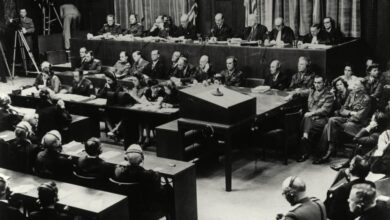
On 28 November 1960, the same day independence was proclaimed, Mauritania applied for admission to the United Nations. The Security Council considered the application in early December, but the Soviet Union used its veto to prevent a recommendation for membership.
The United Nations’ own records show that the dispute was entangled with the wider Cold War confrontation. During a Security Council debate in October 1961, a delegate accused the major powers of using Mauritania as a “hostage” in retaliation connected to the long-running dispute over the admission of Mongolia.
That was a delegate’s interpretation of the political manoeuvring, rather than a neutral finding by the United Nations. Nevertheless, the official record confirms that the two applications became closely linked in the Council’s deliberations.
African countries were not silent. During the 1961 debate, a delegate cited the support of 21 out of 25 independent African states represented at a meeting in Monrovia for Mauritania’s admission.
The episode demonstrated how newly independent African countries could use collective diplomatic pressure to defend the sovereignty of one of their own.
Mauritania was finally admitted to the United Nations on 27 October 1961, after the Security Council recommended its admission on 25 October. That was 333 days after the independence proclamation.
What Mauritania’s Experience Means For Uganda
There is a striking comparison with Uganda’s own journey to international recognition.
Uganda attained independence on 9 October 1962 and was admitted to the United Nations on 25 October 1962 — just 16 days later. Mauritania, by contrast, waited 333 days between its declaration of independence and UN admission. The two countries faced different political circumstances, but their timelines illustrate that the journey from colonial rule to full international participation was not identical across Africa.
The Mauritanian dispute also formed part of a wider continental challenge over inherited colonial boundaries. In July 1964, the Organisation of African Unity adopted Resolution AHG/Res.16(I), pledging member states to respect the borders existing when they attained independence.
The resolution reflected the concern that attempts to redraw Africa’s borders could create instability and conflict. It remains an important part of the historical foundation of the African Union’s approach to territorial integrity.
For Uganda, the lesson is particularly relevant: sovereignty is not secured by a declaration alone. It also depends on territorial integrity, effective institutions, diplomatic recognition and the ability of a country to defend its interests within regional and international organisations.
Independence Was Only The Beginning
Mauritania’s independence did not automatically resolve its internal political and social challenges. Ould Daddah remained in power until a military coup in 1978. Subsequent political debates included questions of language, national identity, representation and the relationship between the country’s different communities.
Yet the events of 28 November 1960 remain significant beyond Mauritania itself. They capture a defining moment in Africa’s struggle to transform colonial territories into independent states — and the diplomatic, political and institutional battles that continued after the flags were raised.
Sixty-six years later, Mauritania’s independence story reminds Africa that freedom from colonial administration was a historic achievement, but defending sovereignty and building a stable, inclusive state would be a much longer undertaking.