Today In History: Kasese Palace Raid: Ten Years On, The Kingdom Rebuilds As Families Still Seek Answers
+256 702 23 93 37: The assault ended with the arrest of King Charles Wesley Mumbere, the destruction of parts of the palace compound and the deaths of scores of people. More than 100 people were believed to have died during the palace assault alone, according to investigations by Human Rights Watch and the International Criminal Court's Office of the Prosecutor.

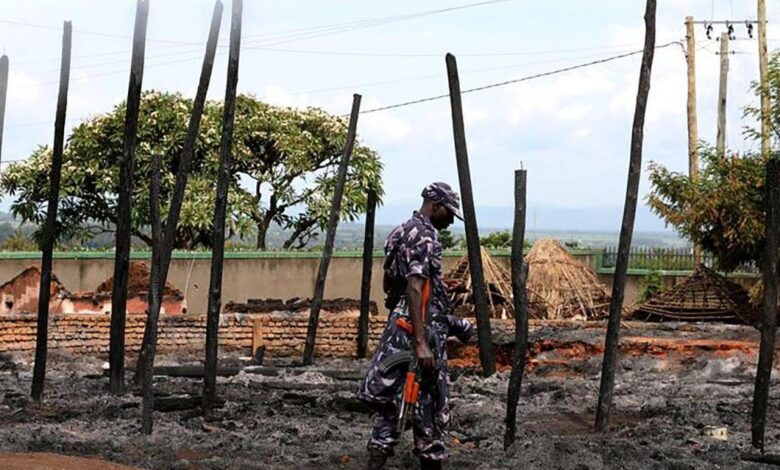
UgandaToday: Today In History: Kasese Palace Raid: Ten Years On, The Kingdom Rebuilds As Families Still Seek Answers

The Uganda Today Historical Perspective
Friday, 27 November 2026 | 10 Years Ago Today
On 27 November 2016, Ugandan security forces stormed the Buhikira Palace of the Rwenzururu Kingdom in Kasese, arrested Omusinga Charles Wesley Mumbere and killed more than 100 people, according to independent investigations. A decade later, the King has returned, charges against him and hundreds of his subjects have been withdrawn, and a new palace site has been handed over. But questions surrounding the deaths, missing relatives and accountability remain part of Kasese’s unfinished history.
Ten years ago today, the Rwenzori sub-region witnessed one of the most consequential and painful security operations in Uganda’s recent history.
At approximately 1pm on Sunday, 27 November 2016, joint security forces comprising the Uganda People’s Defence Forces (UPDF) and the Uganda Police Force stormed the Buhikira Royal Palace in Kasese, the seat of the Obusinga Bwa Rwenzururu.
The operation followed two days of escalating violence between security forces and individuals associated with the Rwenzururu Kingdom’s royal guards.
The assault ended with the arrest of King Charles Wesley Mumbere, the destruction of parts of the palace compound and the deaths of scores of people. More than 100 people were believed to have died during the palace assault alone, according to investigations by Human Rights Watch and the International Criminal Court’s Office of the Prosecutor.
The events left families mourning, others searching for missing relatives, and a cultural institution struggling to recover from the destruction of its administrative and ceremonial centre.
Ten years later, the physical rebuilding of the kingdom is beginning to take shape. Yet the historical questions surrounding the killings have not all been answered.
The Two Days That Changed Kasese

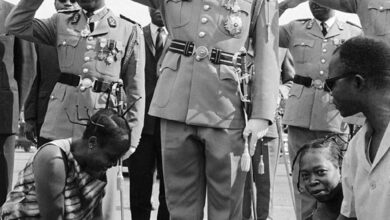
Rwenzururu King Charles Wesley Mumbere is escorted by security personnel following his arrest during the November 2016 operation at Buhikira Palace in Kasese. His arrest triggered years of legal proceedings and uncertainty surrounding the kingdom’s leadership.
The palace assault did not begin on 27 November. It was the culmination of violence that had started the previous morning.
On 26 November 2016, soldiers entered the Rwenzururu Kingdom’s administrative offices on Alexander Street in Kasese. Human Rights Watch documented the killing of eight royal guards during the operation.
Later that day, violence spread to other parts of the district. Civilians, including some people identified as royal guards, attacked police posts in several locations. Human Rights Watch reported that at least 14 police officers and one crime preventer were killed, while 32 civilians were shot dead by security forces during the clashes.
The government maintained that its operations were a response to attacks against police installations and an alleged armed movement threatening national security. Officials also linked some members of the royal guards to suspected separatist activities.
The Rwenzururu Kingdom disputed the portrayal of its cultural institution as a separatist project.
By the evening of 26 November, the palace compound had been surrounded by security forces.
Negotiations reportedly took place the following morning over the disbandment of the royal guards. However, the situation deteriorated, and at approximately 1pm on 27 November, security forces stormed the compound.
The assault resulted in extensive destruction and numerous deaths. King Mumbere was arrested and subsequently transferred to Kampala.
Human Rights Watch documented evidence and witness accounts raising questions about the treatment of people inside the compound, including allegations that some captured individuals were beaten after being restrained.
The government maintained that the operation was intended to neutralise an armed security threat. The competing accounts made an independent investigation particularly important.
The Death Toll That Never Had A Common Final Figure

One of the most troubling aspects of the Kasese events is that the number of people who died remains disputed.
Initial police accounts placed the death toll over the two days at 87, including 16 police officers. The government subsequently increased the official figure to 103, although the period covered by that revised number was not clearly specified.
Human Rights Watch arrived at a substantially higher estimate after interviewing witnesses, examining photographs and videos, and speaking to families.
Its 2017 investigation estimated that at least 55 people died on 26 November and more than 100 during the palace assault on 27 November. The organisation later put the overall toll at a minimum of 156, saying it could be higher.
The International Criminal Court’s Office of the Prosecutor, in its 2020 preliminary examination report, referred to information indicating approximately 150 deaths over the two days, including at least 14 police officers.
These figures should not be combined into a falsely precise total. They reflect different investigations, reporting periods and methods of counting.
The absence of a publicly established, independently verified final death toll has made it difficult for families to establish the full extent of their losses.
The 52 Unclaimed Bodies And Families Still Searching

The human consequences extended beyond those whose bodies were recovered and identified.
In November 2017, Uganda Radio Network reported that 52 bodies from the palace attack remained unclaimed and had been buried in individual graves at Kihara military barracks in Kasese.
Police said DNA samples had been collected to assist with future identification. The Rwenzururu Kingdom’s spokesperson at the time said that some bodies had been badly burned, making identification difficult.
Human Rights Watch also reported that some families had never received the remains of their relatives.
A December 2021 investigation by Daily Monitor documented families who were still searching for people who had disappeared during the violence. Among the unresolved cases were relatives who had last been seen at the palace and whose families could not establish whether they had died, been arrested or disappeared elsewhere.
These are not merely statistical gaps. They represent families who have been unable to complete the cultural and personal process of mourning and burial.
For communities in which burial rites and family identity carry profound significance, uncertainty over the fate of a relative can prolong grief for years.
The International Criminal Court’s Important Assessment

The Kasese killings also attracted the attention of the International Criminal Court.
In its Report on Preliminary Examination Activities 2020, published on 14 December 2020, the Office of the Prosecutor examined information submitted about the events of 26 and 27 November 2016.
The report found credible information that multiple killings had been committed by Ugandan security forces during the operations.
It also expressed concern that the use of force appeared indiscriminate and disproportionate, and that the information available indicated the presence of women, children, domestic workers and other civilians inside the palace compound.
However, the Prosecutor’s Office concluded that it could not establish the additional requirement of a state or organisational policy necessary to classify the alleged acts as crimes against humanity under the Rome Statute. It also found that the circumstances did not meet the applicable threshold for classifying the events as a non-international armed conflict for war-crimes purposes.
This distinction is important.
The ICC assessment was not a criminal trial, nor was it a judicial declaration that the killings were lawful. It was a preliminary prosecutorial assessment of whether the allegations met the legal requirements for further action by the Court.
The report therefore did not remove the responsibility of Ugandan authorities to investigate possible unlawful killings and provide answers to affected families.
Charges Were Withdrawn — But Withdrawal Was Not A Trial Verdict
For years, King Mumbere and hundreds of his subjects faced serious criminal charges arising from the wider Kasese violence.
The legal proceedings included allegations of murder, treason, terrorism and other offences. Mumbere was arrested on 27 November 2016 and spent years under restrictive bail conditions that prevented him from returning freely to his kingdom.
A major development came on 13 June 2023 when the Director of Public Prosecutions, Jane Frances Abodo, discontinued proceedings against Mumbere and 217 of his co-accused following their applications for amnesty.
The court ordered the release of those who remained in custody.
The decision ended a prolonged period of criminal proceedings for the King and the larger group. Mumbere subsequently returned to Kasese on 4 October 2023 after nearly seven years away from his kingdom.
However, the withdrawal of charges should not be confused with a trial judgment establishing innocence or determining responsibility for the deaths of civilians during the security operation.
There was also a separate legal development involving former Rwenzururu Prime Minister Thembo Kitsumbire. On 7 May 2024, the High Court’s International Crimes Division confirmed charges of treason and terrorism, with misprision of treason as an alternative charge, and referred his case for trial.
That ruling confirmed charges at a pre-trial stage; it was not a conviction.
The last public judgment located for this feature on that case is dated May 2024. A later final disposition was not established in the records reviewed.
Ten Years Later, Widows And Former Detainees Still Carry The Burden
The consequences of the Kasese events did not end when the King and other accused persons were released.
An April 2025 investigation by The Observer documented the continuing struggles of widows, children and former detainees.
The newspaper reported that Peace Kabugho, who lost her husband during the violence, was leading a group of 38 widows in Kasese Municipality. The women were saving money, extending small loans and making handmade products in an effort to rebuild their livelihoods.
The same investigation documented former detainees struggling to recover from years in prison, family separation, lost property and the difficulty of restarting their lives.
The government also gave its position. State Minister for ICT and National Guidance Godfrey Kabbyanga told The Observer that a presidential directive issued in January 2025 had called for support to affected people and that efforts were being made to connect them to government programmes, including the Parish Development Model and Emyooga.
The different accounts demonstrate the distance that can exist between official commitments to reconciliation and the daily realities experienced by affected families.
Compensation, psychosocial support, education for orphaned children, the identification of missing people and assistance to former detainees remain important elements of any lasting recovery.
A New Palace Site Signals A New Chapter

There are signs that the Rwenzururu Kingdom is attempting to restore its institutional and cultural infrastructure.
On 12 November 2026, New Vision reported that King Mumbere had returned to Kasese following a medical review in Turkey, where he had travelled in August. His homecoming was welcomed by large numbers of subjects.
More recently, on 17 November 2026, Kasese Guide Radio reported that a new site at Kahokya Cell in Kirembe Ward, Kasese Municipality, had been formally handed over to the Omusinga for the kingdom’s palace project.
The King reportedly welcomed the proposed architectural designs and indicated that construction would be implemented in phases.
The development is significant because the destroyed Buhikira Palace was not simply a royal residence. It also served as an administrative centre and a place associated with the kingdom’s cultural and ceremonial life.
The new site offers an opportunity to rebuild an important symbol of the institution’s continuity.
But a new building cannot, by itself, resolve the historical questions surrounding the people who died, those who disappeared and the families who lost their livelihoods.
The Wider Lesson For Uganda
The Kasese events must be understood within the longer history of tensions between the central government, cultural institutions and communities seeking recognition of their identity and interests.
A 2022 scholarly study published in African Studies Review, titled The Deepening Politics of Fragmentation in Uganda: Understanding Violence in the Rwenzori Region, examined the conflict within the broader context of contested local authority, historical grievances and competing political interests.
The research argues that tensions between central-state power and subnational cultural and political structures can become dangerous when grievances are not addressed through dialogue and inclusive institutions.
For Uganda, the lesson extends beyond the Rwenzori region.
The Constitution recognises the cultural importance of traditional institutions while restricting their involvement in partisan politics. Managing the relationship between the state and cultural leaders requires respect for the law, open communication, restraint by security agencies and protection of citizens regardless of their ethnic or cultural affiliation.
The deaths of police officers during the November 2016 violence also deserve recognition. Their families, like the families of civilians and royal guards, have a right to truth and appropriate justice.
A credible historical account must acknowledge violence against all victims and must not treat the loss of one group as less important than another.
Ten Years On, Rebuilding Must Include Truth
On 27 November 2016, Kasese became the scene of a security operation that left deep scars on a community and a cultural institution.
Ten years later, the King is back in his kingdom, a new palace site has been handed over, and efforts to restore the institution are continuing.
Yet the questions surrounding the killings, missing relatives, unclaimed bodies and the treatment of civilians remain central to the legacy of that day.
The history of Kasese should not be reduced to a dispute between the government and a cultural institution, nor should it be remembered only through the arrest of a King.
It is also the history of ordinary people whose lives were interrupted, children who lost parents, widows who struggled to support families and communities that spent years seeking answers.
The rebuilding of the palace may restore a physical centre for the kingdom. The rebuilding of trust will require something more: an honest account of what happened, respect for every victim, and meaningful steps towards justice and reconciliation.
Ten years after the guns fell silent at Buhikira, the kingdom is preparing to build again. But for many families in Kasese, the search for truth remains unfinished.