Besigye And Lukwago Behind Bars: Uganda’s Unanswered Questions On Justice, Political Freedom And The Rule Of Law
+256 702 23 93 37: The cases involving Besigye and Lukwago have become a test of public confidence in Uganda's institutions. The right to liberty, fair hearing, legal representation and protection from arbitrary detention are not privileges reserved for politicians. They are constitutional protections that apply to every Ugandan.

UgandaToday: Besigye And Lukwago Behind Bars: Uganda’s Unanswered Questions On Justice, Political Freedom And The Rule Of Law

UGANDA TODAY | Political Affairs | 27 November 2026
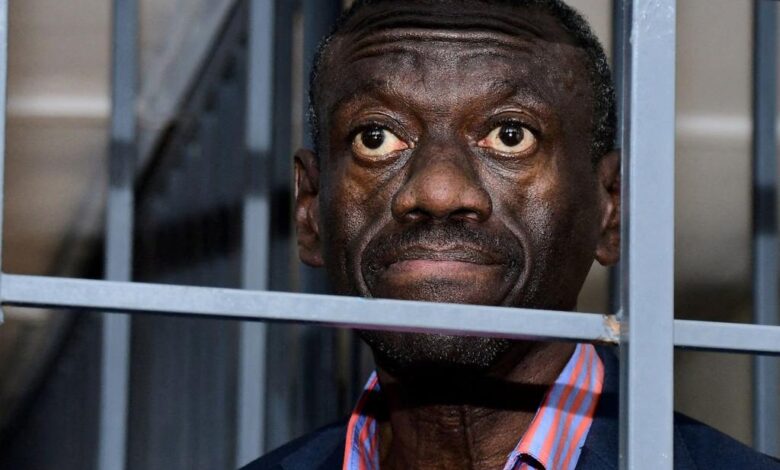
The continued incarceration of Dr Kizza Besigye and Kampala Lord Mayor Erias Lukwago raises important questions about the administration of justice, constitutional freedoms, political accountability and the protection of civil liberties in Uganda.
The central question is not whether politicians should be above the law. They should not. It is whether the law is being applied fairly, transparently and without political interference, regardless of an individual’s political affiliation or public standing.
The accompanying video introduces an additional dimension to the Besigye controversy. It carries a dramatic claim that Dr Besigye was allegedly going to be eliminated in Kenya by machinery associated with President Yoweri Museveni. That allegation requires independent verification and should not be treated as an established fact.
Besigye’s Detention: From Nairobi Abduction To A Treason Trial
Dr Besigye’s detention dates back to November 16, 2024, when he was seized in Nairobi, Kenya, and subsequently transferred to Uganda.
His arrest attracted international attention, particularly because of the circumstances surrounding his removal from Kenya and his initial appearance before a military court.
Amnesty International questioned the legality of the manner in which he was taken from Kenya, arguing that the circumstances violated international human rights protections and the required extradition procedures. The East African Court of Justice subsequently became the venue for a legal challenge concerning the alleged cross-border abduction.
Besigye was later charged with treason alongside Hajji Obeid Lutale and Captain Denis Oola. The prosecution alleges that they participated in activities connected to a plan to overthrow the government. Besigye has denied the accusations and has not been convicted.
The distinction is important: being charged with a criminal offence does not amount to being found guilty.
Health Concerns Add Urgency To The Besigye Case
The concerns surrounding Besigye’s continued detention have gone beyond the legal proceedings.
On July 29, 2026, he collapsed during a court appearance and was subsequently hospitalised. Reuters reported the incident, while his wife, Winnie Byanyima, raised serious concerns about his condition.
By November 2026, Byanyima was again appealing for his release, saying that he had difficulty walking, speaking and using his hands. She called for specialised medical treatment and questioned the continued denial of bail.
These developments raise a fundamental question: how should the justice system balance the rights of an accused person, the prosecution’s responsibility to establish its case and the state’s obligation to protect the health and dignity of someone in custody?
Erias Lukwago: The Lawyer Who Also Ended Up Behind Bars

The detention of former Kampala Lord Mayor Erias Lukwago presents another troubling dimension to the unfolding political and legal controversy.
Lukwago, a lawyer and political leader, was arrested at his Wakaliga residence in Kampala on June 15, 2026, by security operatives. His arrest came when he was representing Besigye and pursuing legal action relating to alleged threats against the opposition politician.
According to Reuters, the circumstances of his arrest prompted questions after opposition leaders alleged that he had been taken away by security personnel. Reuters reported that it could not independently verify some of those allegations.
He was subsequently charged with misprision of treason, an offence relating to failure to report knowledge of an alleged treasonable plan. Lukwago denied the accusation and was remanded to prison.
His legal team has repeatedly pursued bail.
In October 2026, Uganda Radio Network reported that Lukwago had been taken to Mulago National Referral Hospital for medical attention while awaiting consideration of another bail application.
His lawyers argued that he had spent more than 60 days on remand without trial and was entitled to mandatory bail under Article 23(6)(b) of the Constitution. They also raised concerns about his need for specialised medical treatment.
The continued detention of a lawyer who is also an accused person raises questions about access to legal representation, the right to liberty and the safeguards available to people facing criminal proceedings.
Muhoozi’s Statements And The Question Of Who Controls Release

Perhaps the most consequential recent development came on November 24, 2026.
According to a report by Kenya’s People Daily, Chief of Defence Forces General Muhoozi Kainerugaba made social media statements concerning the possible release of Besigye, Lukwago and political activist Sam Mugumya.
He reportedly said the three would have to sign a surrender document prepared by the authorities to avoid remaining in detention, adding that their release depended on his permission.
The reported statements did not explain the contents of the proposed document or identify the legal process through which it would operate.
People Daily
This raises an important constitutional question.
Uganda’s criminal justice system is founded on the principle that the courts, rather than individual political or military personalities, determine matters of bail, trial and criminal responsibility.
If the reported remarks are accurately represented, the public deserves clarification about the legal authority behind them and whether they have any bearing on ongoing judicial proceedings.
A person’s freedom should not be presented as a personal favour from an individual holding public office.
The Bigger Question: Is Justice Being Separated From Politics?

The cases involving Besigye and Lukwago have become a test of public confidence in Uganda’s institutions.
The right to liberty, fair hearing, legal representation and protection from arbitrary detention are not privileges reserved for politicians. They are constitutional protections that apply to every Ugandan.
At the same time, allegations of treason and other criminal offences must be investigated and determined through lawful procedures. Neither political popularity nor opposition status should confer immunity from prosecution.
However, neither should the state use criminal proceedings to punish political dissent or weaken legitimate opposition.
The controversy also raises questions about the involvement of military institutions in matters involving civilians, the independence of prosecutorial decisions and the need for transparent judicial proceedings.
Uganda Must Answer The Questions
The detention of two prominent figures associated with the opposition has attracted attention beyond Uganda’s borders.
The government has a responsibility to explain the legal basis for the continued detention, demonstrate that the accused are receiving appropriate medical attention and ensure that their cases proceed without unnecessary delay.
The courts, meanwhile, must be allowed to exercise their constitutional responsibilities independently.
For Besigye and Lukwago, the presumption of innocence remains central. Neither man has been convicted in the cases discussed here.
For the country, the issue goes beyond the political fortunes of two individuals.
It is about whether constitutional rights mean the same thing for the powerful, the opposition and the ordinary citizen.
If justice is to command public confidence, it must be seen to be independent, impartial and accessible to everyone.
The Latest Court Developments
The treason trial involving Besigye and his co-accused resumed on November 25, 2026, with a fourth prosecution witness expected to testify. KFM reported that Besigye was absent from court while Lutale and Captain Oola attended.
This is an important development because it demonstrates that the criminal proceedings remain active even as questions about Besigye’s health and detention continue.
Lukwago’s latest publicly reported bail application was still awaiting a hearing date in October. His legal team’s constitutional arguments therefore remain an important part of the wider debate.
Editorial clarification: Both men remain in custody, although medical treatment has involved hospital facilities rather than continuous confinement in ordinary prison cells.