
The Blackout That Changed How The World Thinks About Electricity
+256 702 23 93 37: Today In History: Sixty-one years ago, a single protective relay malfunction in Canada triggered one of the largest power failures in modern history, plunging 30 million people into darkness across the United States and Canada. The disaster exposed a vulnerability that went far beyond electricity: the danger of interconnected systems operating without sufficient coordination. Its legacy would help reshape how electricity networks are managed — a lesson that remains relevant as Uganda and East Africa deepen regional power integration.

UgandaToday: Today In History: The Blackout That Changed How The World Thinks About Electricity
Uganda Today | The Uganda Today Historical Perspective | Monday, 9 November 2026
Sixty-one years ago, a single protective relay malfunction in Canada triggered one of the largest power failures in modern history, plunging 30 million people into darkness across the United States and Canada. The disaster exposed a vulnerability that went far beyond electricity: the danger of interconnected systems operating without sufficient coordination. Its legacy would help reshape how electricity networks are managed — a lesson that remains relevant as Uganda and East Africa deepen regional power integration.
At approximately 5:16 p.m. Eastern Time on Tuesday, 9 November 1965, a routine evening in North America took an extraordinary turn.
Electricity suddenly failed across large parts of the northeastern United States and southern Canada.
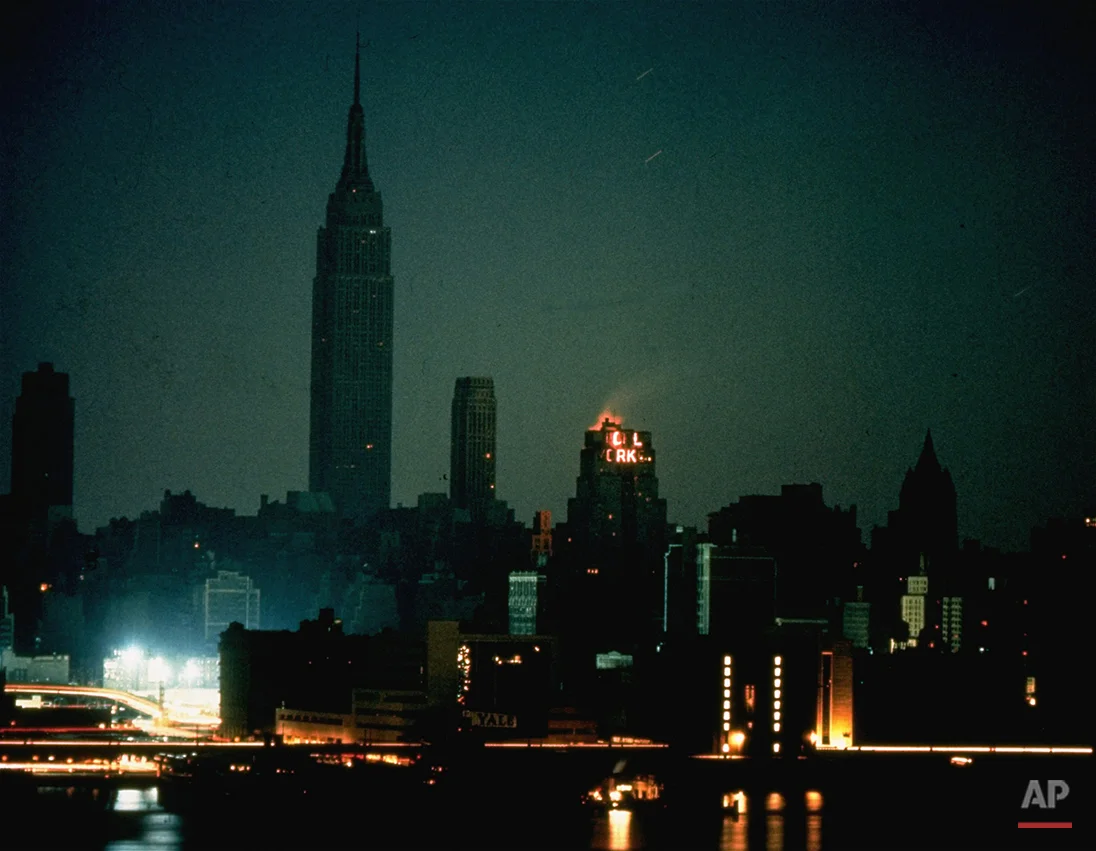
In New York, Boston, Toronto and other major cities, streetlights disappeared, office buildings went dark, traffic signals stopped functioning and thousands of commuters found themselves stranded in underground trains and elevators.
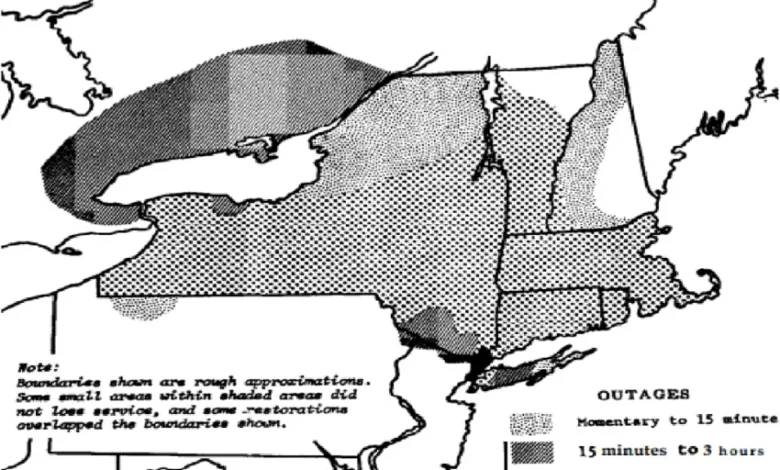
The failure affected approximately 30 million people across an area of about 80,000 square miles. In some places, electricity was not fully restored for up to 13 hours.
It became known as the Great Northeast Blackout of 1965.
Yet the most important part of the story was not simply the darkness that engulfed the cities. It was the extraordinary speed with which a relatively small technical failure spread through an interconnected electricity network.
The blackout would ultimately force governments and electricity companies to confront a fundamental question: How do you keep a system reliable when its individual components depend on one another? Federal Energy Regulatory Commission
The Failure Of One Relay And The Collapse Of An Entire Network
The blackout originated in Ontario, Canada, near Niagara Falls.
At the time, a major generating station was supplying electricity through several high-voltage transmission lines towards the Toronto area.
One of the lines was protected by a backup relay — an electrical device designed to disconnect a transmission line when certain operating conditions were exceeded.
At 5:16 p.m., the relay operated and disconnected one of five 230-kilovolt transmission lines.
The electricity that had been flowing through that line immediately shifted onto the remaining four lines.
Those lines were unable to carry the additional load. They began tripping out in rapid succession.
Within approximately two-and-a-half seconds, the disturbance had developed into a cascading failure.
The resulting power swings spread through the interconnected network, causing additional transmission lines and generating systems to disconnect.
The failure eventually affected much of the northeastern United States and parts of Canada.
The investigation later found that the relay’s operating setting had not been properly understood by the personnel responsible for operating the system. The problem was therefore not merely a faulty piece of equipment; it also exposed weaknesses in system coordination, technical communication and contingency planning.
It was a sobering demonstration of how a failure at one point could destabilise an entire network. Federal Energy Regulatory Commission

The geographical scale of the November 1965 Northeast Blackout. A failure that began on a transmission line in Ontario spread across large sections of the United States and Canada, affecting millions of electricity consumers.
The Human Cost Of A City Without Electricity
For millions of people, the blackout was an unexpected interruption to ordinary life.
In New York City, hundreds of thousands of subway passengers were stranded in trains and stations.
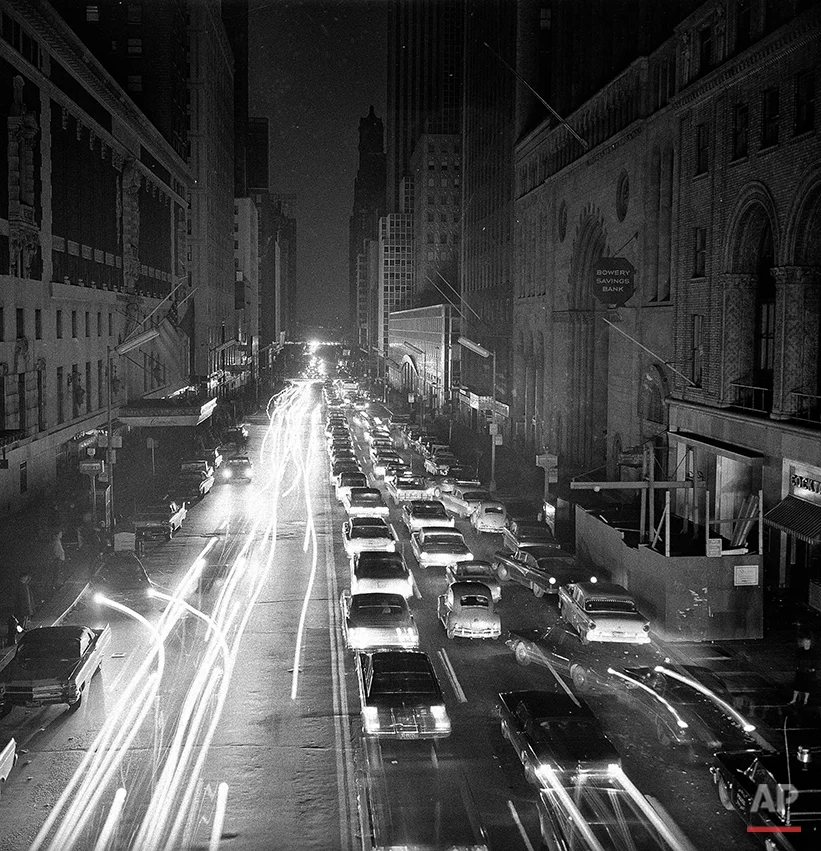
Elevators stopped between floors, leaving office workers trapped inside buildings. Traffic congestion increased as motorists struggled to navigate intersections without functioning traffic signals.
Airports experienced disruption, while commuters who could not reach their homes sought shelter in railway terminals, offices and other public spaces.
The response also revealed the importance of emergency preparedness.
Hospitals with backup generators were able to continue essential operations. In some cities, police officers and ordinary citizens helped direct traffic and assist stranded commuters.
The images from that evening became enduring records of a modern society suddenly deprived of one of its most fundamental services.
The blackout was not simply an inconvenience. It demonstrated how electricity had become inseparable from transportation, communication, public safety, healthcare and economic activity.
The consequences of losing power were felt far beyond the electrical industry itself. AP Photos
The Blackout’s Most Important Legacy Was Institutional
The immediate response to the blackout involved restoring electricity and investigating the cause.
But the longer-term response would transform the way electricity networks were managed.
On the night of the failure, US President Lyndon B. Johnson directed the Federal Power Commission to conduct a thorough investigation and recommend measures to prevent a recurrence.
The investigation revealed that the interconnected electricity network had been operating without adequate coordination among the many companies responsible for its different components.
The Commission’s subsequent recommendations emphasised stronger regional coordination, improved communication between system operators, better technical planning and more effective reliability measures.
In 1968, the North American Electric Reliability Council was established in the aftermath of the blackout.
The organisation would later become the North American Electric Reliability Corporation, commonly known as NERC.
Its work helped establish a framework for coordinating electricity reliability across interconnected systems.
The significance of this development was profound.
The blackout demonstrated that the reliability of an interconnected electricity network could not be guaranteed by individual companies concentrating exclusively on their own equipment.
The entire network had to be considered as one system.
A transmission line could be functioning perfectly within one company’s territory and still become vulnerable to a disturbance originating hundreds of kilometres away.
The lesson was that cooperation was not an optional administrative arrangement. It was an essential component of electricity security. The American Presidency Project

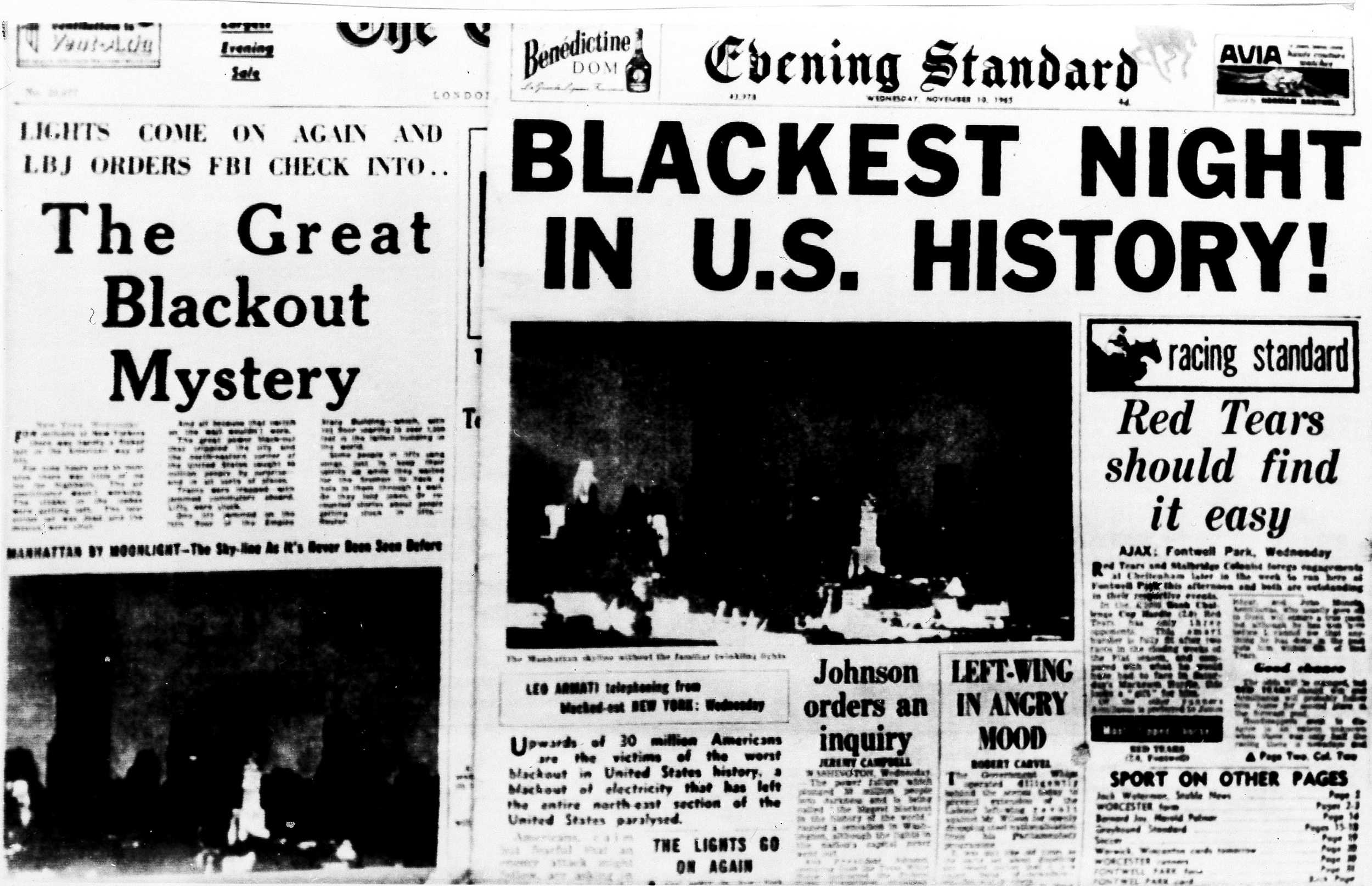 The North American Electric Reliability Council emerged in 1968 following the 1965 blackout. The disaster helped establish the principle that electricity reliability requires coordinated planning and operation across interconnected networks.
The Lesson Was Not To Disconnect — But To Coordinate
One of the most important findings of the post-blackout investigations was that interconnected electricity networks were not inherently unreliable.
In fact, interconnection could improve reliability by allowing different systems to support one another.
The problem was that the network needed to be designed, operated and monitored in a way that could withstand unexpected failures.
The 1967 Federal Power Commission report on the blackout argued that coordinated electricity systems could be more reliable than isolated ones, provided the interconnections were sufficiently strong and the operating arrangements adequately coordinated.
The lesson was therefore not to abandon interconnected power systems.
It was to strengthen them.
This distinction remains important today.
Modern electricity systems are increasingly interconnected across national borders. Electricity can be generated in one country, transmitted through another network and consumed in a third.
Such arrangements can reduce costs, improve energy security and make better use of available generation.
But they also mean that the reliability of one country’s electricity system can depend on the technical and institutional performance of neighbouring systems.
The 1965 blackout remains a historical reminder that the benefits of interconnection must be matched by effective coordination, adequate transmission capacity and clear operating procedures. Studylib
Why The Story Matters To Uganda And East Africa
The history of the 1965 blackout has particular relevance as East Africa continues developing its regional electricity network.
Uganda is a member of the Eastern Africa Power Pool, a regional institution established to facilitate electricity trading and grid interconnection among participating countries.
The Power Pool’s objectives include improving the security of electricity supply, promoting coordinated power exchanges and enabling member countries to support one another during failures in their respective power systems.
Uganda’s regional electricity integration is already advancing.
In October 2023, Uganda and Rwanda began electricity trading following the synchronisation of their electricity networks through the Shango–Mbarara interconnection.
In June 2026, the World Bank announced a major regional energy programme that includes support for the Uganda–Tanzania interconnector and stronger regional power coordination.
The programme is intended to improve cross-border electricity trade, strengthen regional institutions and enhance energy security.
These developments reflect the same broad principle that emerged from the 1965 blackout: interconnected electricity systems can provide important benefits, but they require effective coordination and reliable infrastructure.
For Uganda, the lesson is not that regional electricity integration should be avoided.
It is that integration must be accompanied by investment in transmission infrastructure, technical standards, communication systems, operational planning and emergency preparedness.
A regional power network must be capable not only of moving electricity across borders but also of responding safely when something goes wrong. Eastern Africa Power Pool
From A Blackout To A New Era Of Electricity Reliability
The North American experience continued to evolve after 1965.
The 2003 Northeast blackout, which affected tens of millions of people in the United States and Canada, again exposed weaknesses in the management of interconnected electricity systems.
The response eventually led to stronger reliability requirements.
In the United States, the Energy Policy Act of 2005 established a framework for mandatory electricity reliability standards, with NERC subsequently certified as the Electric Reliability Organization.
This was a significant change from the voluntary coordination arrangements that had emerged after the 1965 blackout.
It illustrated how the lessons of a historical disaster could gradually influence the development of institutions, regulations and technical standards.
The story also demonstrates that electricity reliability is not a problem that can be solved once and forgotten.
It requires continuous attention as networks expand, demand changes and new technologies are introduced. Federal Energy Regulatory Commission
The Lesson Of 9 November 1965
The Great Northeast Blackout began with the operation of a single protective relay.
But the consequences extended across an entire region.
It revealed that a modern electricity network could be vulnerable not because every component was defective, but because the relationships between those components were not adequately understood or managed.
The disaster helped transform electricity reliability from a concern of individual utility companies into a matter of regional cooperation and institutional responsibility.
For Uganda and East Africa, the anniversary offers an important historical perspective as regional electricity interconnections continue to expand.
The future of electricity security will depend not only on how much power countries generate, but also on how effectively they transmit, manage and coordinate it.
The lights of North America went out on 9 November 1965.
But the disaster illuminated a lesson that remains relevant more than six decades later:
In an interconnected world, the strength of a system is determined not only by its individual components, but by how well they work together.
Uganda Today: Today in History
#TodayInHistory #UgandaToday #EnergyHistory #ElectricityReliability #AfricanEnergy #PhoenixNewsFeeds