Tundu Lissu Treason Acquittal: A Victory For Democracy, But Four-Year Jail Term Raises Fresh Concerns
+256 702 23 93 37: The ruling, delivered by Tanzania’s High Court in Dar es Salaam on Friday, November 6, 2026, brought an end to a high-profile trial that had attracted national, regional and international attention.


UgandaToday: Tundu Lissu Treason Acquittal: A Victory For Democracy, But Four-Year Jail Term Raises Fresh Concerns
UGANDA TODAY | EAST AFRICA | POLITICS & DEMOCRACY
By Uganda Today News Desk
KAMPALA / DAR ES SALAAM — The acquittal of Tanzanian opposition leader and CHADEMA chairman Tundu Antiphas Lissu on a treason charge has been welcomed by democracy advocates as a significant legal development, even as his conviction on a lesser charge of incitement and a four-year prison sentence raise fresh concerns about political freedoms and the independence of the judiciary in East Africa.

The ruling, delivered by Tanzania’s High Court in Dar es Salaam on Friday, November 6, 2026, brought an end to a high-profile trial that had attracted national, regional and international attention.
While the court found that prosecutors had failed to establish a critical element of the treason charge, it nevertheless convicted Lissu of incitement, ruling that his statements calling for the disruption of the 2025 General Election amounted to a criminal offence.
For Lissu’s supporters, the decision represents an incomplete victory — one that removes the threat of a possible death sentence but leaves a prominent opposition leader behind bars.
Treason Charge Falls, But Lissu Remains Behind Bars
Lissu was arrested on April 9, 2025, following a political address in which he called for electoral reforms ahead of Tanzania’s 2025 General Election.
The prosecution accused him of seeking to prevent the election and mobilise rebellion through statements urging political change. He denied the allegations, maintaining that his campaign was a legitimate exercise of political expression.
The treason charge carried the possibility of the death penalty, making the proceedings one of the most consequential political trials in Tanzania’s recent history.
However, the three-judge panel, led by Justice Dunstan Ndunguru, ruled that the prosecution had failed to prove that Lissu intended to intimidate the government — a critical element of the treason offence.
The court subsequently convicted him of the alternative offence of incitement under Section 390 of the Penal Code and sentenced him to four years in prison.
The court relied on provisions of Tanzania’s criminal procedure law permitting conviction for a lesser offence related to the original charge. Lissu’s lawyers have indicated their intention to appeal and seek bail.
The treason acquittal therefore did not translate into freedom for the opposition leader.
“No Reforms, No Election”: The Political Battle Behind The Trial
At the centre of the controversy is CHADEMA’s campaign slogan, “No Reforms, No Election”, which called for changes to Tanzania’s electoral system before the country proceeded with its general election.
The campaign reflected long-standing opposition concerns over electoral transparency, political participation, the independence of electoral institutions and the ability of opposition parties to compete fairly.
Lissu and his supporters have argued that meaningful democratic reforms are essential to ensuring that elections reflect the genuine will of the people.
The government and prosecutors, however, maintained that his statements went beyond legitimate political advocacy and encouraged unlawful disruption of the election.
The court’s decision to convict him of incitement has therefore become a focal point in the wider debate over the boundaries between political speech, civil resistance and criminal conduct.
For critics of the verdict, the conviction raises a fundamental question: Can a political leader be imprisoned for advocating electoral reform, particularly where the more serious allegation of treason has not been proved?
The answer, they argue, will have implications extending beyond Tanzania’s borders.
A Victory Against The Death Penalty, But Not Yet A Victory For Freedom
The acquittal of Lissu on treason charges has been described by democracy advocates as a victory against the use of the ultimate punishment in politically charged cases.
Yet the four-year sentence has left many questioning whether the outcome truly addresses the concerns surrounding the prosecution.
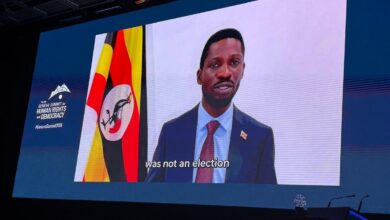
In a statement attributed to Kyagulanyi Robert aka Bobiwine, the verdict is characterised as a victory against state intimidation, but the incitement conviction is criticised as an example of how the judicial system can be used to constrain legitimate political opposition.
The statement argues that the state’s failure to prove treason should have resulted in Lissu’s freedom, rather than a prison sentence under a lesser charge.
These are political assessments of the judgment, rather than findings established by the court. Nevertheless, they reflect the deep mistrust that has developed between Tanzania’s opposition and the authorities.
The case also places renewed attention on the importance of judicial independence, due process and the right of citizens to challenge government policies through peaceful political engagement.
Tanzania’s Democratic Crisis And The Wider East African Question
Lissu’s trial cannot be separated from the wider political developments surrounding Tanzania’s 2025 General Election.
The detention of opposition leaders, restrictions on political participation and allegations of human-rights violations contributed to a tense electoral environment.
The election was followed by deadly unrest. A commission appointed by President Samia Suluhu Hassan reported at least 518 deaths, although the circumstances surrounding the violence remain deeply contested. The government has rejected allegations that security forces used excessive force.
The events have drawn international scrutiny, with human-rights organisations calling for accountability and the protection of political freedoms.
Tanzania, long regarded as one of East Africa’s relatively stable countries, now faces serious questions about its democratic institutions and the relationship between the state and its political opposition.
For Uganda, Kenya and other countries in the region, the developments carry an important lesson: democratic stability cannot be sustained by suppressing political dissent.
The strength of a political system is measured not merely by its ability to maintain order, but also by its willingness to accommodate criticism, protect minority voices and ensure that political competition is fair.
Kampala And Dar Es Salaam: A Shared Democratic Struggle
The statement attributed to Kyagulanyi Ssentamu Robert draws a connection between the political struggles of Uganda and Tanzania, arguing that the quest for democratic accountability transcends national borders.
“From Kampala to Dar es Salaam, our struggle against generational dictatorships and electoral autocracy remains unified,” the statement declares.
The message is rooted in a broader regional concern that political systems can become increasingly restrictive when electoral institutions, state security agencies and judicial processes are perceived as instruments for preserving power.
However, the path towards democratic reform requires more than solidarity statements. It calls for stronger institutions, independent courts, credible elections, respect for constitutional rights and the protection of political participation.
East Africa’s future depends on the ability of its governments and citizens to resolve political disagreements through democratic institutions rather than intimidation, violence or prolonged detention.
The continued imprisonment of a leading opposition figure such as Lissu therefore remains a matter of regional interest.
CHADEMA And The People Of Tanzania Stand At A Defining Moment
The ruling has left CHADEMA with a renewed legal and political challenge.

The party’s leadership has indicated that it intends to appeal the conviction and seek bail for Lissu. The outcome of those efforts could become another important test of Tanzania’s legal and political environment.
For Lissu’s supporters, the struggle is not simply about the fate of one politician. It is about whether Tanzanians can freely demand reforms, participate in elections and hold their leaders accountable without fear of criminal prosecution.
The four-year sentence has also placed the question of political reconciliation firmly before the Tanzanian leadership.
A credible path forward would require the protection of constitutional freedoms, transparent electoral reforms, meaningful dialogue between the government and opposition, and confidence that the courts operate independently of political pressure.
Aluta Continua: The Struggle For Democracy Continues
The message from Kyagulanyi Ssentamu Robert is ultimately one of solidarity and determination.
It stands with Tundu Lissu, CHADEMA and the people of Tanzania in rejecting what it describes as continued political persecution.
The treason acquittal is an important legal outcome. But the continued imprisonment of Lissu means that the larger democratic questions remain unresolved.
A prison sentence may restrict an individual’s movement, but it cannot, by itself, extinguish the demand for accountable leadership, fair elections and respect for fundamental freedoms.
As the appeal process unfolds, Tanzania’s political leadership has an opportunity to demonstrate that democratic reform is not a threat to national stability, but a foundation for it.
For democracy advocates across East Africa, the message remains clear: the struggle for freedom, accountability and genuine political participation continues.
Aluta Continua! The struggle continues.
#TunduLissu #CHADEMA #TanzaniaDemocracy #ElectoralReforms #UgandaToday #EastAfrica