
US Moves To Expel Rwanda From AGOA, Citing M23 Support And Human Rights Concerns
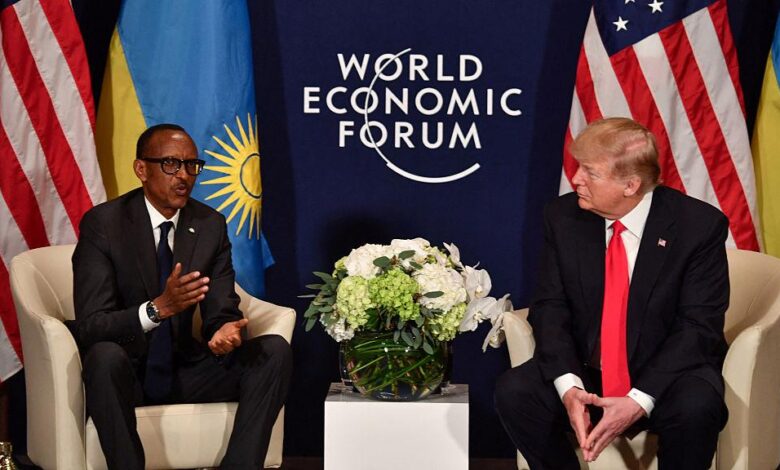
+256 702 23 93 37: The White House letter identifies Rwanda’s alleged military, logistical and material support for the March 23 Movement (M23) as a central reason behind the decision.

UgandaToday: US Moves To Expel Rwanda From AGOA, Citing M23 Support And Human Rights Concerns
Uganda Today | International News
Washington Sets January 2027 Deadline As Kagame Faces Fresh Diplomatic Pressure Over Eastern DR Congo Conflict
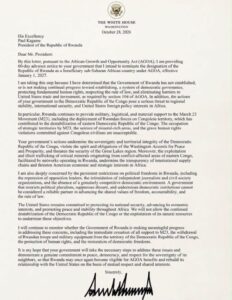
The United States has announced plans to terminate Rwanda’s eligibility for preferential trade benefits under the African Growth and Opportunity Act (AGOA), citing concerns over Kigali’s alleged support for the M23 rebel movement in eastern Democratic Republic of Congo (DRC), restrictions on democratic freedoms, and violations of the rule of law.

The decision, communicated in a letter dated October 28, 2026, addressed to Rwandan President Paul Kagame, gives Rwanda 60 days’ advance notice of its removal from the trade programme, effective January 1, 2027.
The move represents a significant escalation in Washington’s diplomatic and economic pressure on Kigali, particularly as the conflict in eastern Congo continues to threaten regional stability.
The letter states that Rwanda’s government has failed to make sufficient progress in establishing democratic governance, protecting fundamental human rights, respecting the rule of law, and eliminating barriers to American trade and investment.
The announcement also comes amid renewed efforts by the United States to enforce the Washington Accords for Peace and Prosperity, which seek to address the longstanding conflict between Rwanda and the Democratic Republic of Congo.
Washington Accuses Kigali Of Supporting M23 Rebels
The White House letter identifies Rwanda’s alleged military, logistical and material support for the March 23 Movement (M23) as a central reason behind the decision.

According to the letter, Rwanda has continued to support the rebel group, including through the deployment of Rwandan forces on Congolese territory.
Washington accuses the alleged intervention of contributing to the destabilisation of eastern DR Congo, where M23 has seized strategic territories and mineral-rich areas.
The letter further condemns what it describes as grave human rights violations against Congolese civilians in territories occupied by the rebel movement.
The US government maintains that Rwanda’s actions undermine the sovereignty and territorial integrity of the Democratic Republic of Congo, violate the spirit and obligations of the Washington Accords, and threaten the security of the Great Lakes region.

The allegations are not new. Rwanda has repeatedly faced accusations from the Congolese government, the United Nations and international partners of supporting M23. Kigali has denied backing the rebels and has maintained that its security concerns, particularly the threat posed by the FDLR militia operating in eastern Congo, must also be addressed.
The United States imposed sanctions on Rwanda’s Ministry of Defence and Zigama Credit and Savings Society on October 28, 2026, accusing them of supporting M23. Rwanda’s government has rejected accusations of backing armed groups and says it remains committed to implementing the Washington peace agreement.

Washington Raises Concerns Over Rwanda’s Democratic Record
Beyond the security situation in eastern Congo, the US letter raises concerns about Rwanda’s domestic political environment.
It cites restrictions on political freedoms, the repression of opposition leaders, intimidation of independent journalists and civil society organisations, and what Washington describes as the absence of a genuinely competitive democratic environment.

The letter argues that a government which restricts political pluralism, suppresses dissent and undermines democratic institutions cannot be considered a reliable partner in advancing shared values of freedom, accountability and the rule of law.
The US administration says it will continue monitoring Rwanda’s progress in addressing the concerns, including the protection of human rights and restoration of democratic freedoms.
The allegations place renewed attention on Rwanda’s governance model, which has been praised by some international partners for its economic development and public-sector performance but criticised by human rights organisations over political restrictions.
Mineral Wealth And Regional Security At The Centre Of Dispute
The letter also highlights concerns over the exploitation and illicit trafficking of critical minerals originating from conflict-affected areas of eastern Congo.
Washington alleges that networks operating in Rwanda facilitate the movement of minerals from territories affected by the conflict, undermining transparency in international supply chains and threatening American economic and strategic interests in Africa.
Eastern DR Congo is endowed with valuable mineral resources, including gold, coltan, tin and other materials used in electronics and advanced manufacturing.
The control of mineral-rich territories has long been a central feature of the conflict, with Congolese authorities accusing armed groups and external actors of profiting from the region’s natural wealth.
The US government says it will not allow the destabilisation of the DRC or the exploitation of its natural resources to undermine its national security and economic objectives.
Suggested captions: Artisanal mineral extraction in eastern DR Congo, a region rich in critical minerals; and Goma, a major urban centre affected by the conflict. Confirm the exact location and date of each image.
What Rwanda Stands To Lose From AGOA Removal
The African Growth and Opportunity Act, enacted by the United States in 2000, provides eligible sub-Saharan African countries with preferential, duty-free access to the American market for thousands of products.

The programme is designed to promote trade, investment, economic growth and employment across Africa.
Rwanda’s removal would mean that its qualifying exports would no longer enjoy the same preferential treatment under AGOA, potentially increasing the cost of accessing the US market.
Rwanda’s exports to the United States include coffee, minerals and other products. The consequences could be felt by exporters, producers, farmers and businesses involved in trade with the American market.
The full economic impact will depend on the value and composition of Rwanda’s exports to the US, the applicable tariffs on affected products, and whether alternative markets can absorb the goods.
The decision is particularly significant because Rwanda had already lost AGOA apparel benefits in 2018 following a dispute over its restrictions on imported second-hand clothing. Other qualifying exports continued to benefit from the programme.
The latest action could therefore further narrow Rwanda’s access to preferential US trade opportunities.

South Africa Also Faces Removal From AGOA
Rwanda is not the only African country facing the loss of AGOA benefits.
On November 2, 2026, the Office of the United States Trade Representative confirmed that President Donald Trump had notified Congress and the governments of Rwanda and South Africa of his intention to terminate their participation in the programme from January 1, 2027.
US Trade Representative Jamieson Greer said the decision followed an annual review of sub-Saharan African countries’ eligibility for AGOA.
Washington cited concerns about trade and investment barriers, national security and foreign policy interests. In Rwanda’s case, the administration also highlighted concerns over human rights, political pluralism, workers’ rights and the rule of law.
South Africa’s removal is linked to a separate set of concerns, including trade barriers, corruption and US foreign policy interests.
The decision has raised questions about the future of US-Africa trade relations, particularly as African governments seek to diversify export markets and strengthen economic partnerships with other global powers.
Rwanda Given A 60-Day Window To Address Concerns
The White House letter leaves open the possibility that Rwanda could regain eligibility for AGOA benefits if it makes meaningful progress in addressing the concerns raised by Washington.
The US administration has outlined several conditions, including:
-
Immediate cessation of all support to M23.
-
Withdrawal of Rwandan troops and military equipment from the territory of the Democratic Republic of Congo.
-
Protection of human rights.
-
Restoration of democratic freedoms.
-
Respect for the sovereignty and territorial integrity of neighbouring countries.
The letter expresses hope that Rwanda will take the necessary steps to demonstrate a genuine commitment to peace, democracy and respect for its neighbours.
It further states that the United States remains committed to advancing its national security and economic interests while promoting peace and stability throughout Africa.
The coming weeks are therefore likely to be critical for Rwanda’s diplomatic engagement with Washington, particularly as the January 1, 2027 deadline approaches.
Implications For The Great Lakes RegionThe US decision could have implications beyond Rwanda’s immediate trade relationship with Washington.
Uganda, Burundi, Tanzania and the Democratic Republic of Congo are all stakeholders in the stability of the Great Lakes region, where insecurity, cross-border tensions and competition over natural resources have persisted for decades.
For Uganda, the situation is particularly significant because of its economic and security interests in eastern DR Congo, its regional trade links, and its diplomatic relations with both Kigali and Kinshasa.
The loss of preferential US trade benefits could also place pressure on Rwanda to strengthen economic partnerships elsewhere, while raising questions about the effectiveness of regional peace initiatives.
The Washington Accords were intended to provide a framework for addressing security concerns, improving relations between Rwanda and the DRC, and supporting regional economic cooperation.
However, continued fighting in eastern Congo and the latest US sanctions indicate that significant challenges remain.
Whether the threat of losing AGOA benefits will persuade Kigali to change course remains to be seen.
For now, the announcement signals a tougher US approach towards Rwanda and places renewed focus on the relationship between regional security, democratic governance and access to international trade.
#Rwanda #PaulKagame #AGOA #USAfricaRelations #DRCConflict #UgandaToday