The Yellow Letter: When a Colour Meant Grief — From WWII Rooms to Uganda’s Political Battlefield
+256 702 239 337: The irony of Uganda’s yellow colour: From identity to anxiety Fast forward to modern Uganda. The colour yellow has become deeply associated with the ruling National Resistance Movement (NRM), a political movement that has dominated Uganda’s political landscape for decades.
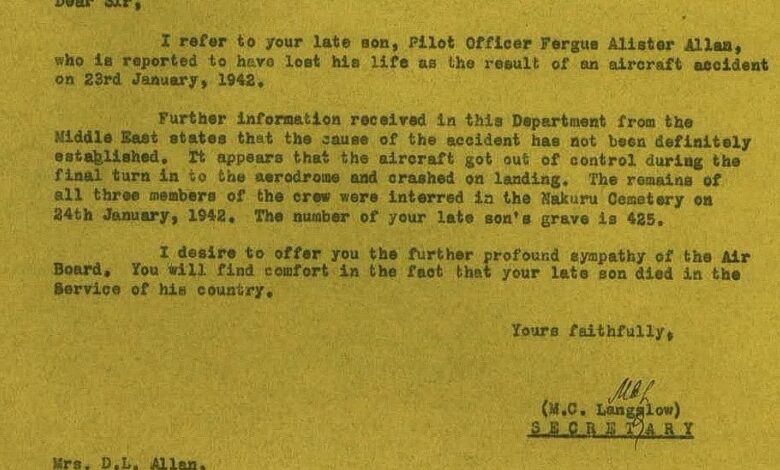
The 1942 letter informing an Australian family of Pilot Officer Fergus Alister Allan’s death — a historical reminder of wartime sacrifice."
The 1942 letter informing an Australian family of Pilot Officer Fergus Alister Allan’s death — a historical reminder of wartime sacrifice.”
UgandaToday: The Yellow Letter: When a Colour Meant Grief — From WWII Rooms to Uganda’s Political Battlefield
By UgandaToday Editorial Desk
The envelope that carried silence before the words were read
In the terrifying years of the Second World War, few things caused greater fear in a household than the arrival of an official-looking wartime letter.
Before a grieving family opened the envelope, many already knew the message waiting inside.
It was not a letter of celebration. It was not a message of reunion. It was the dreaded notification that a son, husband, father, or brother serving far away had fallen in battle.
During World War II, military authorities used formal notifications, telegrams and letters to inform families of deaths, missing soldiers, and other wartime casualties. For many families, the arrival of such correspondence became a moment frozen in time — the sound of footsteps at the gate, the sight of official stationery, and the unbearable realisation that life had changed forever.
The attached historical letter, addressed to a family in Australia, reflects that painful tradition. It informs the relatives of Pilot Officer Fergus Alister Allan that he lost his life following an aircraft accident in January 1942, expressing condolences while confirming that his remains were buried.
A simple piece of paper — but carrying the weight of a family’s heartbreak.
The psychology of the yellow letter
The power of the wartime letter was not only in its words. It was in the colour.
The sight of an official envelope arriving during wartime could send fear through an entire household. It represented uncertainty, loss, and the cruel reality that someone who left home with dreams of returning might never walk through the door again.
The letter became a symbol of the distance between the battlefield and the living room.
A government office wrote the message. A family carried the pain.
The irony of Uganda’s yellow colour: From identity to anxiety
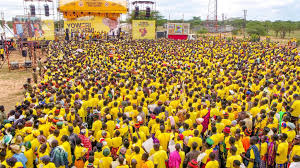
Fast forward to modern Uganda. The colour yellow has become deeply associated with the ruling National Resistance Movement (NRM), a political movement that has dominated Uganda’s political landscape for decades.
Uganda’s political yellow: A colour that inspires loyalty among supporters and controversy among critics.
To many supporters, yellow represents stability, continuity, and the movement’s identity.
But in a sarcastic twist of political symbolism, critics argue that for some Ugandans, the colour has acquired a different emotional association — not with celebration, but with fear, especially whenever state agencies are accused of involvement in arrests, abductions, intimidation, or alleged human rights violations.
The joke making rounds among political observers is that Uganda may have created its own modern version of the “yellow letter”:
not delivered by a wartime messenger on a bicycle, but arriving through midnight knocks, unidentified vehicles, or the sudden disappearance of a citizen bundled the unpopular drnes.
The historical yellow letter carried news that someone had been lost in a foreign battlefield.
The modern political “yellow letter” metaphor, used by critics, suggests anxiety about citizens losing their freedom, security, or sense of protection at home.
A colour cannot carry blame — but symbols carry memories
Colours themselves are innocent. Yellow exists in nature. It represents sunlight, harvests, happiness, and hope.
But throughout history, societies have attached meanings to symbols based on their experiences.
A flag, uniform, badge, or colour can become associated with whatever people experience under it — whether pride or pain.
The same colour that represents political loyalty to one Ugandan may represent fear or anger to another.
That is the complicated life of political symbolism.
From battlefield casualties to human rights debates
The lesson from the WWII yellow letter is not about colour alone.
It is about the relationship between power and citizens.
During wartime, governments had a duty to communicate loss to families. Today, governments carry a different responsibility: protecting citizens’ rights, ensuring due process, and maintaining public trust.
Whenever citizens fear official communication instead of welcoming it, institutions face a serious question:
Has authority become a source of reassurance — or anxiety?
The unanswered question
The WWII family who received the letter about Pilot Officer Fergus Allan eventually had an answer: their loved one was gone.
But in modern Uganda, families of people reported missing or detained have often demanded something more basic:
Information.
Answers.
Accountability.
Because unlike the old yellow letter, which brought painful certainty, uncertainty itself can become its own form of suffering.
And perhaps that is the greatest irony:
The yellow letter of the past announced a death.
The feared “yellow letter” of today, according to critics, is the absence of an explanation.
UgandaToday is published by CMK Media Solutions. UgandaToday is your trusted source for news and analysis.
Partner with Uganda Today where your story matters in shaping the social and economic dynamics of the country.
Let’s help you grow your brand and keep your audience informed.
Website:https://www.ugandatoday.co.ugWhatsApp: +256 702 239 337
X (formerly Twitter):@uganda43443 |
Email:ugandatodayedition@gmail.com
P.O.BOX 184351 Kampala.
Uganda