
Fact Check: The ‘Super Microbes’ Defying Radiation – What Science Really Says About Chernobyl’s Remarkable Survivors
+256 702 23 93 37: More Than Just Radiation Resistance Its resilience extends well beyond radioactive environments. Laboratory studies have shown that D. radiodurans can also survive: Extreme dehydration Intense ultraviolet radiation Freezing temperatures High vacuum conditions similar to outer space Oxidative chemical stress These characteristics have made it one of the leading model organisms for studying life's ability to survive under extreme environmental conditions. (LinkedIn)

UgandaToday: Fact Check: The ‘Super Microbes’ Defying Radiation – What Science Really Says About Chernobyl’s Remarkable Survivors
By UgandaToday Science Desk
Claims circulating on social media and professional networking platforms suggest that scientists have discovered bacteria capable of surviving inside nuclear reactors and fungi that have “mutated to feed on nuclear radiation.”
While the claims are based on genuine scientific discoveries, they often oversimplify or exaggerate what researchers have actually found. A review of published research shows that two extraordinary microorganisms—Deinococcus radiodurans and the black fungus Cladosporium sphaerospermum—are indeed among the most radiation-resistant organisms known, but scientists caution against interpreting the findings too literally.
The World’s Toughest Bacterium
One of the most remarkable organisms ever studied is Deinococcus radiodurans, often dubbed the world’s toughest bacterium.
Originally discovered in the 1950s during experiments aimed at sterilising canned food with gamma radiation, the bacterium surprised scientists by surviving radiation levels that should have killed virtually every living organism.
Researchers have since demonstrated that D. radiodurans can survive radiation doses thousands of times greater than those that would prove fatal to humans. While severe radiation shatters its DNA into hundreds of fragments, the bacterium possesses an extraordinary ability to accurately rebuild its entire genome within hours.
Scientists attribute this resilience to multiple copies of its genome, highly efficient DNA repair systems and protective antioxidant molecules that shield vital proteins from radiation damage. (LinkedIn)
More Than Just Radiation Resistance
Its resilience extends well beyond radioactive environments.
Laboratory studies have shown that D. radiodurans can also survive:
- Extreme dehydration
- Intense ultraviolet radiation
- Freezing temperatures
- High vacuum conditions similar to outer space
- Oxidative chemical stress
These characteristics have made it one of the leading model organisms for studying life’s ability to survive under extreme environmental conditions. (LinkedIn)
The Truth About the ‘Radiation-Eating’ Fungus
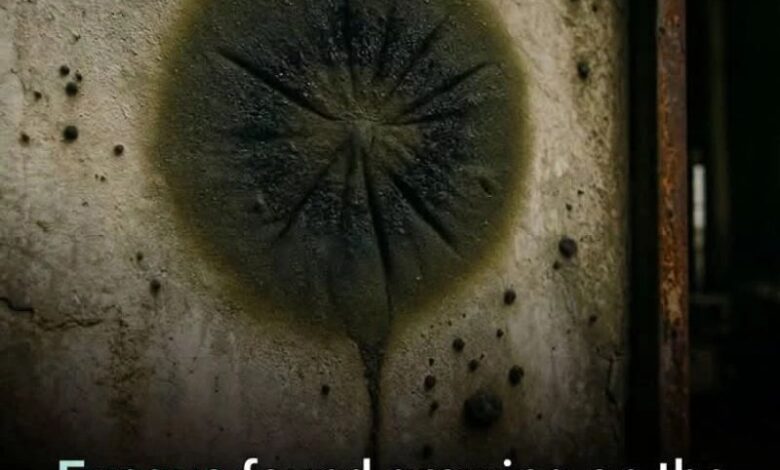
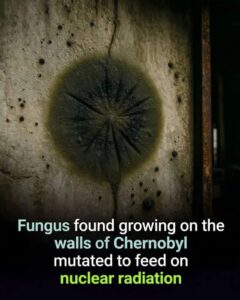
The accompanying viral image refers to a different organism altogether.
Following the 1986 Chernobyl nuclear disaster, scientists discovered several species of dark, melanin-rich fungi growing inside the damaged reactor buildings, including Cladosporium sphaerospermum.
These fungi attracted worldwide attention because they appeared to grow toward radiation sources and, under laboratory conditions, some experiments suggested that exposure to ionising radiation enhanced their metabolic activity.
Researchers coined the term “radiosynthesis” to describe the proposed process, drawing an analogy with photosynthesis.
However, scientists emphasise that this does not mean the fungus literally “eats” radiation in the same way humans eat food or plants capture sunlight. Instead, evidence suggests that melanin—the same pigment responsible for colouring human skin—may alter its chemical properties after exposure to radiation, potentially helping the fungi thrive in radioactive environments.
The exact biological mechanism remains an active area of research and has not been fully established. (LinkedIn)
Did the Fungus ‘Mutate’ Because of Chernobyl?
Another common misconception is that the fungus suddenly mutated after the nuclear accident.
Scientists say there is no convincing evidence that these fungi evolved specifically because of the Chernobyl disaster.
Rather, many melanised fungi already existed in nature and were simply better adapted to survive under intense radiation, allowing them to flourish where competing organisms could not.
Cleaning Up Nuclear Waste
Researchers believe these organisms could play a valuable role in environmental restoration.
By genetically engineering D. radiodurans, scientists are investigating whether it could break down hazardous chemicals and heavy metals while simultaneously surviving radioactive waste sites that are too dangerous for human workers.
If successful, such microorganisms could become important biological tools for cleaning contaminated industrial and nuclear environments. (LinkedIn)
From Chernobyl to Outer Space
The remarkable organisms have also captured NASA’s attention.
Because astronauts on future missions to the Moon and Mars will be exposed to significantly higher levels of cosmic radiation than on Earth, scientists are investigating whether radiation-resistant microbes—or materials inspired by them—could help protect spacecraft and human habitats.
Experiments aboard the International Space Station have shown that Cladosporium sphaerospermum grows successfully in space, encouraging further research into biological radiation shielding. (LinkedIn)
Potential Medical Breakthroughs
Understanding how these microorganisms repair catastrophic DNA damage could eventually benefit human medicine.
Researchers are studying whether the molecular mechanisms behind D. radiodurans’ exceptional DNA repair capabilities could inspire:
- Improved cancer radiotherapy
- Better protection against radiation exposure
- New approaches to DNA repair research
- Enhanced treatments for radiation-related injuries
Although such applications remain experimental, scientists view the bacterium as one of biology’s most valuable research models.
Verdict: Mostly True, But Simplified
The viral claims contain substantial elements of truth but omit important scientific nuance.
Verified facts include:
✔ Deinococcus radiodurans is among the most radiation-resistant bacteria ever discovered.
✔ Melanin-rich fungi have been found growing inside the Chernobyl reactor complex.
✔ Scientists are investigating their applications in nuclear waste remediation, biotechnology and space exploration.
What is overstated:
❌ There is no definitive proof that the fungi literally “feed” on radiation in the conventional sense.
❌ Scientists have not concluded that these fungi evolved or mutated specifically because of the Chernobyl accident.
Instead, current evidence suggests that radiation may enhance the metabolism of certain melanised fungi, while their extraordinary survival abilities make them promising candidates for future scientific and technological innovations.
Nature, once again, continues to demonstrate an astonishing ability to adapt—even in environments once considered completely inhospitable.