
When God’s Rules Change: Chris-Vincent Agyapong Puller Questions The Certainty Of Religion
+256 702 23 93 37: The questions became too many. The nature of God, the doctrines attributed to him, the conflicting interpretations of scripture and the authority claimed by religious institutions all raised the same uncomfortable question in my mind: if something is eternally true, why does humanity's understanding of it keep changing?

UgandaToday: When God’s Rules Change: Chris-Vincent Agyapong Puller Questions The Certainty Of Religion
An Opinion On Faith, Religious Authority And The Jehovah’s Witnesses’ New Position On Blood
By Chris-Vincent Agyapong Puller
For many years, I have lived without religion.
I did not leave because somebody persuaded me to abandon faith. I left because, after looking at religion as honestly as I could, it stopped making sense to me.
The questions became too many. The nature of God, the doctrines attributed to him, the conflicting interpretations of scripture and the authority claimed by religious institutions all raised the same uncomfortable question in my mind: if something is eternally true, why does humanity’s understanding of it keep changing?

That question has never left me.
Thousands Of Gods, Thousands Of Certainties
Human history is filled with religions and gods.
Across different civilisations, people have worshipped deities ranging from the Egyptian Amun-Ra to the Greek Zeus and countless other gods whose names have survived largely through history and mythology.
What interests me is not merely the number of gods.
It is the certainty with which their followers believed in them.
Every religious tradition has had people who were convinced that their understanding of the divine was the correct one. Priests, prophets, theologians and religious authorities emerged to explain what God supposedly wanted, what He prohibited and what would happen to those who disobeyed.

And once those interpretations became doctrine, questioning them could become extraordinarily difficult.
The argument was simple: if the rule comes from God, who are you to question it?
That is where, for me, the problem begins.
When Religious Interpretation Becomes Divine Law
Religious institutions do not merely provide spiritual guidance. Throughout history, they have also developed elaborate systems of doctrine, morality and behaviour.
The difficulty arises when human interpretation is presented as unquestionable divine instruction.
If a religious authority says, “God commands this”, the ordinary believer is not being invited to debate an opinion. The believer is being asked to obey a command supposedly originating from the Creator.
And if the interpretation later changes, another difficult question follows:
Did God change His mind, or did human beings change their interpretation of God?
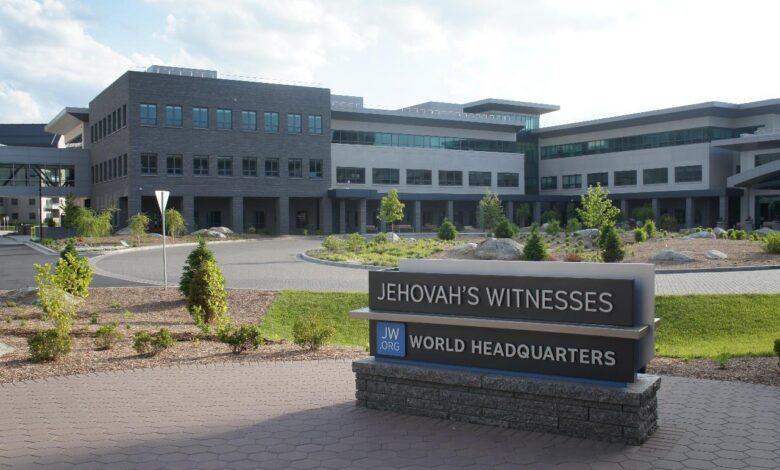
The recent development within the Jehovah’s Witnesses’ position on blood transfusion provides a powerful contemporary example for reflection.
The Jehovah’s Witnesses And Blood
On September 18, 2026, the Governing Body of Jehovah’s Witnesses announced an adjustment to its position on blood components.
According to the organisation’s own announcement, individual Witnesses may now decide according to personal conscience whether to accept red blood cells, white blood cells, plasma or platelets from another person’s blood. Members may also personally decide whether to donate blood specifically so that such components or fractions can be used by another person.

However, the organisation’s prohibition on whole-blood transfusions remains unchanged. Jehovah’s Witnesses continue to base that position on their interpretation of the Biblical instruction to “abstain from blood.”
This distinction is important.
It is therefore inaccurate to describe the latest announcement simply as the abolition of the Jehovah’s Witnesses’ blood doctrine. It is a significant adjustment concerning the four primary blood components, while the prohibition on whole blood remains.
But the change raises a much larger philosophical question.
If The Bible Was Silent, Who Was Making The Rule?
The organisation’s explanation for the change is particularly interesting.
The new position recognises that the Bible does not specifically address the modern medical question of whether an individual should accept or donate particular blood components. Consequently, decisions regarding those components are now left to individual conscience.
For Puller, this is precisely where the problem lies.
If the scripture did not explicitly settle the question, how did an interpretation become sufficiently authoritative to determine what believers could accept in a medical emergency?
And if that interpretation can subsequently be revised, what was the source of the earlier certainty?
The questions are uncomfortable because blood transfusion is not an abstract theological argument. It concerns medical treatment, personal autonomy and, potentially, life and death.
The Human Cost Of Religious Certainty
Jehovah’s Witnesses have maintained their distinctive position on blood for decades, and the doctrine has been the subject of intense ethical, medical and legal debate.
There have been cases around the world involving adults and children in which religious objections to blood transfusion collided with medical recommendations and, in some jurisdictions, court intervention.
The organisation itself has long taught that whole-blood transfusion is religiously unacceptable while encouraging alternative medical approaches where possible.
The latest adjustment therefore represents an important development in the relationship between religious conviction and medical decision-making.
But it would be difficult—and irresponsible—to attach a precise worldwide death toll to the historical policy without reliable evidence. Claims about a specific number of deaths attributable to the doctrine should therefore be treated cautiously.
The broader ethical question, however, remains legitimate:
What happens when an institution’s interpretation of God’s will affects a person’s decision to accept potentially life-saving medical treatment?
Religion Has Changed Before
Puller argues that the Jehovah’s Witnesses’ experience is not unique.
He points to other religious traditions in which theological positions have evolved over time.
One example is the Catholic Church’s historical treatment of the concept of limbo.
The Vatican’s International Theological Commission explained in its 2007 study that the theory of limbo had been developed by medieval theologians and had been part of traditional theological teaching, but had never been defined as a dogma of the Magisterium. The study noted that the 1992 Catechism did not mention limbo and instead entrusted unbaptised infants to God’s mercy while expressing hope for their salvation.
That history is more nuanced than simply saying that “the Catholic Church invented limbo and then abolished it.”
Nevertheless, it demonstrates something important: religious ideas can develop, disappear from prominence and be replaced by different theological interpretations.
The Larger Question: Can Divine Truth Evolve?
This is where Puller’s argument becomes philosophical rather than merely religious.
If God is eternal and unchanging, he asks, why should His fundamental instructions change?
A believer might answer that God’s truth does not change; rather, human beings gradually understand it more accurately.
That is a perfectly coherent theological response.
Religious history, however, shows that doctrines and interpretations have evolved considerably across centuries.
The disagreement, therefore, is not necessarily about whether religious people are sincere.
Many undoubtedly are.
The deeper question is whether sincerity and institutional authority are enough to establish that a particular interpretation genuinely comes from God.
The Problem Of Religious Middlemen
Puller’s strongest criticism is directed at what he describes as the “middlemen” between humanity and God.
Religious leaders may claim special authority to interpret scripture, define doctrine and determine acceptable behaviour.
But those leaders are human beings.
They read ancient texts. They interpret languages. They consider historical circumstances. They debate one another. They reach conclusions—and sometimes later revise them.
That does not automatically prove that religion is false.
But it does raise an important question about epistemic authority:
How does an ordinary believer distinguish between an eternal divine command and a human interpretation of that command?
That question applies not only to Jehovah’s Witnesses, but to virtually every organised religion.
Puller’s Personal Conclusion
For Puller, the answer has been to walk away from religion altogether.
He says doing so has made his life simpler and lighter because he no longer feels compelled to profess beliefs he does not hold.
He also describes a sense of personal freedom in making decisions about his own life without having a religious authority interpret God’s will on his behalf.
But Puller does not present his conclusion as an instruction to everybody else.
His message is essentially this: examine your beliefs honestly.
Do not believe something merely because an institution tells you that God requires it.
Do not confuse certainty with evidence.
And do not be afraid to ask difficult questions simply because the answers have traditionally been regarded as sacred.
Faith, Freedom And The Right To Question
For millions of believers, religion provides meaning, community, moral guidance and hope.
For others, religion raises questions that ultimately lead them away from faith.
Both experiences belong to the human story.
The important issue raised by Puller’s essay is therefore not whether every religion is false, nor whether every believer has been deceived.
It is whether human beings should retain the freedom to examine the claims made in the name of God.
The Jehovah’s Witnesses’ September 18 announcement offers a particularly striking case study because it concerns a subject where religious belief and modern medicine intersect.
The organisation has changed its position on four major blood components while maintaining its prohibition on whole blood.
For believers, that may represent a welcome expansion of personal conscience.
For critics such as Puller, it raises a more fundamental question:
If a rule presented as divine can be revised by human authorities, where exactly does divine command end and human interpretation begin?
That is a question that religion cannot avoid simply because it is uncomfortable.
And perhaps, in the end, the freedom to ask uncomfortable questions is one of the most important freedoms a human being possesses.
Editor’s Note: This article presents the views and arguments expressed by Chris-Vincent Agyapong Puller. Uganda Today does not present his conclusions about religion as established fact, nor does publication of the opinion constitute endorsement of those views. The Jehovah’s Witnesses’ current position on blood components has been checked against the organisation’s September 18, 2026 announcement.