
BoU Warning: How Government Borrowing Could Affect Loans And Businesses
+256 702 23 93 37: Central Bank Raises Concern Over Higher Borrowing And Possible Pressure On Interest Rates

UgandaToday: BoU Warning: How Government Borrowing Could Affect Loans And Businesses
Central Bank Raises Concern Over Higher Borrowing And Possible Pressure On Interest Rates
A warning from the Bank of Uganda should attract the attention of anyone in Uganda who has a bank loan, plans to borrow money, operates a business or depends on affordable credit.
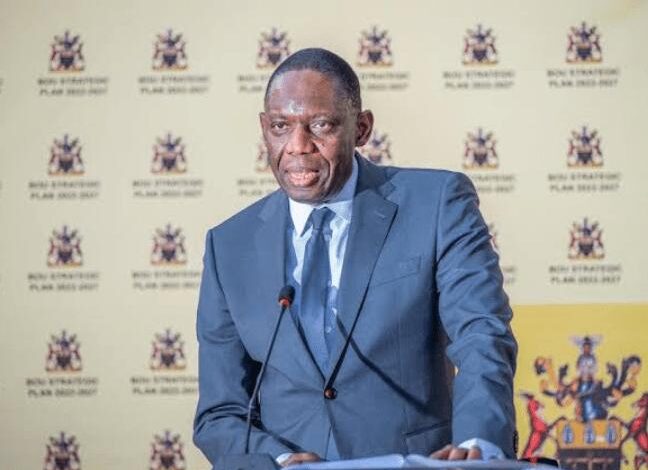
Bank of Uganda Governor Michael Atingi-Ego has cautioned that government borrowing above planned levels could push interest rates upwards and make it more difficult for private-sector borrowers to access credit. (UBC Uganda)
The Governor made the remarks while appearing before Parliament’s Budget Committee on September 21, 2026, during discussions on Uganda’s fiscal framework.
Government Plans Shs12.7 Trillion Domestic Borrowing
According to the central bank, Government plans to raise approximately Shs12.7 trillion in net domestic financing during the 2026/27 financial year.
That figure is lower than the Shs15.1 trillion borrowed domestically during the previous financial year.
The Bank of Uganda says the banking system currently has sufficient liquidity and that the financial market has the capacity to absorb the planned borrowing. However, Atingi-Ego warned that borrowing beyond planned levels could put upward pressure on interest rates and potentially crowd out private borrowers. (UBC Uganda)


Why Should An Ordinary Ugandan Care?
Government borrowing may sound like a technical matter for economists and Parliament.
It is not.
Interest rates affect the cost of borrowing for businesses, farmers, property developers, students, households and individuals.
When the cost of funds rises, commercial banks may face higher funding costs. Depending on the structure of particular loans and wider market conditions, borrowers can face higher repayment costs.
For a small business owner who borrowed Shs20 million to expand a shop, buy machinery or increase stock, even a relatively small change in the cost of credit can affect monthly cash flow.
The Private Sector Is Already Borrowing More
The Bank of Uganda reported that private-sector credit grew by 16.1 per cent year-on-year to June 2026, while average monthly growth during the financial year was approximately 11.5 per cent.
The central bank projects average private-sector credit growth of about 13 per cent during 2026/27. (UBC Uganda)
That makes the relationship between government borrowing and private-sector credit particularly important.
Uganda needs public financing for infrastructure and other national programmes, but businesses also need access to affordable capital if they are to expand, employ workers and invest.
What Happens If Government Borrowing Goes Too Far?
The concern raised by the central bank is commonly described as crowding out.
In simple terms, if Government becomes a very large borrower in the domestic financial market, it can compete with private businesses and individuals for available funds.
If demand for funds increases significantly, the price of borrowing can also come under pressure.
This does not mean that every increase in Government borrowing automatically produces higher loan rates. The Bank of Uganda itself says current financial-market conditions can absorb the planned borrowing.
The warning concerns borrowing beyond the projected levels and the possible consequences for interest rates and private-sector financing. (UBC Uganda)
Petroleum Revenues Add Another Dimension
Uganda’s fiscal outlook is also increasingly linked to expected petroleum revenues.
The Governor told Parliament that the Petroleum Revenue Investment Reserve remains a Government asset, although it is operationally managed by the Bank of Uganda. (UBC Uganda)
The management of future oil revenues will therefore remain an important issue for Uganda’s public finances.
The challenge will be ensuring that expected petroleum revenues complement sustainable fiscal management rather than creating pressure for excessive expenditure or borrowing.
What Borrowers Should Watch
For Ugandans with existing or planned loans, the broader lesson is that interest rates are influenced by more than individual bank decisions.
Inflation, monetary policy, Government borrowing, liquidity, exchange-rate conditions and international financial developments can all affect the lending environment.
Businesses planning to borrow should therefore pay close attention to the total cost of credit rather than looking only at the advertised interest rate.