US Visa Denials Shrink Uganda’s UN General Assembly Delegation To Five
+256 702 23 93 37: Diplomatic sources cited by local media said the original list of prospective travellers was reduced from 11 names to seven and ultimately to five. The sources also said some officials in Uganda's Foreign Affairs establishment were among those unable to secure visas.

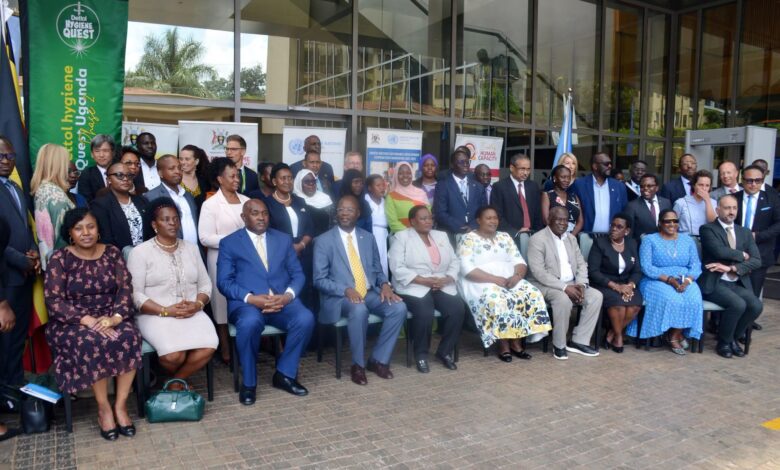
UgandaToday: US Visa Denials Shrink Uganda’s UN General Assembly Delegation To Five
Electoral Commission Chairperson Byabakama Not Confirmed Among Those Denied
Uganda’s representation at the 81st United Nations General Assembly in New York has been dramatically reduced after the United States Embassy in Kampala declined to issue visas to a number of senior government officials who had been expected to travel to the United States.
According to reporting by local media on September 22, 2026, only five Ugandans from the planned delegation were ultimately granted entry visas: Vice President Jessica Alupo, Health Minister Dr Chris Baryomunsi, Health Ministry Permanent Secretary Dr Diana Atwine, Foreign Affairs Minister Adonia Ayebare and the Vice President’s bodyguard.
The development has attracted considerable attention because Uganda has traditionally sent substantially larger delegations to the annual UN gathering.


The United States Embassy in Kampala, whose visa section was responsible for processing applications for members of Uganda’s intended UN General Assembly delegation. Photo: U.S. Department of State.
US Embassy Declines To Discuss Individual Cases
The United States Embassy in Kampala has not publicly identified the Ugandan officials whose applications were unsuccessful.
Responding to inquiries about the matter, the Embassy said that visa records are confidential under US law and that it could not discuss individual visa cases.
This means that claims circulating about particular officials having been denied visas need to be treated carefully unless those officials, their institutions or credible documentary evidence confirm the applications and their outcome.
Diplomatic sources cited by local media said the original list of prospective travellers was reduced from 11 names to seven and ultimately to five. The sources also said some officials in Uganda’s Foreign Affairs establishment were among those unable to secure visas.
Was Electoral Commission Chairperson Simon Byabakama Denied A US Visa?
One of the questions attracting particular attention is whether Justice Simon Mugenyi Byabakama, chairperson of Uganda’s Electoral Commission, was among the officials denied American visas.
At the time of publication, Uganda Today has found no credible public confirmation from the US Embassy, the Electoral Commission, Justice Byabakama or another authoritative source that Byabakama applied for, or was denied, a US visa for this year’s UN General Assembly.
Social-media claims alleging that Byabakama was denied a US visa are circulating, but the available evidence does not establish the claim as fact. A search of credible current reporting did not produce confirmation of such a visa refusal.
Byabakama remains chairperson of the Electoral Commission. The Commission’s 2024 bulletin records that he was reappointed for a second seven-year term beginning February 7, 2024. (Electoral Commission)
Uganda Today therefore states that the Byabakama allegation is described as unconfirmed rather than reporting it as an established visa denial.

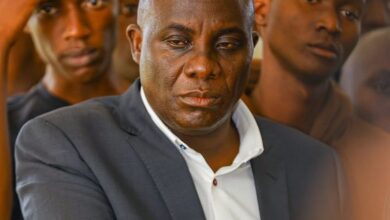
Suggested Photo Caption: Electoral Commission Chairperson Justice Simon Mugenyi Byabakama. There is presently no authoritative confirmation that he was among officials denied US visas for the 81st UN General Assembly.
The Ebola Connection
The visa controversy comes against the background of an unusual public-health situation involving Uganda and the United States.
The US Embassy suspended routine visa operations in Kampala on May 18, 2026, citing the Ebola outbreak affecting Uganda, the Democratic Republic of Congo and South Sudan. The suspension covered both immigrant and non-immigrant visa services. (Travel.state.gov)
Uganda subsequently brought its Ebola outbreak under control. The World Health Organisation and Africa CDC announced on August 27 that Uganda had completed the required 42-day period without a new confirmed case and that the outbreak had ended. Uganda had recorded 20 confirmed cases during the outbreak. (WHO | Regional Office for Africa)
However, the United States continued to maintain public-health measures concerning travellers who had recently been in Uganda.
A September 11 US Centers for Disease Control and Prevention order continued restrictions related to Ebola exposure. Under the measures, US citizens and nationals who had recently been in Uganda or South Sudan could have their flights routed through designated US airports for public-health screening. (CDC)
The local media reported that diplomatic sources attributed the visa difficulties partly to continuing US concern over Ebola, despite Uganda having formally ended its outbreak. The newspaper also reported that large gatherings surrounding the burial of Tooro’s late King Oyo on September 12 had heightened concerns about possible exposure. These explanations are attributed to diplomatic sources rather than officially confirmed by Washington.
Uganda’s UN Delegation: From Dozens To Five
The contrast is striking.
Local media reported that Uganda has typically sent between 30 and 50 officials drawn from ministries, departments and agencies to the annual General Assembly. This year, only five people travelled from Uganda under the arrangement described in the report.
Vice President Jessica Alupo is heading the delegation and is expected to represent President Yoweri Museveni during the General Debate.
The United Nations records that Alupo addressed the 80th General Assembly in September 2025 on Museveni’s behalf. (UN Web TV)


Suggested Photo Caption: Vice President Jessica Alupo addressing the United Nations General Assembly. She is leading Uganda’s five-member delegation to the 81st UNGA in 2026.
The 2023 Parallel Delegation Saga
The current controversy also recalls another unusual episode in Uganda’s recent diplomatic history.
In September 2023, during the 78th UN General Assembly, Uganda dispatched what Daily Monitor described as parallel delegations to New York.
President Museveni had designated Vice President Jessica Alupo to represent him and lead Uganda’s official delegation. The Foreign Affairs Ministry subsequently prepared a delegation of 51 people under her leadership. (Monitor)
But another delegation headed by Prime Minister Robinah Nabbanja subsequently travelled to New York.
According to Daily Monitor, the additional delegation was initially described as numbering about 20 people, although the Office of the Prime Minister later disputed that figure and said Nabbanja had travelled with seven people comprising technical officials and security personnel. (Monitor)
The result was an unusual situation in which the country’s Vice President and Prime Minister were both in New York during the same UN General Assembly, with the Vice President formally designated as head of Uganda’s national delegation.
Accreditation Complications
The episode reportedly created logistical and diplomatic complications for Uganda’s Mission to the United Nations.
Daily Monitor reported that Nabbanja was accredited as an advisor, rather than as head of delegation or delegate, because she arrived after the original arrangements had been made.
Uganda’s Foreign Affairs Permanent Secretary at the time, Vincent Bagiire, defended the Prime Minister’s presence by arguing that the Office of the Prime Minister coordinates implementation of the Sustainable Development Goals and that the General Assembly’s 2023 agenda had a strong SDG focus. (Monitor)
The newspaper nevertheless reported that the duplication generated questions about expenditure, coordination and the usefulness of sending two senior political teams to the same international meeting.


Vice President Jessica Alupo and Prime Minister Robinah Nabbanja were both in New York during Uganda’s controversial parallel-delegation episode at the 78th UN General Assembly in 2023.
From A 71-Person Representation To A Five-Person Team
The 2023 episode was particularly notable because local media reported that the two teams together brought the number of Ugandan officials listed for the UNGA to 71.
The newspaper reported that the Vice President’s official delegation was 51, while the additional delegation associated with the Prime Minister increased the overall number.
That episode now provides an interesting historical contrast with 2026.
In 2023, Uganda faced questions over too many officials travelling to New York and the duplication of representation.
In 2026, the issue has effectively been reversed: the principal question is why so few officials have been able to travel, following the reported refusal of visas to numerous members of the intended delegation.
A Diplomatic And Administrative Question
The current situation should, however, not automatically be interpreted as a diplomatic sanction against Uganda.
The US Embassy has not stated that the visa refusals constitute a political measure. Its official position is that individual visa records are confidential.
Similarly, the explanation linking the refusals to Ebola comes from diplomatic sources cited by Daily Monitor, rather than from an official US statement specifically saying that the five-member delegation was selected because of Ebola.
What is officially documented is that the United States suspended routine visa services in Kampala because of the Ebola outbreak in May and that US public-health restrictions concerning recent travel from Uganda remained in force in September. (Travel.state.gov)
What Is Established — And What Is Not?
| Issue | What the available evidence shows |
|---|---|
| Ugandan officials denied US visas for UNGA 2026 | Yes, according to Daily Monitor and other reports |
| Uganda’s delegation reduced to five travellers | Yes, reported by Daily Monitor |
| Vice President Alupo is leading the delegation | Yes |
| US Embassy confirmed individual visa refusals | No — it cited confidentiality |
| Ebola was officially given by the US Embassy as the reason for the individual refusals | No |
| Diplomatic sources linked the refusals to Ebola | Yes, according to Daily Monitor |
| Justice Simon Byabakama was denied a US visa | Not confirmed by credible public evidence located by Uganda Today |
| Uganda previously sent parallel teams to UNGA | Yes — in 2023 |
| The 2023 teams were led by Alupo and Nabbanja | Yes |
A Remarkable Turn In Uganda’s UN Diplomacy
Uganda’s experience at the United Nations therefore presents two markedly different episodes.
In 2023, the country became the subject of scrutiny over the appearance of parallel delegations, with the Vice President formally designated to represent Uganda while the Prime Minister travelled separately.
Three years later, Uganda’s UN presence has been dramatically constrained, with only five people reported to have secured entry visas from an intended delegation that would ordinarily have been much larger.
For now, the precise individual reasons behind the visa refusals remain undisclosed.
And importantly, the claim that Electoral Commission Chairperson Justice Simon Byabakama was denied an American visa should not be presented as fact unless documentary or official confirmation emerges.
#UgandaToday #Uganda #UNGA81 #USUgandaRelations #USVisa #UgandaDiplomacy
Editorial Note: The visa-denial claims in this article are based principally on reporting published on September 22, 2026. Where individual visa cases are concerned, the US Embassy’s position is that visa records are confidential; consequently, Uganda Today has distinguished confirmed facts from unverified claims.