Who Gets The Government Jobs?
+256 702 23 93 37: Public Service Or Family Influence? Uganda Must Ask Difficult Questions About Government Appointments

UgandaToday: Who Gets The Government Jobs?
By Uganda Today Editorial

Uganda is approaching another important moment in its governance debate, one that deserves serious national attention: the relationship between family connections, political influence and access to influential positions in public institutions.
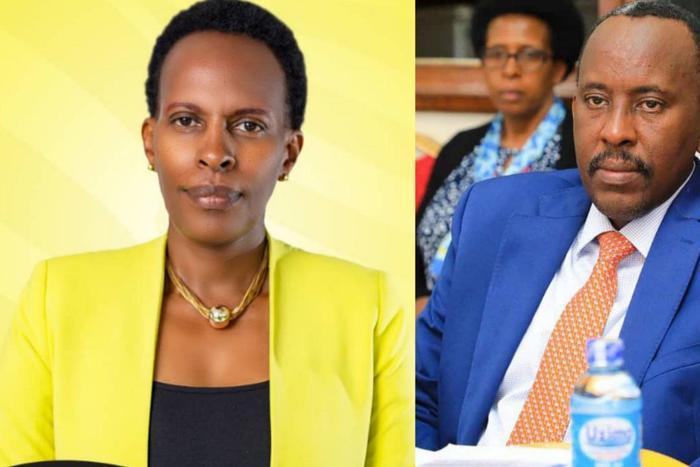
The recent designation of Sheeba Kyobutungi Rujoki Kusasira for a Permanent Secretary position in the Office of the President has brought the subject into sharper focus.
Her proposed elevation has attracted attention because several members of her immediate family are reported to occupy influential positions across different public institutions.
But the bigger question is not simply about one family. It is whether Uganda’s public appointment system consistently protects merit, equal opportunity, institutional independence and public confidence.
The Rujoki Family: A Case That Deserves Public Scrutiny

The Rujoki family presents an interesting example of how members of one family can become prominent across several public institutions.
John Musinguzi Rujoki serves as Commissioner General of the Uganda Revenue Authority, one of the country’s most important revenue-collecting institutions.
His sister, Ruth Rujoki Mushabe, is the Woman Member of Parliament representing Kiruhura District.
Another sibling, Sheeba Kyobutungi Rujoki Kusasira, was named by President Yoweri Museveni among the senior officials designated for Permanent Secretary positions in the November 2026 administrative changes, specifically for the Office of the President, responsible for Science, Technology and Innovation.
James Musherure Rujoki is identified in professional and institutional records as serving at the Petroleum Authority of Uganda, while Sheeba’s husband, Enock Kusasira, is listed by the Uganda Electricity Generation Company Limited as Head of Communication and Corporate Affairs.
These are significant public responsibilities spread across revenue administration, Parliament, petroleum regulation, electricity generation and government administration.
It is important to acknowledge that the individuals concerned may have qualifications, experience and professional achievements that justify their respective positions. Family relationships alone cannot establish wrongdoing.
Nevertheless, the concentration of such positions among members of one family raises reasonable questions about public representation, recruitment procedures and the transparency of appointments.
Ugandans deserve to understand how these appointments were made and what safeguards ensure that every qualified citizen has an equal opportunity.
The Museveni Family And The Question Of Public Influence

The debate becomes even more interesting when examined against the background of the country’s highest political office.
President Yoweri Kaguta Museveni has several close family members serving in prominent political, military and public responsibilities.
His wife, Janet Kataaha Museveni, serves as Minister of Education and Sports.
His son, General Muhoozi Kainerugaba, is the Chief of Defence Forces, having assumed the position in March 2024.
His younger brother, General Caleb Akandwanaho, popularly known as Salim Saleh, is the Chief Coordinator of Operation Wealth Creation, a government initiative intended to support household incomes and agricultural transformation.
Another member of the President’s family is his sister, Dr Violet Kajubiri Froelich, who was nominated for the position of Deputy Chairperson of the Education Service Commission in 2018.
There is also the family connection involving Odrek Rwabwogo, the President’s son-in-law, who previously chaired the Presidential Advisory Committee on Exports and Industrial Development (PACEID).
PACEID was subsequently dissolved in August 2026, with its functions and responsibilities transferred to Operation Wealth Creation.
The presence of these family members in influential responsibilities has generated public debate over the years.
President Museveni has previously defended the involvement of his relatives in public service, maintaining that their positions were based on individual merit rather than nepotism.
That defence is important and should not be dismissed without examination.
However, the fundamental question remains: how can the public independently establish that merit, rather than family proximity, is the determining factor in appointments?
Is Having Relatives In Government Automatically Nepotism?
There is an important distinction between family representation and nepotism.
A husband and wife, siblings or children of a political leader are not automatically disqualified from participating in public service simply because of their relationships.
Uganda’s Constitution does not impose a blanket prohibition on relatives occupying different public offices.
Indeed, Article 172 provides for the appointment of senior public officers through the prescribed constitutional arrangements, while Article 174 specifically provides for the appointment of Permanent Secretaries by the President acting on the advice of the Public Service Commission.
Article 166 also establishes the Public Service Commission and provides for its independence in carrying out its functions.
The real concern therefore arises when questions emerge about whether recruitment and appointment procedures are genuinely competitive, transparent and based on professional suitability.
If a person is qualified, they should not be denied an opportunity simply because they belong to a politically influential family.
Equally, no individual should enjoy preferential access to public office merely because of family connections.
The standard must be the same for everybody.
When Political Office Becomes A Family Legacy
The discussion also extends beyond direct government appointments.
Uganda has witnessed instances in which political positions previously held by deceased legislators have subsequently been occupied by their spouses, children or other close relatives.
Examples include political succession involving the families of former Speaker Jacob Oulanyah, former Serere MP Patrick Okabe and former Kamuli Municipality MP Rehema Watongola.
These successions have sometimes enjoyed substantial community and political support.
In a democracy, voters have the constitutional right to elect candidates of their choice, including relatives of former leaders.
However, political analysts have also questioned whether the increasing concentration of political representation within a relatively small number of families could limit opportunities for fresh leadership.
This raises another question: are Ugandan political institutions sufficiently open to citizens without established political connections?
What Does The Constitution Expect?

The Constitution of Uganda establishes a framework for public administration that should inspire confidence among citizens.
The Public Service Commission has an important responsibility in ensuring that public appointments follow the prescribed procedures.
Permanent Secretaries, heads of departments and other senior officials carry responsibilities involving public resources, government policy implementation and institutional accountability.
Such positions should therefore be occupied by people whose qualifications, integrity and professional competence can withstand public scrutiny.
The same expectation applies to statutory authorities, government agencies, commissions and public corporations.
Government institutions are national institutions. They do not belong to individual politicians, political parties or particular families.
Questions President Museveni And Government Should Address
This discussion should not be interpreted as an accusation against any particular family or individual.
Rather, it is an invitation to a broader national conversation.
Ugandans deserve answers to several legitimate questions:
- What transparent criteria are applied when appointing senior officials to government ministries, agencies and public corporations?
- How does the Public Service Commission establish that candidates recommended for senior appointments meet the required professional and ethical standards?
- Are there adequate safeguards against actual or perceived conflicts of interest when close relatives occupy influential positions across public institutions?
- Is government doing enough to ensure that qualified Ugandans without political or family connections have equal opportunities to serve?
- Would government consider publishing more detailed information about the qualifications, selection procedures and professional suitability of senior appointees?
These questions should be addressed without intimidation, political hostility or assumptions of guilt.
Public Confidence Must Come Before Family Connections
Uganda has many educated, experienced and professionally accomplished citizens who would like to contribute to national development.
They include engineers, economists, lawyers, scientists, administrators, accountants, entrepreneurs and other professionals working both within and outside the country.
The country must continually demonstrate that public opportunities are accessible to all qualified citizens.
It is not necessarily wrong for several members of one family to serve Uganda. What matters is whether each individual has earned the opportunity through a credible and transparent process.
The challenge facing government is to ensure that the public never gets the impression that influential positions are becoming the preserve of a few connected families.
President Museveni and his administration have an opportunity to strengthen confidence in public appointments by making merit, transparency and accountability visible and demonstrable.
Ultimately, Uganda belongs to all Ugandans.
Its public institutions must therefore reflect the aspirations of the entire nation, not merely the opportunities available to those with influential family connections.
The question Uganda must confront is simple: Are we building public institutions based on equal opportunity and professional merit, or are we gradually normalising the concentration of public influence within a few politically connected families?
That is a conversation worth having.
Editorial Note: The family relationships and official positions discussed above are drawn from publicly available institutional records and media reports. The article does not allege that any individual obtained office improperly. Uganda Today welcomes responses and clarification from the Office of the President, the Public Service Commission and the individuals and institutions mentioned.
#UgandaToday #PublicAppointments #GovernmentAccountability #Meritocracy #PhoenixNewsFeeds #OperaNewsFeeds