The Independence Kampala Tried To Save: Angola’s Three Rival Proclamations Of 11 November 1975
+256 702 23 93 37: Uganda Today | The Uganda Today Historical Perspective | Wednesday, 11 November 2026: Fifty-one years ago today, Angola became independent after centuries of Portuguese colonial rule and 14 years of armed resistance. But the birth of the new nation was anything but united. Three rival liberation movements proclaimed competing claims to independence in different parts of the country. What makes this anniversary particularly significant for Uganda is that, just four months earlier, Kampala had hosted an extraordinary African diplomatic effort to prevent precisely the crisis that eventually unfolded. The Organisation of African Unity (OAU) had even warned that Angola's deteriorating situation could divide Africa.


UgandaToday: The Independence Kampala Tried To Save: Angola’s Three Rival Proclamations Of 11 November 1975
Uganda Today | The Uganda Today Historical Perspective | Wednesday, 11 November 2026
Fifty-one years ago today, Angola became independent after centuries of Portuguese colonial rule and 14 years of armed resistance. But the birth of the new nation was anything but united. Three rival liberation movements proclaimed competing claims to independence in different parts of the country. What makes this anniversary particularly significant for Uganda is that, just four months earlier, Kampala had hosted an extraordinary African diplomatic effort to prevent precisely the crisis that eventually unfolded. The Organisation of African Unity (OAU) had even warned that Angola’s deteriorating situation could divide Africa.
The Day Angola Became Independent — But Not United
On 11 November 1975, the people of Angola reached a historic milestone.
After years of armed resistance against Portuguese colonial rule, the country finally attained independence.
The struggle had lasted approximately 14 years, and the departure of Portuguese colonial authorities marked the end of an era.
However, the celebrations concealed a serious political crisis.
Instead of a single government taking control through an agreed national transition, three competing liberation movements made separate declarations of independence.
The Popular Movement for the Liberation of Angola (MPLA), led by Agostinho Neto, proclaimed the People’s Republic of Angola in the capital, Luanda.
The National Front for the Liberation of Angola (FNLA), led by Holden Roberto, made a rival proclamation in Ambriz.
The National Union for the Total Independence of Angola (UNITA), under Jonas Savimbi, proclaimed independence in Nova Lisboa, present-day Huambo.
The proclamations were not equally recognised internationally. The MPLA established the government that would become the internationally recognised Angolan administration.
Angola had achieved independence, but the political struggle over who would govern the country had entered a new and more dangerous phase. RTP

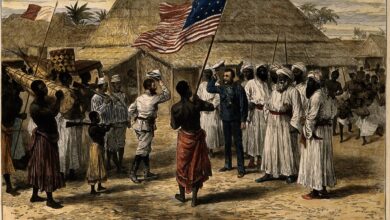
Archival photograph credited to JAImagens, reproduced in Rede Angola’s historical feature.
The Agreement That Was Supposed To Guarantee A Peaceful Transition
To understand why Angola’s independence became so complicated, it is necessary to return to January 1975.
Following the 1974 revolution in Portugal, which overthrew the country’s authoritarian government and accelerated the decolonisation process, negotiations began between Lisbon and the three principal Angolan liberation movements.
On 15 January 1975, representatives of Portugal, the MPLA, FNLA and UNITA signed the Alvor Agreement at the Hotel Penina in Portugal.
The agreement was intended to provide a framework for a peaceful transfer of power.
Among its major provisions were:
- Establishment of a transitional government involving the three liberation movements and Portugal.
- Creation of a joint national military force.
- Organisation of elections for a constituent assembly.
- Withdrawal of Portuguese troops.
- Proclamation of Angolan independence on 11 November 1975.
The agreement initially offered hope that the three movements could overcome their ideological and political differences and jointly govern an independent Angola.
Unfortunately, mutual distrust, political rivalry and armed confrontations progressively undermined the arrangement.
The transitional government became ineffective, fighting escalated, and Portugal eventually suspended the Alvor Agreement on 22 August 1975.
The November independence deadline remained, even as the political arrangements intended to make it peaceful were collapsing. RTP

Kampala Entered The Angolan Crisis
This is where the story takes on a particularly important Ugandan dimension.
While fighting intensified in Angola, the OAU decided that the crisis required urgent continental intervention.
In July 1975, Kampala became the centre of an important diplomatic effort to prevent the collapse of Angola’s transition to independence.
The OAU Council of Ministers held its 25th Ordinary Session in Kampala from 18 to 25 July 1975.
Representatives of the MPLA, FNLA and UNITA presented their positions, while officials from Zaire and the People’s Republic of the Congo also addressed the Angolan situation.
The Council expressed concern about continuing armed confrontations and the repeated violation of agreements intended to maintain peace.
Its Resolution CM/Res.424 (XXV) contained a particularly striking warning.
The Council declared itself:
“Convinced that the present explosive situation in Angola is likely to divide Africa.”
This was not an ordinary diplomatic observation.
African governments were concerned that the conflict could create divisions across the continent, particularly because different countries were increasingly supporting rival Angolan factions.
The Council urged the three movements to end hostilities and requested that their leaders and chiefs of staff be invited to Kampala to explain their disagreements to African heads of state and government.
Kampala was therefore not merely a venue for diplomatic speeches. It was part of an attempt to prevent an African independence struggle from becoming a prolonged continental security crisis. African Union
The OAU Summit Considered An African Peace Force
The diplomatic intervention did not end with the Council of Ministers.
From 28 July to 1 August 1975, Kampala hosted the 12th Ordinary Session of the OAU Assembly of Heads of State and Government.
The assembly considered the Angolan crisis and heard representations from the three liberation movements and the acting Prime Minister of the transitional government.
Its Resolution AHG/Res.72 (XII) made several important recommendations.
First, it urgently appealed to all the liberation movements to lay down their arms.
Second, it called upon Portugal to discharge its responsibilities in Angola impartially.
Third, it decided to send a fact-finding and conciliation commission to Angola.
Perhaps most significantly, it requested the OAU Defence Commission to examine, after receiving the commission’s findings, whether it would be necessary to establish and deploy an OAU peace force in Angola.
This distinction is important: the summit did not immediately deploy a continental military force. It directed that the possibility be examined following an investigation.
The resolution demonstrated that African leaders recognised the seriousness of the situation and were prepared to consider an intervention beyond conventional diplomatic appeals.
Yet the crisis continued to deteriorate. Digital Library


Independence Became A Cold War Battleground
The tragedy of Angola’s transition was that the internal political divisions attracted powerful external interests.
The emerging Cold War rivalry between the United States and the Soviet Union transformed Angola into an international battleground.
The MPLA received support from the Soviet Union and Cuba.
The FNLA enjoyed support from Zaire, then under President Mobutu Sese Seko, as well as assistance from the United States.
UNITA also received American support and eventually developed a close military relationship with apartheid South Africa.
In October 1975, South African forces entered southern Angola, advancing towards the capital.
Cuba subsequently deployed military forces to support the MPLA against the South African advance.
The United States and Soviet Union were therefore involved in a conflict that had begun as an Angolan struggle for political independence but was increasingly shaped by international ideological competition.
The result was a dangerous combination of domestic rivalry, foreign military intervention and competing regional interests.
The OAU’s July warning that Angola could divide Africa was becoming increasingly relevant. Office of the Historian
Portugal Left Without Handing Power To A Unified Government
As independence approached, the Portuguese authorities faced an uncomfortable reality.
The Alvor Agreement had collapsed, the transitional government was no longer functioning effectively, and the liberation movements had failed to establish a common administration.
Portugal’s last High Commissioner in Angola, Admiral Leonel Cardoso, made the formal declaration ending Portuguese sovereignty on 10 November 1975, with independence taking effect at midnight.
Rather than transferring authority to one agreed coalition government, sovereignty was formally left in the name of the Angolan people.
At midnight, Agostinho Neto proclaimed the People’s Republic of Angola in Luanda.
The rival proclamations in Ambriz and Nova Lisboa followed the competing political claims of the FNLA and UNITA.
The international community subsequently recognised the MPLA-led government, while the competing movements continued their struggle for power.
The events surrounding the handover illustrate a fundamental problem in decolonisation: ending foreign rule does not automatically produce political agreement among those inheriting the state. Cambridge University Press
Kampala’s Diplomatic Role Was Also Politically Complicated
There is another dimension worth considering.
Although the OAU resolutions demonstrate a genuine institutional effort to prevent an Angolan catastrophe, the diplomatic environment was not free of political alignments.
A declassified United States diplomatic cable dated 25 November 1975 records a meeting between American officials and President Idi Amin in which Amin reportedly urged Washington to continue assisting the FNLA and UNITA and expressed support for Mobutu’s position on Angola.
The cable is an American diplomat’s account of a private conversation, not an independently verified transcript. Nevertheless, it illustrates the complexity of the political relationships surrounding the OAU’s attempts at mediation.
It would therefore be misleading to portray the Kampala initiative as a simple story of politically neutral intervention.
African governments themselves had competing interests, relationships and positions concerning the future of Angola.
That complexity was one of the greatest obstacles to achieving a common African position. Office of the Historian
Angola’s Independence Changed The Southern African Liberation Struggle
Despite the difficult circumstances surrounding its birth, Angola’s independence had consequences far beyond its own borders.
The country became strategically important to other African liberation movements.
The Zimbabwe African People’s Union (ZAPU) and the South West Africa People’s Organisation (SWAPO) established bases in Angola, making the country an important part of the wider struggle against colonialism and minority rule in Southern Africa.
The presence of these movements reflected the interconnected nature of African liberation struggles.
Angola’s political future was therefore not simply a domestic matter. It affected the balance of power in a region where Namibia, Zimbabwe and South Africa were still confronting colonial or apartheid domination.
The country’s strategic importance also helps explain why foreign powers were so deeply involved in its affairs. South African History Online
The Price Of An Unresolved Political Settlement
The conflict that followed independence would become one of the longest and most devastating civil wars in modern African history.
Although several attempts were made to negotiate peace, the fighting continued for decades.
On 4 April 2002, the Angolan government and UNITA signed a ceasefire agreement, bringing an end to the prolonged civil war following the death of Jonas Savimbi in February of that year.
The war had caused immense human suffering, displacement and destruction of infrastructure.
The country had gained independence in 1975, but it would take another 27 years before the main civil war finally came to an end.
The distinction between attaining independence and achieving lasting peace remains one of the most important lessons of Angola’s modern history. The Guardian
What Uganda Should Remember About 11 November 1975
For Uganda, this anniversary is significant for a reason that is often overlooked.
Kampala once served as an important centre of African diplomatic intervention in a major liberation and state-building crisis.
The original OAU resolutions remain historical evidence that Uganda hosted discussions about one of Africa’s most consequential political transitions.
The events also remind us that African independence struggles were never isolated national experiences.
They were interconnected through diplomacy, solidarity, military assistance, regional politics and international competition.
The OAU’s experience in Angola demonstrated that continental declarations and diplomatic resolutions, however important, cannot substitute for political compromise, functioning institutions and a genuine commitment by competing parties to peaceful coexistence.
For the African continent today, this remains an important consideration whenever countries confront political transitions, internal divisions or competing claims to national authority.
Angola’s experience reminds us that independence is a beginning, not the completion of nation-building.
On 11 November 1975, Angola became independent. Four months earlier, Kampala had hosted African leaders who understood that the country was approaching a dangerous crossroads.
Their warning was clear: a divided Angola could divide Africa.
History would show how difficult that warning was to ignore.
Uganda Today Editorial Perspective
What distinguishes this edition from the ordinary Angolan Independence Day commemorations is the recovery of Uganda’s place in the story.
The central historical discovery is that Kampala was the venue for an important OAU diplomatic intervention in July 1975, when African leaders were already warning that the Angolan crisis could fracture continental unity.
The story therefore brings together three interconnected histories: Angola’s struggle for independence, Uganda’s role in African diplomacy and the wider Cold War struggle that shaped Southern Africa.
The historical lesson is simple but profound: a country can win its independence in a day, but building a united nation can take generations.
#TodayInHistory
#UgandaToday
#AngolanIndependence
#AfricanHistory
#PhoenixNewsFeeds
#OperaNewsFeeds