The Boy, The Pig And The Meaning Of Hard Work: When Helping The Family Is Mistaken For Child Labour
Watch Video: +256 702 23 93 37: A Child Can Learn The Value Of Work Without Losing His Childhood There is a danger in creating a society where children are taught that every form of responsibility is undesirable. Children need education, play, rest, protection and time to develop. But they also need responsibility, practical skills, discipline and an understanding of where their family's livelihood comes from.

UgandaToday: The Boy, The Pig And The Meaning Of Hard Work: When Helping The Family Is Mistaken For Child Labour
A Powerful Rural Image That Deserves More Than A Quick Judgement
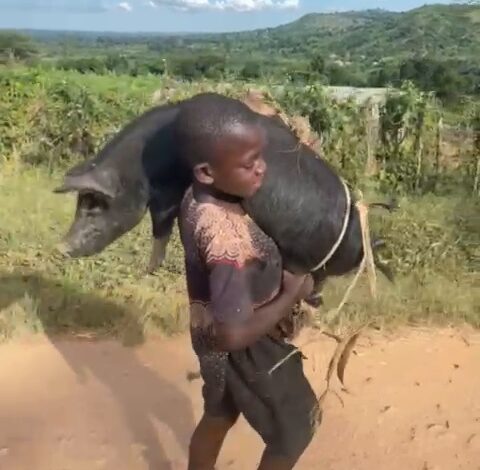
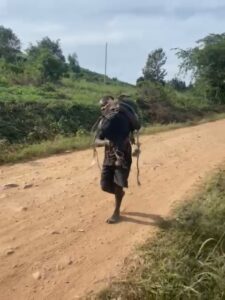
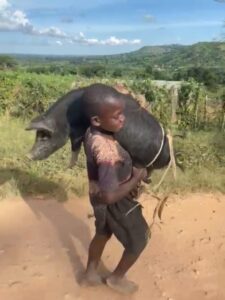
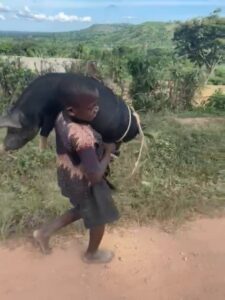
A striking video making the rounds shows a young Ugandan boy, seemingly between 10 and 12 years old, walking along a rural road with a sizeable pig resting across his shoulders.
The boy appears determined. He does not look as though he is being dragged into the task. He simply carries the animal and continues walking, apparently taking it towards his home.
For many viewers, particularly those accustomed to discussing children’s rights through the lens of modern labour standards, the immediate reaction may be to describe the scene as “child labour”.
But there is another side of the African story that deserves to be heard.
Across many African communities, children grow up participating in the economic life of their families. They feed livestock, weed gardens, accompany parents to markets, help in family shops, carry farm produce, look after animals and participate in countless other household activities.
These responsibilities have traditionally been part of learning how to survive, contribute and eventually become responsible adults.
The challenge is knowing where to draw the line.

Helping The Family Is Not Automatically Child Labour
The International Labour Organization makes an important distinction that is sometimes lost in public discussions.
According to the ILO, not all work performed by children should be classified as child labour. Children helping their parents at home or in a family business, or undertaking age-appropriate activities that do not interfere with schooling, health or development, can be part of normal childhood development. (International Labour Organization)
The ILO says child labour is generally concerned with work that is harmful to a child’s physical, mental, social or moral development, or work that interferes with education through excessive hours, premature withdrawal from school or excessively heavy work. (International Labour Organization)
That distinction matters.
A child who helps a parent feed pigs before going to school is not necessarily in the same situation as a child who spends the entire day working on a farm and consequently misses school.
A teenager who helps sell the family’s produce during a school holiday is not automatically in the same category as a child who is forced into full-time commercial work.
The circumstances matter.
The African Homestead Has Always Been A School Of Its Own
In many African families, children traditionally learn responsibility by participating in the activities that sustain the household.
The boy who accompanies his father to the garden learns farming.
The girl who helps her mother prepare food learns household management.
The child who feeds the family’s goats learns animal husbandry.
The youngster who helps sell tomatoes at the roadside learns basic commerce.
The child who assists in a family shop learns how customers are served and how money is handled.
These experiences can transmit practical knowledge from one generation to another.
For families living primarily from agriculture and small-scale enterprise, the family itself is often the first workplace, classroom and apprenticeship centre.
That cultural reality should not automatically be dismissed as exploitation.
But The Boy Carrying The Pig Also Raises A Serious Question
There is, however, an important caution.
The argument that family work should not automatically be called child labour should never become an excuse for exposing children to dangerous or physically excessive tasks.
Uganda’s Employment Act provides that children under 12 should not be employed in a business, undertaking or workplace. For children under 14, the law provides for only light work under adult supervision and where the work does not affect their education. It also prohibits work that is injurious, dangerous or hazardous to a child. (ULII)
The Children Act goes further in identifying potentially harmful employment, including the manual handling or transportation of heavy loads. (ULII)
That is particularly relevant to the image in this video.
The footage shows a child carrying a pig that appears substantial in size relative to his body. Without knowing the animal’s actual weight, the child’s exact age, how far he walked, how frequently he performs such tasks or whether an adult was supervising him, it would be premature to make a definitive legal assessment.
But neither should those questions be ignored.
The Difference Is In The Circumstances
The real question, therefore, should not simply be:
“Is the child working?”
The better questions are:
What kind of work is he doing?
How heavy or dangerous is the task?
How long does he work?
Does the work interfere with school?
Is he being forced to do it?
Is an adult supervising him?
Does the activity place his health or safety at risk?
Those are the questions that distinguish family responsibility from exploitation.
The ILO itself says that determining whether particular work constitutes child labour depends on factors including the child’s age, the nature of the work, the hours involved, the conditions and the effect on schooling. (International Labour Organization)
A Child Can Learn The Value Of Work Without Losing His Childhood
There is a danger in creating a society where children are taught that every form of responsibility is undesirable.
Children need education, play, rest, protection and time to develop.
But they also need responsibility, practical skills, discipline and an understanding of where their family’s livelihood comes from.
A rural child who learns how to raise pigs may eventually become a successful livestock farmer.
A child who helps in a family enterprise may grow into an entrepreneur.
A child who accompanies a parent to the market may learn the basics of buying and selling.
The objective should therefore not be to disconnect children completely from productive family life.
It should be to ensure that their participation remains age-appropriate, safe, voluntary, supervised and compatible with education.
Uganda’s Child Labour Challenge Is Real
This discussion should not be interpreted as a denial that child labour exists in Uganda.
It does.
The ILO reported in 2024 that Uganda had experienced a substantial increase in child labour, citing UBOS data that put the number at about 6.2 million children, or 39.5 percent, in 2021. (International Labour Organization)
UNICEF Uganda’s 2024 annual report likewise reported that about 40 percent of children aged 5–17 were engaged in harmful child labour. (UNICEF)
Agriculture is particularly important in this discussion. The latest ILO-UNICEF global estimates show that agriculture accounts for 61 percent of child labour worldwide, with much of it occurring in family subsistence and smallholder farming. (International Labour Organization)
Therefore, Uganda must continue fighting genuine child labour, particularly work that is hazardous, exploitative or destructive to education.
But the fight must also be intelligent enough to distinguish between exploitation and age-appropriate participation in family life.
Perhaps The Boy Is Carrying More Than A Pig
There is something deeply symbolic about the image.
The boy is carrying an animal.
But, metaphorically, he may also be carrying a family’s hopes.
For a rural household, a pig can represent school fees, food, rent, medical expenses or the next investment in the family’s livelihood.
A livestock enterprise can be the difference between a child remaining in school and dropping out.
That does not mean children should be made to carry dangerous loads or undertake hazardous work.
Rather, it reminds society that behind many apparently simple images of rural children at work lies a complicated story of poverty, family survival, education and aspiration.
Let Us Protect Children Without Taking Away Their Dignity
The conversation about children and work should therefore move beyond labels.
Not every child holding a hoe is a victim.
Not every child helping a parent is being exploited.
And not every child carrying something for the family should immediately be presented as evidence of child labour.
At the same time, not every traditional practice is automatically safe simply because generations have practised it.
The responsibility of parents, communities, government and society is to strike the balance: protect children from exploitation and hazardous work while allowing them, where appropriate and safe, to learn responsibility and participate in family life.
The young boy in the video may simply be doing what millions of African children have historically done — helping their families.
But because the video shows him carrying what appears to be a heavy animal, it also provides an opportunity for an important national conversation:
How do we teach our children the dignity of work without asking them to carry burdens that belong to adults?
That is perhaps the more constructive question Uganda should be asking.
Editorial Note
Uganda Today has not independently established the boy’s identity, exact age, location, family circumstances, ownership of the pig or the reason for transporting the animal. The article interprets the video as a starting point for a wider discussion about children, family enterprise, responsibility and child labour. The legal position should be assessed according to the child’s actual age, the nature and weight of the task, supervision, duration, safety conditions and effect on education.
The legal and conceptual distinction in the article is supported by the ILO’s guidance that family assistance and age-appropriate work are not automatically child labour, while hazardous, excessive or education-disrupting work is a different matter. (International Labour Organization) Uganda’s current statutory framework also makes the child’s age and the safety of the task particularly important. (ULII)
#UgandaToday #ChildLabour #AfricanFamily #DignityOfWork #Uganda #PhoenixNewsFeeds