From Four-Star General To A Mound Of Earth: The Haunting Final Chapter Of Moses Ali’s Extraordinary Life
+256 702 23 93 37: It is a silent reminder to an entire generation of leaders—and to everyone watching from outside the corridors of power—that life is temporary, power is temporary, but the legacy we leave behind can outlive us.

UgandaToday: From Four-Star General To A Mound Of Earth: The Haunting Final Chapter Of Moses Ali’s Extraordinary Life
There are photographs that tell a story.
And then there are images that force a nation to pause.
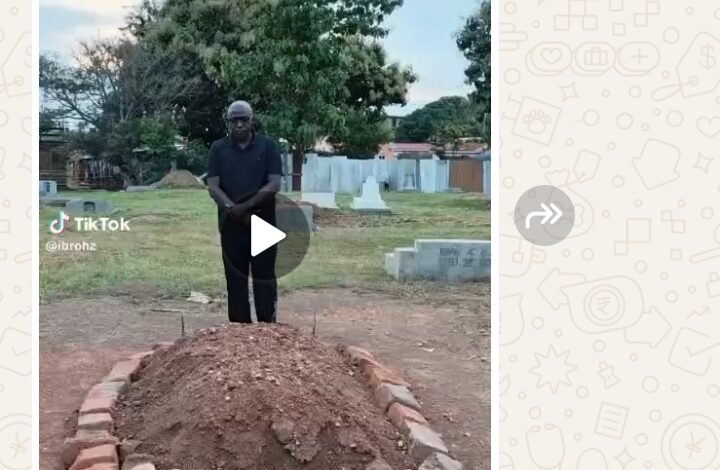
A short video showing the grave of the late Gen. Moses Ali does precisely that.
Standing before the freshly mounded earth, one is confronted by a reality that political power often makes easy to forget: however high a human being rises, however powerful the office, however decorated the uniform, life eventually comes to an end.
There is no Cabinet table at the grave.
No parliamentary microphone.
No military convoy.
No presidential appointment.
No four-star insignia.
There is only earth.
And beneath that earth lies one of the most extraordinary figures in Uganda’s modern political and military history.
Gen. Moses Ali—soldier, rebel commander, minister, lawyer, parliamentarian, statesman and Deputy Prime Minister—has completed a journey that took him from the classrooms of northern Uganda to the highest corridors of power.
His final destination was his ancestral home in Adjumani.
The Grave That Silences Power, Titles And Politics
The image of Moses Ali’s grave strips away the symbols that surrounded him for more than half a century.
It reminds us that the offices people occupy are temporary, however powerful they may appear.
Moses Ali’s career stretched across some of Uganda’s most turbulent political chapters.
He lived through the governments of Milton Obote and Idi Amin, the turmoil following Amin’s overthrow, the wars and political instability of the early 1980s, and the rise and consolidation of Yoweri Museveni’s National Resistance Movement.
At different points, he was a soldier, government minister, rebel commander, detainee, parliamentarian and senior Cabinet official.
Yet the final image is not of the General standing at a podium.
It is his grave.
From The Classroom To The Barracks
Born on April 5, 1939, at Maliaderi in Atabo Parish, Pakele, in what is today Adjumani District, Moses Ali’s early years were rooted in northern Uganda.
His education took him through several institutions, including Adjumani Muslim Primary School, Pakele Church of Uganda Primary School, Erepi Church of Uganda Primary School, Nyangilia Church of Uganda Junior Secondary School, Teso College Aloet, Busega Secondary School and Old Kampala Senior Secondary School.
Before becoming a soldier, he was a teacher. He taught at Kotch Goma Church of Uganda Primary School and Anaka Catholic Girls School.
For a man who would eventually command troops and occupy senior government offices, the classroom was an unlikely starting point. But education remained a recurring thread throughout his life.
Even after entering the military and later politics, Ali continued pursuing academic qualifications.
He eventually studied law at Makerere University, obtained a Diploma in Legal Practice from the Law Development Centre and later pursued a Master’s degree in Intelligence Studies. The soldier became a lawyer. The commander became a parliamentarian. And the military officer became one of Uganda’s longest-serving political figures.
The Making Of A Soldier
Moses Ali entered military service and underwent professional training that included officer cadet instruction, paratrooper training and advanced command courses. He later attended the prestigious Staff College at Camberley in the United Kingdom. His military career unfolded against the backdrop of one of the most turbulent periods in Uganda’s history.
The country was experiencing political instability, military coups, armed conflict and rapidly changing governments. Ali rose through the ranks and eventually became a senior military commander. His military career would later earn him promotion to the rank of General.
The Amin Years And A Complicated Legacy
Moses Ali’s biography cannot be separated from the era of President Idi Amin.
During Amin’s rule, Ali occupied senior government and military positions, including ministerial responsibilities.
It was a period in which Uganda experienced political repression, disappearances, economic upheaval and widespread violence.
Ali’s association with the Amin government remains one of the most debated chapters of his life.
But his relationship with Amin’s government would eventually change, and the political upheavals that followed Amin’s overthrow would push Ali into yet another role.
From Minister To Rebel Commander
When Idi Amin was overthrown in 1979, Uganda did not immediately find peace.
Instead, the country entered another turbulent period marked by competing armed groups and political instability.
Moses Ali became associated with the Uganda National Rescue Front, commonly known as UNRF, an armed movement largely linked to former soldiers and operating from the West Nile region.
The man who had once occupied a government ministerial office was now leading an armed opposition movement.
It was one of the great reversals of his career. But there would be another.
From Rebellion To Government
The coming to power of Yoweri Museveni and the National Resistance Movement in 1986 opened a new political chapter. Ali eventually reached an accommodation with the new government.
His forces were integrated into the emerging political and security order, and the former rebel commander returned to government. It was a remarkable political transformation.
A man who had once opposed the government became one of its most senior officials. And unlike many politicians whose careers rise and fall within a single administration, Moses Ali would remain a fixture of Ugandan public life for decades.
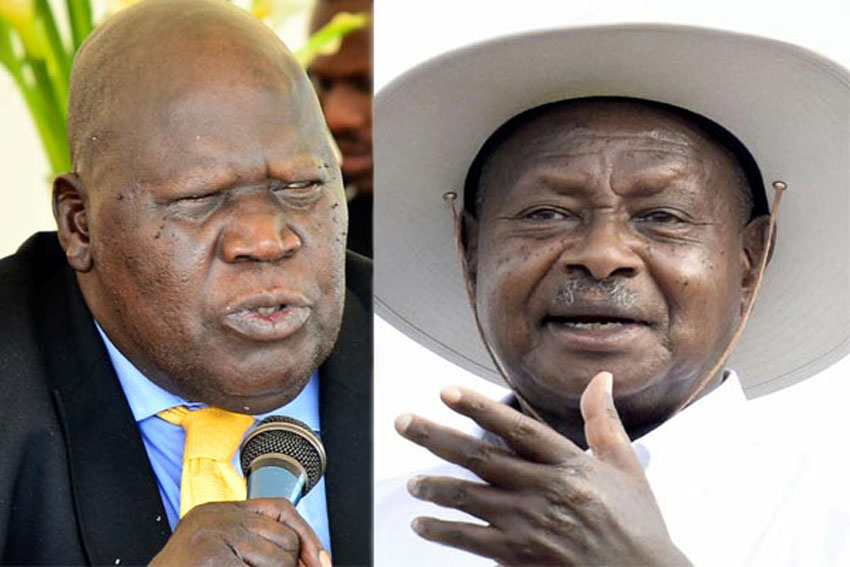
The Survivor Of Political Storms
Ali’s journey was not without setbacks.
In 1990, he was arrested and charged with serious offences, including treason.
He spent time in detention before being acquitted in 1992.
For many politicians, such an episode might have marked the end.
For Moses Ali, it became another chapter in a career characterised by extraordinary political resilience.
He returned to public life and continued climbing the political ladder.
The Politician Who Seemed To Defy Time
Ali served in numerous government positions, including ministerial portfolios covering areas such as Internal Affairs, Tourism, Wildlife and Antiquities, Youth, Culture and Sports, Disaster Preparedness and Refugees.
He also became a long-serving Member of Parliament.
His political career stretched across generations.
Governments changed.
Ministers came and went.
Political alliances shifted.
Yet Moses Ali remained.
He eventually became Deputy Prime Minister and Deputy Leader of Government Business in Parliament. For many Ugandans, his name became synonymous with longevity in public service.
Five Decades In The Service Of Uganda
Few Ugandan politicians can claim a career as long or as politically varied as Moses Ali’s.
His life intersected with some of the defining events of post-independence Uganda. He did not merely witness Uganda’s history. He participated in it. At different points, he was a soldier, government official, rebel, detainee, legislator, minister and senior member of Cabinet. That complicated journey makes his biography both remarkable and controversial.
The Final Chapter
In July 2026, the long journey finally came to an end.
Moses Ali died in Kampala at the age of 87. The news brought tributes from government, Parliament, the military and political leaders who had interacted with him during his decades of public service. Parliament paid tribute to him as a statesman whose life was intertwined with some of Uganda’s most consequential political chapters. The Uganda Peoples’ Defence Forces also honoured his military contribution. But perhaps the most powerful farewell came not from the speeches, guns or official ceremonies. It came from the grave.
The Four-Star General Returns Home
On July 23, 2026, Moses Ali was laid to rest at his ancestral home in Atabu Parish, Pakele Division, Adjumani District.
The burial was conducted with military honours.
The guns fired.
The uniformed officers saluted.
The mourners gathered.
The tributes were delivered.
And then the ceremonies ended.
The crowds departed.
The powerful returned to their offices.
The soldiers returned to their barracks.
The politicians returned to Parliament and government.
But Moses Ali remained behind.
In the earth.
When Power Meets Mortality
This is what makes the video of his grave so haunting.
The image strips away everything that surrounded Moses Ali during his lifetime.
It strips away the title “General.”
It strips away “Minister.”
It strips away “Deputy Prime Minister.”
It strips away “Member of Parliament.”
It strips away the political alliances and disagreements.
What remains is a human being returning to the earth.
The grave makes no distinction between the powerful and the powerless.
It does not recognise political parties.
It does not recognise military ranks.
It does not recognise wealth.
It does not recognise influence.
In the end, every human journey reaches the same destination.
A Life Larger Than The Office
Whatever history ultimately decides about Moses Ali, it will be difficult to write Uganda’s post-independence political history without mentioning him.
His life was marked by contradictions.
He was part of Amin’s government before becoming associated with armed opposition.
He became a rebel before joining Museveni’s government.
He was a military commander who later studied law.
He was a Cabinet minister who spent decades in Parliament.
He was a man who survived political storms that ended the careers of many others.
And he remained active in public life well into his eighties.
That alone makes his biography extraordinary.
But The Grave Asks Another Question
What does all that power ultimately mean?
What remains after the Cabinet appointment expires?
What remains after the parliamentary seat is lost?
What remains after the military uniform is removed?
What remains when the convoy disappears?
The grave offers a brutally simple answer.
Only the legacy remains.
The stories people tell.
The institutions one helped build.
The people one influenced.
The decisions one made.
The lives one touched.
And the historical record left behind.
The Lesson In The Mound Of Earth
Perhaps the most profound message from the image is not about death.
It is about life.
Moses Ali spent decades moving through the highest levels of power.
But his final resting place is remarkably simple.
That should humble anyone who believes that political office is permanent.
Presidents leave office.
Generals surrender their commands.
Ministers lose their portfolios.
Members of Parliament eventually leave the chamber.
Political movements rise and fall.
But mortality remains the one institution from which no human being can resign.
The grave of Moses Ali therefore stands as more than a burial site.
It is a silent reminder to an entire generation of leaders—and to everyone watching from outside the corridors of power—that life is temporary, power is temporary, but the legacy we leave behind can outlive us.
From a classroom in northern Uganda to the military barracks, from the corridors of Idi Amin’s government to rebellion, from political confrontation to the Cabinet of Yoweri Museveni, and finally to a quiet grave in Adjumani, Moses Ali lived a life that mirrored much of Uganda’s turbulent history.
Now the guns have fallen silent.
The political speeches are over.
The convoy is gone.
The office is empty.
And the General has returned home.
#MosesAli #GeneralMosesAli #UgandaToday #UgandaHistory #UgandaPolitics #Adjumani #WestNile #UPDF #MosesAliLegacy #Uganda #PoliticalHistory #AfricanHistory #LifeAndLegacy #PhoenixNewsFeeds #OperaNewsFeeds