Uganda’s Gold Boom Faces Fresh Scrutiny As Entebbe Refinery Supply Chain Comes Under Spotlight
Thaba Rejects Allegations Of Improper Links Thaba Investments publicly presents itself as a modern Ugandan refining and logistics operation. Its own website says the Entebbe facility has capacity to refine up to 600 kilogrammes of gold per day and operates under a Manufacture Under Bond licence.

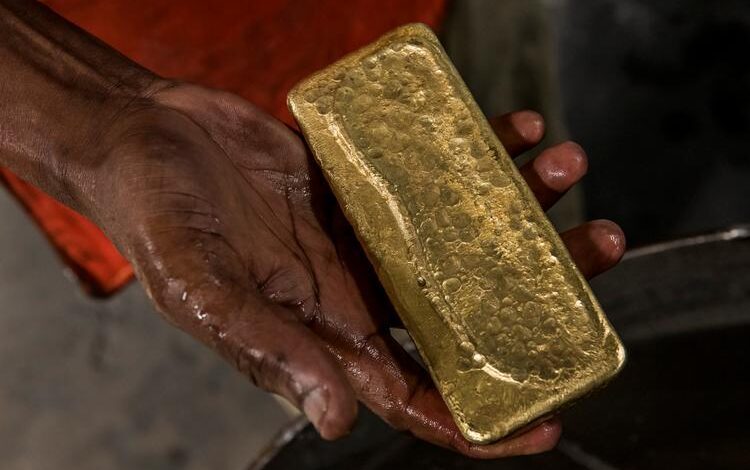
UgandaToday: Uganda’s Gold Boom Faces Fresh Scrutiny As Entebbe Refinery Supply Chain Comes Under Spotlight
Bloomberg Investigation Raises Questions Over Uganda’s Multi-Billion-Dollar Gold Export Trade

Uganda’s rapidly expanding gold-export business has come under renewed international scrutiny following a Bloomberg investigation examining the supply chains behind one of the country’s largest gold exporters.
The investigation reported that Thaba Investments, an Entebbe-based company, accounted for nearly half of Uganda’s gold exports in the 12 months to June 2026, with export values running into billions of dollars. Bloomberg’s analysis of trade data, corporate records and customs information reportedly found similarities between some of Thaba’s suppliers, intermediaries and logistics arrangements and those previously associated with African Gold Refinery (AGR).
The findings do not by themselves establish that Thaba is controlled by or acting on behalf of sanctioned individuals. Bloomberg reported that both Thaba’s majority shareholder and Belgian businessman Alain Goetz denied such links.
The Shadow Of Previous US Sanctions
The scrutiny is rooted partly in the history of AGR and Goetz.

The United States sanctioned Goetz and companies associated with him in 2022 over allegations concerning gold trading connected to conflict-affected eastern Democratic Republic of Congo. The sanctions followed longstanding international concerns over the role of illicit gold in financing armed groups in the region.
According to the Bloomberg investigation, AGR accounted for roughly two-fifths of Uganda’s gold-export value between 2018 and 2021, worth about $1.8 billion.
Bloomberg reported that Thaba subsequently assumed a similarly significant position in Uganda’s gold-export market, recording about $6.8 billion in export value between 2023 and mid-2026.
Thaba Rejects Allegations Of Improper Links
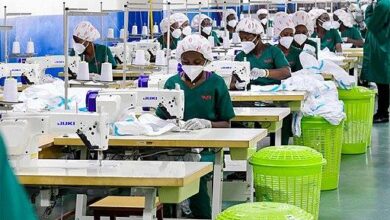
Thaba Investments publicly presents itself as a modern Ugandan refining and logistics operation. Its own website says the Entebbe facility has capacity to refine up to 600 kilogrammes of gold per day and operates under a Manufacture Under Bond licence.
The company and its majority shareholder have denied claims linking them to Goetz or suggesting that the company represents a continuation of his sanctioned operations.
Goetz has likewise denied having a current role in Thaba or knowledge of its business operations, according to the reporting.
That distinction is important because similarities in addresses, personnel, suppliers or logistics arrangements are indicators requiring further due diligence, rather than proof of ownership or criminal conduct.
Uganda’s Gold Exports Have Grown Dramatically
The controversy comes against the backdrop of Uganda’s extraordinary rise in recorded gold exports.
Gold has become one of Uganda’s most valuable export commodities, with recent trade data showing mineral products — particularly gold — making a substantial contribution to export earnings.
The expansion has brought investment, employment and foreign exchange, but it has also raised questions about the provenance of gold entering Uganda’s export chain.
Uganda has relatively modest officially recorded domestic gold production compared with the enormous value of gold passing through its export system. This makes traceability and responsible sourcing central to the credibility of the sector.
The Traceability Question
The central question now facing Uganda’s gold industry is not simply how much gold is exported, but where the gold comes from, who produces it, who buys it and whether every stage of the supply chain can withstand international due-diligence scrutiny.
This is particularly significant because Uganda sits within a region where gold from conflict-affected areas of eastern Congo and other neighbouring countries has historically entered informal trading networks.
Uganda’s participation in the Extractive Industries Transparency Initiative has also placed greater emphasis on transparency and governance within the extractive sector. Official EITI documentation identifies gold refining as an important component of Uganda’s mineral-processing industry.

What Comes Next?
The latest scrutiny could increase pressure on Ugandan authorities, exporters, refiners and international buyers to demonstrate stronger documentation of gold provenance.
For Uganda, the stakes are considerable.
A transparent and traceable gold industry could strengthen the country’s position as a regional mineral-processing hub. Conversely, unresolved questions about supply chains could expose legitimate businesses and the wider Ugandan export sector to reputational, regulatory and financial risks.
The latest Bloomberg investigation therefore presents a challenge not only to individual companies, but to the wider architecture through which Uganda’s rapidly expanding gold economy connects African mines to international bullion markets.
Editorial Note: The allegations concerning links between Thaba Investments and the previously sanctioned network are attributed to Bloomberg’s investigation and other cited reporting. Thaba Investments, its majority shareholder and Alain Goetz have denied improper links.
#UgandaToday #UgandaGold #GoldExports #Mining #Entebbe #PhoenixNewsFeeds #OperaNewsFeeds