Gashumba Suspension Letter Controversy Puts PLU’s Identity, Discipline And Political Accountability Under Scrutiny
+256 702 23 93 37: However, the authenticity of the document has become a central issue. Nile Post reported on October 19 that the PLU General Secretary had dismissed the letter as fake, while Eagle Online published a report treating the suspension as an actual disciplinary decision.

UgandaToday: Gashumba Suspension Letter Controversy Puts PLU’s Identity, Discipline And Political Accountability Under Scrutiny
UGANDA TODAY | POLITICS, RELIGION AND ACCOUNTABILITY | 20 OCTOBER 2026
By Uganda Today Editorial Desk
The controversy surrounding a letter purportedly suspending social commentator Frank Gashumba from the Patriotic League of Uganda (PLU) has opened a wider debate about leadership, internal discipline, religious freedom and the political identity of an organisation whose chairman, Gen. Muhoozi Kainerugaba, is also Uganda’s serving Chief of Defence Forces.
The document, dated October 19, 2026, and bearing the reference number 01/15/OCT, is addressed to Gashumba and purportedly signed by PLU National Vice Chairman Michael Nuwagira Kaguta Toyota, popularly known as Toyota. It cites concerns about Gashumba’s statements concerning Balokole and Pentecostal churches and refers to an investigation and interim administrative measures.
However, the authenticity of the document has become a central issue. Nile Post reported on October 19 that the PLU General Secretary had dismissed the letter as fake, while Eagle Online published a report treating the suspension as an actual disciplinary decision.
The image supplied to Uganda Today also carries a prominent red FAKE watermark. That marking is a reason for caution.
The controversy therefore presents two related questions: what, if anything, has PLU formally decided about Gashumba, and what does the episode reveal about the organisation’s institutional character and the exercise of political authority?

Gashumba’s Attack On Alleged Fake Pastors
The dispute did not emerge in isolation. It followed days of increasingly heated exchanges between Gashumba and prominent Pentecostal leaders over allegations that some religious figures exploit believers through questionable miracle claims and financial demands.
Gashumba challenged preachers who claim to perform miraculous healings to demonstrate their abilities under independently verifiable conditions at hospitals, including Mulago National Referral Hospital, Nsambya Hospital and Mengo Hospital.
He initially offered Shs200 million and subsequently raised the challenge to Shs500 million, according to Eagle Online’s account of the controversy.
His argument, as reported in the media, is that people who claim to heal serious illnesses should be prepared to demonstrate those claims rather than rely solely on testimonies made during church services.
Gashumba has also argued that his criticism targets what he describes as fraudulent religious practitioners, not God or Christianity itself. His remarks comparing Catholic priests with Pentecostal pastors have, however, widened the dispute beyond allegations of financial exploitation.
The controversy raises legitimate questions about accountability in religious institutions. Where believers are asked to contribute money in expectation of healing, prosperity or deliverance, transparency and protection against deception are important public concerns.
Nevertheless, accusations against particular pastors must be supported by evidence. A public challenge involving money is not, by itself, proof that a religious leader is fraudulent, just as a pastor’s claim to possess spiritual gifts is not independent evidence that a medical miracle has occurred.
Any assessment must distinguish between protected religious belief, demonstrable medical claims, potentially misleading fundraising practices and conduct that may violate the law.
Muhoozi’s Intervention Changed The Political Dimension
The matter took a more consequential turn when Gen. Muhoozi Kainerugaba intervened publicly.
According to Pulse Uganda, on October 17, Muhoozi called on Gashumba to apologise to Christians and declared that PLU had no problem with pastors in Uganda. He also emphasised that the organisation did not tolerate disorder.
That intervention is important because it placed the organisation’s chairman directly in the middle of a dispute that had initially centred on Gashumba’s statements and the conduct of some religious leaders.
It also raises a question about the relationship between individual expression and collective discipline within PLU.
Was Gashumba expressing his personal opinion, speaking in a recognised organisational capacity, or representing a position that PLU considered inconsistent with its own values? If disciplinary action was contemplated, what rules governed the process, and what opportunity would he have to respond?
These are questions that cannot be answered conclusively by the disputed letter.
At the same time, a political or civic organisation is entitled to establish standards for its representatives. The critical issue is whether those standards are clear, consistently applied and enforced through credible procedures rather than through public pressure or informal instructions.
The involvement of a prominent military officer who also heads the organisation makes transparency particularly important.
PLU’s Identity Crisis: Civic Movement, Pressure Group Or Political Party?

The controversy involving Gashumba comes at a particularly sensitive moment for PLU because the organisation’s formal identity has itself become a subject of public debate.
In September 2026, PLU spokesperson Andrew Mwenda said the organisation had no intention of becoming a political party. He described it as a civic organisation, pressure group and social movement operating within the National Resistance Movement (NRM).
However, Daily Monitor reported on October 14 that PLU had approached the Electoral Commission to reserve the name, colours, symbol and slogan of a proposed political party to be called the Patriotic League of Uganda Movement (PLUM).
The newspaper reported that the application, dated October 9, had been made by Cankara Moses Mwaka, identified as the proposed party’s acting chief promoter. The Electoral Commission spokesperson said he could not comment because he had not received a copy of the application.
These developments suggest that the organisation’s political future and formal status are not simply theoretical questions. They require clarification through its own public statements and the applicable registration process.
There is an important distinction between an organisation that mobilises citizens around political causes and one that is legally registered as a political party. A pressure group can campaign for political change, criticise government policy and mobilise supporters without necessarily being a registered party.
Equally, reserving a proposed party name is not the same as completing registration or acquiring all the legal status and rights associated with a registered political party.
PLU’s activities should therefore be assessed against its actual conduct, stated objectives and legal status, rather than relying exclusively on the label it uses at any particular moment.
Political Activity And The Question Of Consistency
The debate has become more complicated because PLU has undertaken organised mobilisation in support of Muhoozi’s proposed 2031 presidential bid.
Its own website has reported endorsement activities in different parts of Uganda, including the collection of signatures and mobilisation of political support.
Such activities raise a reasonable question: how should an organisation that describes itself as a civic movement distinguish civic engagement from organised electoral politics?
The answer cannot rest on terminology alone. It requires transparency about leadership, objectives, funding, decision-making, legal registration and the relationship between the organisation and any prospective political party.
The controversy over Gashumba’s letter offers a practical example of why that clarity matters. When an organisation exercises disciplinary authority over a prominent member, the public should be able to determine which rules apply, who has the authority to enforce them and how decisions are reviewed.
If PLU is operating as a civic movement, it should explain the basis of its internal disciplinary powers. If it is moving towards party registration, it should communicate the process clearly and distinguish proposed arrangements from legally completed ones.
The Military Dimension: Why Muhoozi’s Dual Role Matters
Muhoozi’s position makes the issue more sensitive than an ordinary disagreement within a voluntary organisation.
He is both chairman of PLU and Uganda’s serving Chief of Defence Forces (CDF). His official military responsibilities and his political activities therefore occupy overlapping areas of public attention.
The Associated Press has previously examined concerns about the involvement of a serving military officer in political activity, while Reuters reported in August 2026 that Muhoozi had announced an intention to seek Uganda’s presidency in 2031.
However, the combination of military office, political mobilisation and organisational leadership creates a strong public interest in distinguishing institutional authority from personal or political influence.
Uganda’s constitutional framework provides for civilian authority over the armed forces and establishes legal principles governing public institutions and political participation. The precise application of relevant laws to any particular activity requires examination of the applicable provisions and facts.
The broader governance concern is straightforward: citizens should be able to understand when a person is acting as a military officer, when that person is acting as an organisational leader and what legal authority supports each action.
Where those roles overlap, clear institutional boundaries are essential to public confidence.
Could Internal Discipline Become A Test Of Political Accountability?
If the disputed letter is authentic, it could be read as evidence that PLU is attempting to formalise internal discipline and publicly distance itself from statements it considers harmful to its relationships with religious communities.
If it is fabricated, the incident presents a different but equally serious problem: someone may have attempted to create the impression that the organisation had taken a decision it had not made.
Neither possibility should be accepted without verification.
The proper response is to establish who prepared the document, whether it was signed and issued with authority, whether Gashumba received an official communication and whether the organisation’s recognised procedures were followed.
That process would protect not only Gashumba but also PLU’s leadership and the public against misinformation.
Born-Again Churches, Freedom Of Worship And Public Accountability

The dispute also touches a broader social question: how can Uganda protect religious freedom while ensuring that religious institutions and their leaders are accountable for their conduct?
Pentecostal and evangelical churches play important roles in worship, counselling, charity, community organisation and social support. Many believers find meaning, solidarity and practical assistance through their congregations.
At the same time, religious institutions, like other organisations, should not be beyond scrutiny when credible allegations concern financial exploitation, misleading claims, abuse or other unlawful conduct.
The constitutional protection of freedom of religion and worship does not mean that every action undertaken in the name of religion is exempt from generally applicable law. Equally, criticism of alleged wrongdoing must not become a pretext for persecuting believers or disparaging an entire religious community.
A credible approach would focus on verifiable conduct.
Where a pastor claims to have cured a serious illness, for example, independent medical evidence is more useful than either unquestioning acceptance or blanket dismissal. Where church members allege financial deception, documentary evidence and appropriate investigations are more useful than insults. Where threats are made, the appropriate authorities should assess them on the available evidence.
Gashumba’s challenge has drawn attention to these questions, but the public debate would benefit from moving beyond personal attacks and competing declarations of spiritual authority.
The government, religious umbrella bodies and relevant oversight institutions also have a role to play in ensuring that complaints are addressed fairly and consistently, without discriminating against particular denominations.
Why The Authenticity Dispute Matters Beyond Gashumba
The circulation of a purported disciplinary letter illustrates how easily an unresolved internal matter can become a national political controversy.
The document appears official in format. It contains a reference number, a date, an address, a statement of concerns, proposed disciplinary measures and the name of a senior official. Yet the presence of these details does not settle the question of authenticity.
The red FAKE watermark on the image supplied to Uganda Today adds another layer of uncertainty. It may represent a warning attached to a disputed document, but without establishing who placed it there and why, it cannot serve as a substitute for verification.
The conflicting media reports make the need for confirmation even greater.
For a news organisation, the distinction between reporting that a letter exists and reporting that a suspension has occurred is fundamental. The first is a statement about a circulating document; the second asserts that an organisation has made and implemented a decision.
The latter requires stronger evidence.
The public should also be cautious about assuming that the letter was fabricated merely because one official reportedly rejected it, or that it was genuine merely because another report described the suspension as a fact. Direct confirmation from the purported author, the General Secretary and the organisation’s recognised communications office would help resolve the dispute.
Questions PLU Should Answer
The controversy could be resolved more quickly if PLU publicly addressed several straightforward questions:
-
Did Michael Nuwagira Kaguta Toyota write, sign or authorise the letter dated October 19, 2026?
-
Has Frank Gashumba been formally suspended, or is he still a member in good standing?
-
Has an investigation been opened into his statements about Balokole and Pentecostal churches?
-
What provisions of PLU’s constitution, rules or internal procedures govern suspension and disciplinary investigations?
-
What is PLU’s current legal status, given the reported move to reserve a proposed political party name while previously declaring that it would remain a civic movement?
-
How does the organisation distinguish its political mobilisation from the official duties of its chairman as CDF?
Clear answers would help separate verifiable facts from speculation and protect the credibility of the organisation’s leadership.
The Bigger Lesson: Institutions Must Be Bigger Than Individuals
The Gashumba controversy is ultimately about more than one outspoken commentator, a group of pastors or a disputed letter.
It is a test of how an influential organisation manages disagreement, communicates decisions and establishes accountability when its leadership occupies prominent positions in both public life and the security establishment.
If the letter is authentic, PLU should explain the process through which the decision was reached and ensure that Gashumba receives a fair opportunity to respond.
If it is fake, the organisation should establish the facts, explain how the document was misrepresented and take appropriate action against any proven fabrication.
In either case, the public deserves a transparent account.
Uganda also needs a sustained conversation about the standards expected of political pressure groups, the responsibilities of public officials who lead them and the protection of religious communities from both exploitation and unjustified attacks.
Neither religious authority nor political influence should exempt anyone from legitimate scrutiny. But accountability must be grounded in evidence, lawful procedures and respect for the rights of others.
For PLU, the immediate challenge is to establish the truth about the letter. The larger challenge is to demonstrate that its rules, public positions and exercise of authority are transparent enough to withstand scrutiny.
Suggested Photographs And Captions For Publication
The three photographs above are suggested visual references. Before publication, Uganda Today should obtain and use verified photographs from identifiable sources, with the appropriate permissions and accurate captions.

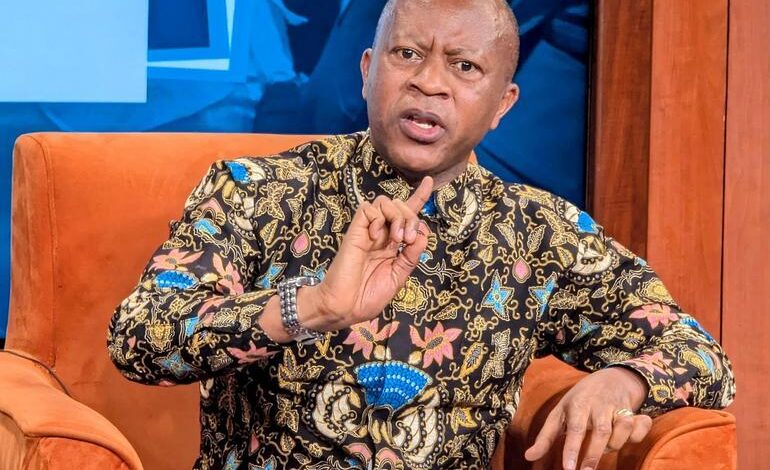
Photo 1: Frank Gashumba
Caption: Frank Gashumba, whose remarks about alleged fraudulent miracle claims triggered a public dispute with Pentecostal leaders and drew intervention from PLU chairman Gen. Muhoozi Kainerugaba.


#UgandaToday #FrankGashumba #PatrioticLeagueOfUganda #MuhooziKainerugaba #ReligiousFreedom #PoliticalAccountability