State Witness Against Besigye Remanded as Fabricated Intelligence Probe Deepens
+256 702 239 337: Fresh twist raises questions over President Museveni's defence of prolonged detention of opposition leader


UgandaToday: State Witness Against Besigye Remanded as Fabricated Intelligence Probe Deepens
Fresh twist raises questions over President Museveni’s defence of prolonged detention of opposition leader
By UgandaToday Investigations Desk
A dramatic development in Uganda’s security establishment has injected fresh controversy into the ongoing prosecution of opposition stalwart Dr. Kizza Besigye, after one of the military officers expected to testify against him was himself remanded to prison over allegations of fabricating intelligence reports and other grave offences.
The latest development comes only days after Yoweri Kaguta Museveni, during his national address, forcefully defended the continued denial of bail to Besigye and other political detainees, describing them as “law breakers” who should not easily regain their liberty while facing serious criminal charges.
However, events unfolding within the Uganda People’s Defence Forces (UPDF) appear to have complicated that narrative.
Witness Turned Accused
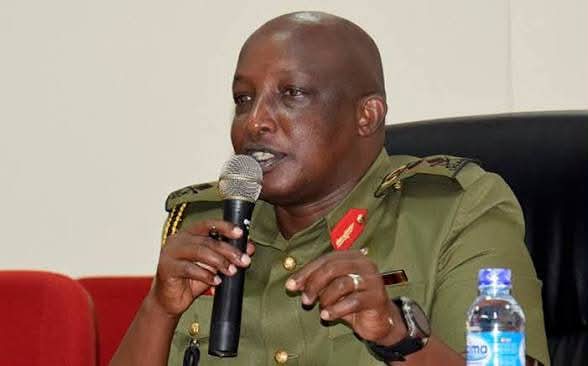
Former Chief of Military Intelligence (CMI), Major General James Birungi, identified among the senior officers expected to feature prominently as a prosecution witness in the case against Besigye, has now been detained and remanded alongside two of his former deputies.
Also detained are Colonel Peter Ahimbisibwe, formerly Director of Counter-Terrorism, and Lieutenant Colonel Ephraim Byaruhanga, formerly Director of Special Operations.
The three senior officers are reportedly facing proceedings before the General Court Martial on accusations including treason, terrorism, corruption and murder.
Their arrest followed an extensive internal investigation reportedly headed by Lieutenant General Sam Okiding, which allegedly unearthed widespread misconduct within the military intelligence establishment.
Fabricated Intelligence Allegations
According to information emerging from the military probe, investigators accuse the officers of manufacturing intelligence reports and issuing false security assessments intended to influence military operations and strategic decision-making.
Among the allegations is the claim that the officers falsely reported in 2023 that notorious Allied Democratic Forces (ADF) bomb expert Meddie Nkalubo had been eliminated during a UPDF airstrike.
Subsequent intelligence reportedly established that Nkalubo was still alive and operational, raising serious concerns about the credibility of intelligence generated under the officers’ command.
Investigators are also said to have uncovered extensive financial irregularities involving the misuse of military resources and the diversion of public funds allocated to intelligence operations.
The Besigye Connection
The development assumes even greater significance because Colonel Ahimbisibwe and Lieutenant Colonel Byaruhanga are not peripheral figures in the Besigye saga.
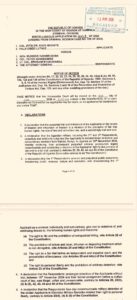
They are the second and third respondents in Miscellaneous Application No. 0227 of 2026 filed before the High Court Criminal Division by Besigye and Hajji Obeid Lutale.
The application also names General Muhoozi Kainerugaba as a respondent.
The applicants accuse the respondents of orchestrating their cross-border abduction from Nairobi on 16 November 2024 before transporting them to Uganda.
The suit alleges unlawful arrest, illegal rendition, prolonged incommunicado detention inside military facilities, denial of legal representation, restricted family access, denial of medical treatment and repeated public threats against Besigye’s life.
Besigye and Lutale seek declarations that these actions violated Uganda’s Constitution, rendered subsequent criminal proceedings fundamentally defective and warrant their unconditional release.
Questions Over Witness Credibility
The detention of officers now accused of fabricating intelligence is likely to intensify scrutiny over the reliability of evidence assembled against Besigye.
Legal observers argue that where prosecution witnesses themselves become subjects of criminal proceedings involving allegations of falsified intelligence, courts may inevitably be invited to carefully examine the credibility and integrity of the evidence they previously generated.
The development may equally provide additional ammunition for the defence, which has consistently maintained that the charges against Besigye are politically motivated and built upon an unlawful process.
Whether the ongoing military prosecution of the former intelligence chiefs directly affects the criminal case against Besigye remains a matter that courts will ultimately determine.
Museveni’s Position Under Renewed Scrutiny
The timing of the arrests has inevitably reignited debate surrounding President Museveni’s recent televised defence of denying bail to Besigye and other political detainees.
In his address, the President argued that suspects accused of grave offences should not automatically benefit from bail and insisted that courts ought to prioritise public security over personal liberty in such cases.
Critics, including sections of Uganda’s legal fraternity and civil society, have countered that the Constitution presumes every accused person innocent until proven guilty and that bail is a constitutional safeguard rather than a declaration of innocence.
The remand of officers previously associated with the prosecution narrative has further fuelled calls for greater judicial scrutiny of evidence presented in politically sensitive cases.
Constitution Above Politics
At the centre of the unfolding controversy lies a broader constitutional question that transcends individual personalities.
Uganda’s legal framework demands that every criminal prosecution be founded upon credible, lawfully obtained evidence presented by reliable witnesses through fair procedures.
Where allegations emerge that investigators or intended witnesses themselves participated in fabricating intelligence or abusing state power, public confidence in the administration of justice inevitably comes under strain.
As both the proceedings against the former intelligence chiefs and the prosecution of Besigye continue through Uganda’s courts, the cases are expected to test not only the credibility of state investigations but also the resilience of constitutional guarantees governing liberty, due process and the rule of law.
For many observers, the unfolding developments underscore a fundamental constitutional principle: the rule of law is not a privilege bestowed by the State, but an obligation imposed upon it by the Constitution itself.