Museveni’s Renewed Attack on Bail Rekindles Constitutional Crisis: Is Uganda’s Judiciary Still Independent?
+256 702 239 337: Uganda Law Society: "This Is Executive Interference". Leading the criticism was the Uganda Law Society (ULS), whose strongly worded statement described the President's comments as unconstitutional interference with the administration of justice. Signed by ULS President Isaac Ssemakadde, the statement argues that: Bail is a judicial function protected under Articles 23 and 28 of the Constitution. Public comments on pending criminal proceedings violate the sub judice principle. Decisions on whether to grant bail belong exclusively to judicial officers. Blanket abolition of bail would offend both Uganda's Constitution and international human rights standards.


UgandaToday: Museveni’s Renewed Attack on Bail Rekindles Constitutional Crisis: Is Uganda’s Judiciary Still Independent?
By UgandaToday Investigations Desk
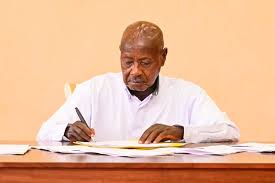
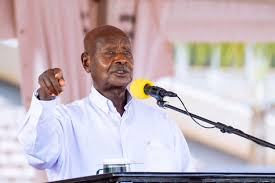
President Yoweri Kaguta Museveni’s latest national address has reignited one of Uganda’s longest-running constitutional debates after he renewed calls to abolish or severely restrict bail while commenting extensively on the ongoing criminal proceedings involving opposition leader Dr. Kizza Besigye.
The President argued that suspects accused of serious offences should not be granted bail because they may interfere with state witnesses and frustrate criminal prosecutions.
His remarks have, however, drawn immediate condemnation from legal professionals, constitutional scholars, political leaders and sections of civil society, who argue that they amount to executive interference in matters constitutionally reserved for the Judiciary.

Uganda Law Society: “This Is Executive Interference”
Leading the criticism was the Uganda Law Society (ULS), whose strongly worded statement described the President’s comments as unconstitutional interference with the administration of justice.
Signed by ULS President Isaac Ssemakadde, the statement argues that:
- Bail is a judicial function protected under Articles 23 and 28 of the Constitution.
- Public comments on pending criminal proceedings violate the sub judice principle.
- Decisions on whether to grant bail belong exclusively to judicial officers.
- Blanket abolition of bail would offend both Uganda’s Constitution and international human rights standards.
The ULS further urged the Chief Justice and the Judiciary to publicly defend judicial independence and resist executive pressure.
Perhaps its strongest rebuttal to the President’s witness-protection argument was the assertion that:
“Banning bail will not protect witnesses. It will instead punish the innocent and shield systemic failures from scrutiny.”

Is Witness Protection Really the Problem?
President Museveni insists that suspects released on bail intimidate witnesses.
Yet constitutional lawyers argue that such reasoning raises difficult legal and institutional questions.
Doesn’t Uganda Already Have Institutions to Protect Witnesses?
One of the principal responsibilities of the State is protecting witnesses throughout criminal proceedings.
If witnesses remain vulnerable to intimidation, critics ask whether that reflects a failure of the accused—or a failure of the State’s own witness protection mechanisms.
Many legal experts contend that strengthening investigations and witness protection would be a constitutionally safer remedy than removing a fundamental liberty guaranteed by the Constitution.
Presumption of Innocence Cannot Be Suspended
Uganda’s Constitution provides that every accused person is presumed innocent until proven guilty.
Bail exists because criminal charges alone do not amount to guilt.
Legal scholars warn that treating every accused person as though conviction were inevitable risks reversing one of the oldest principles of criminal justice.
They argue that prolonged pre-trial detention effectively becomes punishment before conviction.
What Happens When the Accused Is Acquitted?
One of the questions increasingly dominating public discourse is this:
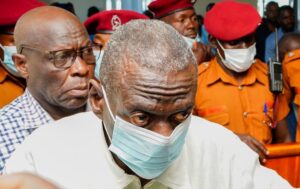
What happens if an accused person spends years on remand only to be acquitted?
History offers several examples where suspects have eventually been cleared after lengthy incarceration.
Years lost in detention cannot easily be restored.
Families may be destroyed.
Businesses collapse.
Employment disappears.
Children grow up without parents.
Although courts may occasionally award compensation for unlawful detention, many legal practitioners argue that no monetary award can fully restore years lost awaiting trial.
The Constitutional Role of Bail
Ugandan courts have consistently held that bail is not an acquittal.
Neither does granting bail terminate criminal proceedings.
Instead, bail balances two competing constitutional interests:
- protecting individual liberty; and
- ensuring the accused returns for trial.
Courts already possess powers to deny bail where credible evidence shows:
- likelihood of absconding;
- interference with witnesses;
- commission of further offences;
- threats to public safety.
Critics therefore question why an already existing judicial discretion should be replaced by executive policy.
Executive Versus Judicial Power
Uganda’s Constitution establishes three independent arms of government:
- Executive
- Legislature
- Judiciary
Each is expected to exercise its powers without encroaching upon the others.
Constitutional commentators argue that when the Head of State publicly comments on active criminal cases or urges particular outcomes regarding bail, it creates perceptions of pressure upon judicial officers, even where no direct instruction is issued.
The Uganda Law Society says such commentary risks undermining public confidence in judicial independence.
Questions Over Military Involvement in Civilian Law Enforcement
Another issue repeatedly raised by opposition politicians, human rights defenders and lawyers concerns the role of the military in civilian policing.
Critics have questioned allegations of military involvement in arrests and detention of civilians despite constitutional provisions assigning ordinary law enforcement primarily to civilian policing institutions.
Uganda’s Supreme Court earlier affirmed constitutional limits on the trial of civilians before military courts, reinforcing the distinction between civilian justice and military jurisdiction.
Human rights organisations have argued that allegations of arbitrary arrests, enforced disappearances and torture should be independently investigated wherever credible evidence exists.
Government agencies have, at different times, denied wrongdoing or maintained that security operations are conducted within the law.
Buganda’s Earlier Call for Rule of Law
The Kingdom of Buganda has consistently used national occasions to call for constitutionalism, justice and respect for human rights.
His Majesty the Kabaka Ronald Muwenda Mutebi II, through messages delivered by the Charles Peter Mayiga, has repeatedly urged leaders to uphold the Constitution, strengthen institutions and promote justice as the foundation of national stability.
Those messages have frequently emphasized that lasting peace is built upon the rule of law rather than arbitrary exercise of power.
A Debate Bigger Than Dr. Besigye
While President Museveni’s latest remarks were made in reference to Dr. Besigye’s prosecution, constitutional experts say the implications extend far beyond one individual.
Today’s opposition figure could be tomorrow’s government official.
Any weakening of judicial independence today could affect every Ugandan citizen tomorrow.
Constitutional safeguards are designed not merely to protect the popular or the powerful, but every individual who comes before the courts.
The Cost of Weak Institutions
Across democratic societies, confidence in justice depends upon courts being seen as impartial.
When executive officials appear to dictate judicial outcomes, critics warn that public trust inevitably suffers.
The question facing Uganda therefore extends beyond bail itself.
It concerns whether constitutional institutions are permitted to perform their respective mandates free from political influence.
A Clarion Call for Constitutionalism
Uganda’s Constitution remains the supreme law of the land.
Its guarantees of liberty, fair hearing, judicial independence and separation of powers were deliberately crafted to prevent concentration of authority within any single institution.
The present debate should therefore serve as an opportunity—not to weaken constitutional protections—but to strengthen criminal investigations, improve witness protection, expedite trials and reinforce public confidence in the courts.
Justice is best served when courts remain independent, investigations are professional, witnesses are effectively protected and every accused person receives a fair hearing before an impartial tribunal.
That is the essence of constitutional democracy and the rule of law.