Uganda’s Supplementary Budget Sparks Wider Debate on Economic Sovereignty and Historical Lessons
+256 702 239 337: Supplementary spending returns to the centre of public discourse The video opens against the backdrop of a newspaper front page highlighting the headline: “We’ll pay the price.” The imagery immediately frames the concern that supplementary appropriations, while often presented as administrative necessities, ultimately carry long-term consequences for ordinary taxpayers.
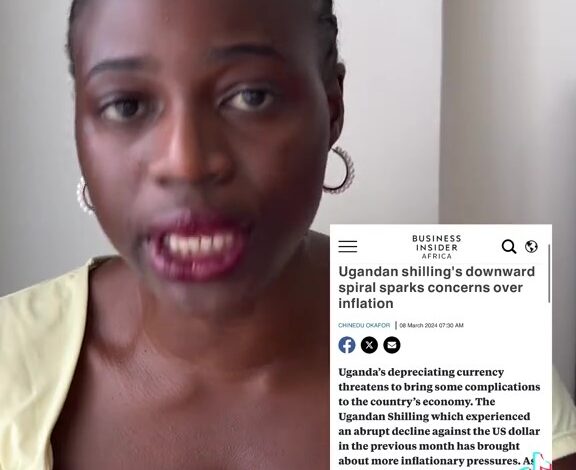
A social media commentator reflects on Uganda’s supplementary expenditure and its wider economic implications.
A social media commentator reflects on Uganda’s supplementary expenditure and its wider economic implications.
UgandaToday: Uganda’s Supplementary Budget Sparks Wider Debate on Economic Sovereignty and Historical Lessons
A video commentary circulating on social media has reignited public debate over Uganda’s recently announced supplementary expenditure, drawing attention not only to the immediate fiscal implications but also to broader questions of governance, public accountability, and the historical consequences of economic mismanagement.
In the video, a young commentator reflects on the Ugandan government’s latest budgetary decisions while drawing parallels with the political and economic trajectory of Zimbabwe, formerly Southern Rhodesia. Her reflections have gained traction online as citizens continue to scrutinise the country’s growing public expenditure amid rising cost-of-living pressures.
Supplementary spending returns to the centre of public discourse
The video opens against the backdrop of a newspaper front page highlighting the headline: “We’ll pay the price.” The imagery immediately frames the concern that supplementary appropriations, while often presented as administrative necessities, ultimately carry long-term consequences for ordinary taxpayers.
At a time when many Ugandans are grappling with inflationary pressures, unemployment, and constrained household incomes, public conversations around supplementary budgets increasingly extend beyond parliamentary procedure to questions of national priorities.
Observers note that while supplementary appropriations are lawful instruments of fiscal management, their political reception often depends on whether citizens perceive them as responding to urgent public need or as adding strain to an already burdened economy.
Historical parallels with Zimbabwe
In the course of the commentary, Zimbabwe is invoked as a cautionary example. The speaker briefly traces the history of Southern Rhodesia and later independent Zimbabwe, pointing to how economic instability, political contestation, and institutional erosion can combine to produce prolonged national hardship.
The reference is not presented as a direct equivalence between the two countries, but rather as a broader reflection on how state decisions can shape economic confidence over time.
Zimbabwe’s experience remains one of the most cited examples in African political discourse when discussing inflation, investor confidence, currency instability, and the relationship between governance and economic resilience.
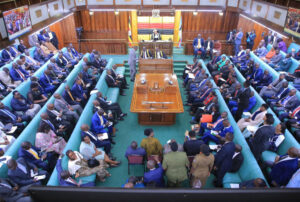
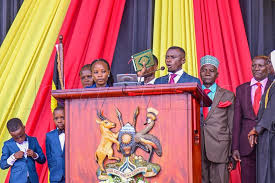
Parliament passed the Protection of Sovereignty Bill together with a supplementary budget barely a month to the presentation of a new financial year budget. Despite widespread criticism from economists, legal experts and civil society. Supplementary appropriations remain among the most closely watched instruments of public finance management.
Social media as a new civic forum
The growing circulation of such commentary also illustrates the evolving role of digital platforms in Uganda’s public conversation.
Short-form video platforms are increasingly becoming spaces where citizens interpret state policy, compare contemporary developments with historical precedents, and present political analysis in accessible language to younger audiences.
This shift reflects a broader transformation in public communication, where formal political institutions no longer monopolise policy interpretation. Social media now functions as a parallel civic arena in which public finance, governance, and historical memory are constantly debated.
The deeper question: public trust
Beyond the immediate debate over supplementary allocations lies a deeper concern — public trust.
Fiscal policy is not merely about numbers in a budget framework. It also shapes citizen confidence in institutions, government legitimacy, and perceptions of whether national resources are being managed prudently.
As Uganda continues to navigate economic pressures and ambitious development priorities, public scrutiny of expenditure decisions is likely to remain intense.
The viral video may not settle the debate, but it captures an increasingly visible national mood: that economic decisions made today will ultimately define the burdens — or opportunities — inherited tomorrow. #UgandaToday #PhoenixNewsFeeds #OperaNewsFeeds #UgandaPolitics #PublicFinance #EconomicGovernance
UgandaToday is published by CMK Media Solutions. UgandaToday is your trusted source for news and analysis.
Partner with Uganda Today where your story matters in shaping the social and economic dynamics of the country.
Let’s help you grow your brand and keep your audience informed.
Website:https://www.ugandatoday.co.ugWhatsApp: +256 702 239 337
X (formerly Twitter):@uganda43443 |
Email:ugandatodayedition@gmail.com
P.O.BOX 184351 Kampala.
Uganda