Archbishop Kaziimba, Political Witness and the Burden of Survival in Uganda’s Polarised Public Square
+256 702 239 337: During the engagement, Kaziimba reportedly appealed for restraint and de-escalation at a moment of heightened national anxiety. In remarks that later attracted public debate, he is said to have made a direct appeal to Kyagulanyi’s wife, Barbara Itungo Kyagulanyi, urging her to persuade her husband not to pursue post-election protests over the contested results. To supporters of the Archbishop, the intervention reflected a pastoral attempt to prevent further confrontation and possible violence.

UgandaToday: Archbishop Kaziimba, Political Witness and the Burden of Survival in Uganda’s Polarised Public Square
By Uganda Today Political Desk
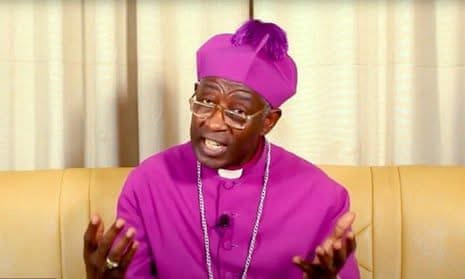
The public storm surrounding Samuel Stephen Kaziimba Mugalu has once again placed Uganda’s religious leadership under sharp national scrutiny.
On April 19, 2026, the Archbishop publicly defended himself against recurring accusations that he has grown too close to the ruling National Resistance Movement government. His critics argue that, unlike some senior clerics within the Uganda Episcopal Conference, Kaziimba has often appeared restrained in his criticism of state conduct, particularly after the contested January 15, 2026 general elections in which President Yoweri Kaguta Museveni was declared winner for a seventh consecutive term.
Archbishop Stephen Kaziimba Mugalu being chased out of church in Boston:
Elections Aftermath Inter Religious Council Visit to Kyagulanyi’s Residence
In the tense aftermath of Uganda’s disputed January 15, 2026 general elections, Archbishop Samuel Stephen Kaziimba Mugalu joined fellow leaders under the banner of the Inter-Religious Council of Uganda in a visit to the residence of opposition leader Robert Kyagulanyi Ssentamu. During the engagement, Kaziimba reportedly appealed for restraint and de-escalation at a moment of heightened national anxiety. In remarks that later attracted public debate, he is said to have made a direct appeal to Kyagulanyi’s wife, Barbara Itungo Kyagulanyi, urging her to persuade her husband not to pursue post-election protests over the contested results. To supporters of the Archbishop, the intervention reflected a pastoral attempt to prevent further confrontation and possible violence. Critics, however, interpreted the appeal as emblematic of what they regard as a cautious clerical posture that appeared more concerned with preserving public order than openly interrogating the political grievances that had triggered the post-election tension.

In defending his position, Kaziimba made a remark that quickly ignited public debate.
“Do you think I can make an impact by being killed?”
For many Ugandans, the statement landed awkwardly. To some, it sounded like caution bordering on retreat. To others, it reflected a sober acknowledgment of the risks that accompany public leadership in a politically charged environment.
The controversy intensified further during the Archbishop’s farewell pastoral visit to the Ugandan community in Boston, where sections of the congregation reportedly booed him — a symbolic indication of how deeply divided opinion around his tenure has become.
A tenure likely to invite mixed verdicts
Measured purely by visible institutional legacy, one of the most frequently cited achievements of Archbishop Kaziimba’s tenure remains the completion and consolidation of Church House along Kampala Road in Kampala.
Beyond that, many critics maintain that his leadership has not produced the kind of moral and national imprint expected from the head of the Church of Uganda during a period marked by heightened political contestation, democratic anxieties and growing public demands for prophetic clarity.
Yet reducing the debate to whether Kaziimba has been “too political” or “not political enough” risks missing the deeper question now confronting Uganda’s religious institutions: What precisely is the duty of a church leader in moments of national political turbulence?
Does scripture require every cleric to become a martyr?
That question formed the centre of reflections by commentator Chris Mwesigye Bishaka, whose remarks on Facebook triggered further public discussion.
Bishaka argues that while criticism of Kaziimba is understandable, some of the anger directed at him may overlook both biblical nuance and historical context.
Many critics have invoked the example of Jesus Christ, suggesting that authentic spiritual leadership requires readiness to die in defence of truth and justice.
Yet the New Testament presents a more layered picture.
While Jesus ultimately gave His life, the Gospel narrative does not portray Him as recklessly courting political confrontation at every turn. He often withdrew from premature danger, moved strategically, and concentrated on teaching, healing and spiritual transformation. His mission, Christians hold, was singular and divinely ordained.
In response to Bishaka’s analysis, one social media commentator, Musajja wa Kabaka, advanced a related argument: that reading every clerical responsibility through the lens of martyrdom may impose on contemporary church leaders a burden that scripture itself does not uniformly demand.
The John the Baptist question
Within the New Testament, perhaps the clearest example of direct political confrontation is John the Baptist.
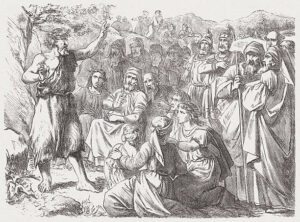
John openly rebuked Herod Antipas over moral and political misconduct. His boldness ultimately led to imprisonment and execution.
That history has often been cited as a model of prophetic witness.
But it also underscores an important theological reality: not every vocation within scripture unfolds identically.
Some prophets confront. Some shepherd. Some build institutions. Some preserve communities through prudence rather than confrontation.
The challenge, therefore, is not merely whether Kaziimba has spoken loudly enough. It is whether Uganda expects every church leader to embody one singular model of public witness.
Between prophecy and preservation
Uganda’s religious leaders today occupy an unusually delicate position.
They lead spiritual communities that span political divides. They minister to victims and office holders alike. They operate in a national atmosphere where public speech can rapidly become politically charged, morally weaponised, or dangerously consequential.
That reality does not exempt them from moral responsibility.
Indeed, many Ugandans reasonably expect religious leaders to speak firmly against injustice, electoral controversy, abuse of power and public suffering.
But moral courage may not always take the form of direct confrontation. Sometimes it may emerge through mediation, pastoral guidance, quiet institutional protection, or carefully measured public interventions designed to preserve both witness and survival.
Why the debate matters
The debate around Archbishop Kaziimba is therefore larger than one individual.
It reflects a growing national conversation about the place of faith institutions in a politically polarised republic.
Should church leaders function primarily as prophetic critics of power?
Should they remain non-partisan moral referees?
Or should they balance both roles while navigating the realities of institutional survival?
Those questions remain unresolved.
What is increasingly clear, however, is that Uganda’s religious leadership will continue to be judged not only by cathedrals built or projects completed, but by the moral imagination with which it responds to moments of national anxiety.
Archbishop Kaziimba’s statement — “Do you think I can make an impact by being killed?” — may have unsettled many.
But it has also forced the country to confront a difficult and enduring question: must every religious leader die to prove that he stood for truth?
#UgandaToday #PhoenixNewsFeeds #OperaNewsFeeds #ChurchOfUganda #StephenKaziimba #UgandaPolitics