Politics

Museveni Then, Sovereignty Now: How an Early Promise Against Oppression Returned to Haunt the NRM

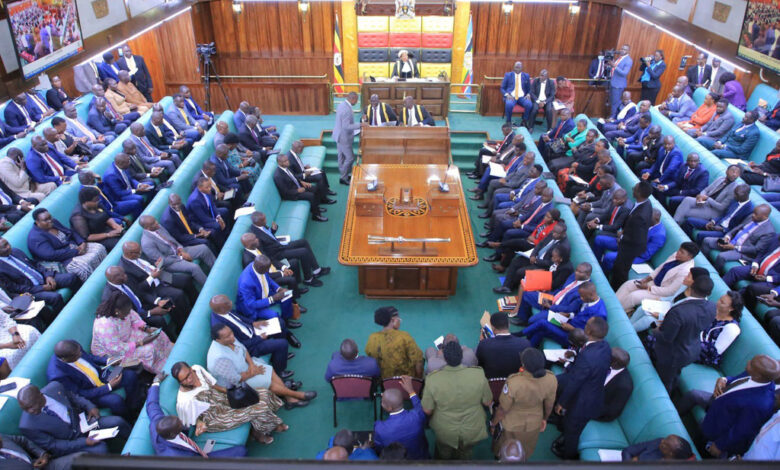
The Uganda Law Society questioned both the necessity and constitutional soundness of the legislation, while religious leaders and civil society organisations cautioned that vague enforcement language could easily become a political instrument rather than a narrowly tailored sovereignty safeguard.

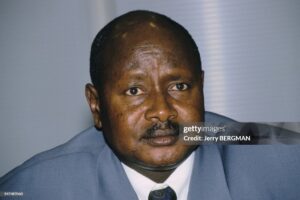
“President Museveni during early years at the helm of Uganda’s political administration.”

UgandaToday: Museveni Then, Sovereignty Now: How an Early Promise Against Oppression Returned to Haunt the NRM

By Uganda Today Political Desk

A resurfacing archival video from President Yoweri Museveni’s early years in power has reopened a defining national question: has the ruling National Resistance Movement remained faithful to its founding pledge never to enact laws that strengthen state oppression? The debate has intensified after the passage of the Protection of Sovereignty Bill, 2026, despite warnings from the Bank of Uganda, universities, lawyers, religious leaders, civil society and international development partners. Recent developments involving public pressure on the central bank governor and the reported theft of central bank computers have deepened the political intrigue.

President Museveni in the early years of NRM rule, declaring that his government would never enact laws meant to intensify oppression against citizens.


The words that have returned from history

A striking archival video of President Yoweri Museveni from the formative years of NRM rule has once again entered Uganda’s political conversation.

In that early address, Museveni articulated one of the central moral claims of the liberation era: that the new government would not reproduce the legal machinery of repression that had characterised previous regimes.

Parliament passes the sovereignty bill despite national alarm

Uganda’s Parliament this week passed the Protection of Sovereignty Bill, 2026, after amendments softened some earlier provisions but preserved the law’s central thrust — regulating foreign-linked political activity and criminalising conduct deemed to advance foreign interests against Uganda’s national interests. The legislation now awaits presidential assent.

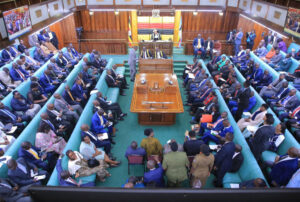
Parliament passed the Protection of Sovereignty Bill despite widespread criticism from economists, legal experts and civil society.

The bill generated unusually broad institutional resistance.

The Bank of Uganda, the Uganda Law Society, Makerere University, Mbarara University of Science and Technology, civil society actors, religious leaders and the World Bank all raised concerns over the bill’s constitutional, economic and civic implications.

The central concern among critics was not whether sovereignty matters — it does — but whether the law creates broad discretionary state power that could be turned against dissent, advocacy, academic debate, journalism and civic organisation.

Bank of Uganda’s warning: “economic disaster”

Among the most consequential interventions came from Michael Atingi-Ego.

The governor warned lawmakers that, in its earlier form, the bill risked discouraging remittances, foreign exchange inflows and development financing — flows that are critical to Uganda’s macroeconomic stability.

He warned Parliament that tampering with those inflows could run down reserves and create what he described as “economic disaster for our country.”

That warning altered the debate.

Parliament eventually amended the legislation so that registration and disclosure requirements apply more narrowly to foreign funding used for political purposes. Yet many legal and civic observers maintain that the amended law still retains vague language capable of expansive interpretation.

Muhoozi’s warning and the politics of pressure

The political temperature rose further when Gen. Muhoozi Kainerugaba — son of President Museveni — publicly weighed in.

Reports from Ugandan media and public commentary indicated that Muhoozi sharply criticised the central bank governor’s intervention, warning against what he suggested was institutional overreach into political and legislative matters. That episode was politically significant.

It underscored the increasingly contested boundary between technocratic institutions and political power in Uganda’s governance architecture.

For critics, the symbolism was unmistakable: when a central banker raises macroeconomic caution and comes under visible political pressure, the debate is no longer merely about legislation — it becomes a question of institutional autonomy.

The bizarre theft of central bank computers

Then came a development that injected further intrigue.

Days after public controversy over the governor’s cautionary guidance, reports emerged of a theft involving computers at the Bank of Uganda. Public reporting indicated that several laptops were reportedly stolen from the central bank. Authorities have not publicly linked the incident to the sovereignty bill debate, and no evidence presently establishes such a connection.

Still, the timing has inevitably intensified public speculation.

From a political standpoint, the theft has become part of a wider atmosphere of unease surrounding institutions that voiced caution at a sensitive legislative moment.

That makes the story significant not because of proven causation, but because of public perception.

Museveni’s congratulatory message — and a deeper contradiction

Following passage of the bill, President Yoweri Museveni congratulated NRM Members of Parliament for standing firm in defence of Uganda’s sovereignty despite what he characterised as noise and alarm from critics.

That presidential message now sits in direct political tension with the archival pledge from the liberation years.

Pull quote

“Mutuleke tukole ebyaffe nga mmwe bwe mukola ebyamwe.”

A careful English rendering would be:

“Let us do our things the way you do yours.”

That line was used as Museveni’s shorthand explanation of what he said the bill means politically.

Full context of Museveni’s congratulatory message

In his statement, President Museveni congratulated the NRM Members of Parliament for passing the bill and framed it as a defence of Uganda’s sovereign decision-making. He argued that “independence” means the right of a country to make its own decisions and learn from them, while “sovereignty” means that outsiders should not fund groups in order to influence national decisions. He also said that much of the public anxiety around remittances, investment and banking had been “noise,” maintaining that those were not the targets of the legislation.

The political thrust of the message was therefore twofold:

  • first, to praise NRM legislators for standing firm despite criticism;
  • second, to define the bill not as an anti-development law, but as a political instrument against external influence in domestic affairs.

Why that wording matters politically

That Luganda phrase has become politically significant because it compresses the ideological justification of the sovereignty bill into ordinary language.

For critics, however, it also sharpens the contradiction with Museveni’s early liberation-era pledge that the NRM would not enact laws intended to deepen state oppression of citizens.

That is why the phrase has rapidly moved beyond rhetoric — it has become part of the broader argument over whether the sovereignty bill protects national autonomy or expands legal power over civic dissent.

Supporters view that as a legitimate assertion of independence. Critics see a profound reversal.

The central democratic question is this: can the state claim to defend sovereignty while narrowing the civic space through which citizens themselves exercise sovereignty? 

When history begins to interrogate power

Political history often returns through old words. Museveni’s early declaration that the NRM would never make laws designed to intensify oppression has now returned not as nostalgia, but as constitutional scrutiny. The sovereignty bill has therefore become larger than legislation.

It has become a test of continuity between the NRM’s founding philosophy and the contemporary exercise of state power.

In 1986, law was presented as a shield against arbitrary authority.

In 2026, many critics argue that law is increasingly becoming the terrain through which political control is formalised.

Uganda’s constitutional question

No serious observer disputes that every state has a right to protect national sovereignty. But sovereignty in a republic is not held by government alone.

It also resides in citizens — in universities, churches, professional bodies, lawyers, journalists, researchers, civic organisations and lawful critics.

That is why the national argument will not end with parliamentary passage. It has only entered a deeper and more consequential phase.

Four decades later, that historic vow has returned to the centre of Uganda’s national debate.

The immediate trigger is the passage of the Protection of Sovereignty Bill, 2026, a controversial piece of legislation that has generated one of the broadest coalitions of criticism in recent years. Despite warnings from economists, legal scholars, civil society actors, universities, religious leaders and opposition figures, Parliament passed the bill this week. Shortly thereafter, President Museveni publicly congratulated ruling party legislators for what he described as ideological clarity and a defence of Uganda’s national independence.

From Liberation Promise to State Power

The political significance of this moment lies not merely in the text of the bill, but in the contrast between the language of the liberation era and the instincts of contemporary state power.

In the early years of the NRM, Museveni repeatedly argued that Uganda’s tragedy had been the abuse of state authority against citizens. Law, in that philosophy, was supposed to restrain arbitrary power. Government legitimacy was to flow from consent, not coercion.

Yet critics now argue that the sovereignty bill risks doing precisely what the NRM once vowed to prevent: expanding the legal instruments through which the state may monitor, regulate and potentially criminalise civic, political and institutional dissent.

That contradiction is at the heart of the current national unease.

The Warning from Uganda’s Economic and Civic Establishment

What makes the current debate extraordinary is the breadth of concern.

Among those who publicly raised alarm was the Governor of the Bank of Uganda, who warned that earlier drafts of the legislation could trigger severe economic disruption by discouraging remittances, foreign exchange inflows and investor confidence.

The World Bank also expressed concern over the bill’s implications for development financing and civic partnerships.

Academics from Makerere University and Mbarara University of Science and Technology joined legal scholars, researchers and public intellectuals in warning that overly broad definitions of “foreign interests” could weaken constitutional freedoms, civic participation and academic independence.

The Uganda Law Society questioned both the necessity and constitutional soundness of the legislation, while religious leaders and civil society organisations cautioned that vague enforcement language could easily become a political instrument rather than a narrowly tailored sovereignty safeguard.
#UgandaToday #PhoenixNewsFeeds #OperaNewsFeeds #ProtectionOfSovereigntyBill
#UgandaPolitics #Museveni

Publisher

Uganda Today

Published by Uganda Today, your trusted source for news and analysis. Let’s help you grow your brand and keep your audience informed.


Partner with Uganda Today where your story matters in shaping the social and economic dynamics of the country.


Website: https://www.ugandatoday.co.ug/about-cmk


WhatsApp: +256 702 239 337


X (formerly Twitter): @uganda43443 |


Email: ugandatodayedition@gmail.com

Related Articles

Back to top button
error: Content is protected !!