Environment

From Coconut Waste to Green Wealth: How Indonesia Is Turning Husks into Eco-Friendly Packaging

+256 702 239 337: Uganda produces significant quantities of coffee husks, banana fibres, rice husks, sugarcane bagasse, maize stalks and coconut waste, much of which remains underutilised. With appropriate investment in research, innovation and green entrepreneurship, these materials could be transformed into biodegradable packaging, construction materials, furniture and other high-value products. Such innovations would not only help reduce plastic pollution but also create employment for young people and strengthen climate resilience through sustainable manufacturing.

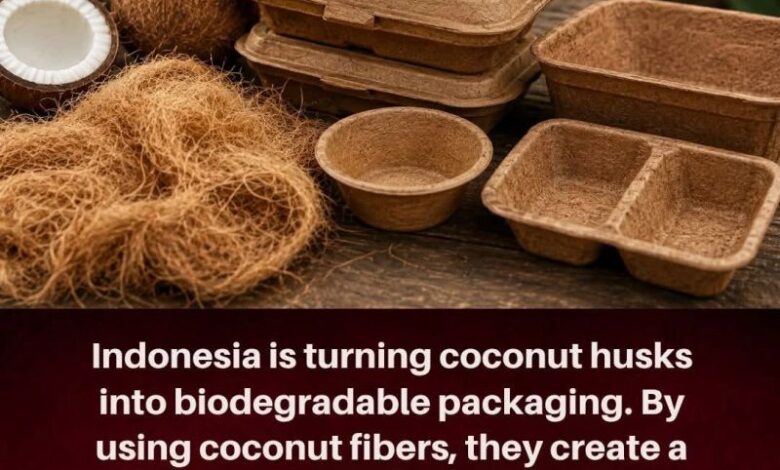
Eco-friendly packaging made from coconut fibres offers a sustainable alternative to single-use plastics.

UgandaToday: From Coconut Waste to Green Wealth: How Indonesia Is Turning Husks into Eco-Friendly Packaging

By UgandaToday Environment Desk

As the world grapples with the escalating crisis of plastic pollution, one Southeast Asian nation is proving that solutions can often be found in nature itself. Indonesia, one of the world’s largest producers of coconuts, is pioneering an innovative approach by transforming discarded coconut husks into biodegradable packaging, creating a sustainable alternative to single-use plastics while generating new economic opportunities.

The initiative offers an inspiring lesson for countries such as Uganda, where coconut farming and other agricultural activities generate substantial organic waste that is often discarded or burnt.

Giving Agricultural Waste a Second Life

Indonesia produces millions of tonnes of coconuts annually, leaving behind enormous quantities of husks that were traditionally regarded as waste. Today, these fibrous by-products are being converted into environmentally friendly packaging materials that are both practical and sustainable.

The naturally tough coconut fibres are processed into strong, lightweight and fully compostable products suitable for food containers, protective packaging, shipping materials and numerous other applications that would otherwise rely on plastic.

Unlike conventional plastic packaging, which can persist in the environment for centuries, coconut fibre products naturally decompose after use, significantly reducing pollution in landfills, rivers and oceans.

Cocopallet's eco-friendly shipping pallets made from coconut husks
Innovative pallets manufactured from coconut waste reduce reliance on timber while promoting a circular economy.

Innovation Driving the Green Economy

Among the pioneers spearheading this transformation is Alterpacks, which has developed compostable packaging manufactured from coconut waste. The company is working to help healthcare institutions replace millions of disposable plastic items with environmentally friendly alternatives.

Another notable innovator is CocoPallet, which manufactures durable shipping pallets from coconut husks. These sustainable pallets reduce dependence on timber, helping conserve forests while creating value from what was once considered agricultural waste.

Together, these innovations demonstrate how circular economy principles can simultaneously tackle waste management, reduce environmental degradation and stimulate industrial innovation.

The coconut value chain is creating new income opportunities through green innovation.

Benefits Beyond Environmental Conservation

The transformation of coconut husks into biodegradable products delivers multiple benefits beyond reducing plastic waste.

It creates additional income streams for coconut farmers, supports the growth of green manufacturing industries, generates employment opportunities and reduces greenhouse gas emissions associated with plastic production and waste disposal.

Consumers also benefit from safer, biodegradable products that minimise long-term environmental impacts.

Lessons for Uganda and Africa

Indonesia’s experience presents valuable lessons for Uganda and many African countries blessed with abundant agricultural resources.

Uganda produces significant quantities of coffee husks, banana fibres, rice husks, sugarcane bagasse, maize stalks and coconut waste, much of which remains underutilised. With appropriate investment in research, innovation and green entrepreneurship, these materials could be transformed into biodegradable packaging, construction materials, furniture and other high-value products.

Such innovations would not only help reduce plastic pollution but also create employment for young people and strengthen climate resilience through sustainable manufacturing.
Building a Circular Economy

The Indonesian model demonstrates that what is commonly viewed as waste can become an economic asset.

Rather than allowing agricultural by-products to accumulate in dumpsites or be openly burnt, they can be reintegrated into production cycles, reducing pressure on natural resources while promoting cleaner industries.

As governments worldwide intensify efforts to phase out single-use plastics, nature-based alternatives such as coconut fibre packaging are becoming increasingly important in building resilient, low-carbon economies.

A Cleaner Future Starts with Innovation

Indonesia’s success story reminds the world that environmental protection and economic development are not competing goals. By converting discarded coconut husks into valuable biodegradable products, the country is reducing plastic pollution, empowering farmers and showcasing how innovation rooted in natural resources can contribute to a healthier planet.

For Uganda and the rest of Africa, the message is clear: the journey towards a greener future may already be growing in our fields.

UgandaToday

UgandaToday is published by CMK Media Solutions. UgandaToday is your trusted source for news and analysis. Partner with Uganda Today where your story matters in shaping the social and economic dynamics of the country. Let’s help you grow your brand and keep your audience informed. Website: https://www.ugandatoday.co.ug WhatsApp: +256 702 239 337 X (formerly Twitter): @uganda43443 | Email: ugandatodayedition@gmail.com P.O.BOX 184351 Kampala. Uganda

Related Articles

Back to top button
error: Content is protected !!