Inside the Shs30 Billion Ferry Question: Why Betty Nambooze Wants Uganda’s Deal with Kalangala Infrastructure Services Revisited
+256 702 239 337: The Shs30 Billion Question The Mukono Municipality legislator alleges that government continues paying approximately Shs2.6 million for every ferry crossing operated by KIS. She further claimed that annual payments amount to nearly Shs15 billion for each ferry, bringing the total annual government expenditure to roughly Shs30 billion for the two vessels.


UgandaToday: Inside the Shs30 Billion Ferry Question: Why Betty Nambooze Wants Uganda’s Deal with Kalangala Infrastructure Services Revisited
By UgandaToday Investigations Desk
A Parliamentary Challenge That Has Reopened an Old Debate
Mukono Municipality Member of Parliament Betty Nambooze Bakireke has thrown fresh scrutiny onto one of Uganda’s most ambitious public-private infrastructure projects, questioning why the Government of Uganda continues paying billions of shillings annually for ferry services operated by Kalangala Infrastructure Services (KIS) despite reportedly owning a 46 per cent equity stake in the company.
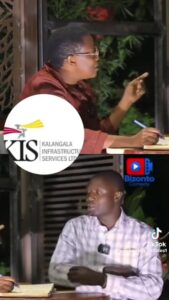
Speaking in a recent public address, Nambooze argued that the arrangement illustrates what she described as a deeper governance problem in Uganda’s management of public investments.
According to the legislator, government’s dual role as both shareholder and purchaser of services deserves urgent parliamentary scrutiny.
Her remarks have revived longstanding public interest in the financial architecture of the Kalangala Infrastructure Project, a flagship Public-Private Partnership (PPP) launched more than a decade ago.

A US$50 Million Dream to Transform the Ssese Islands
The Kalangala Infrastructure Project was conceived as a landmark initiative to transform Bugala Island and the wider Ssese Islands into an economic and tourism hub.
Implemented through Kalangala Infrastructure Services, the project brought together government and private investors to deliver critical infrastructure that included:
- Construction of two modern ferries connecting Bukakata in Masaka to Luku (Bugoma) Landing Site in Kalangala;
- A hybrid solar and diesel electricity generation plant;
- A clean water distribution system;
- Upgrading approximately 66 kilometres of roads on Bugala Island.
The overall investment was estimated at approximately US$50 million, making it one of Uganda’s earliest integrated public-private infrastructure concessions.
Government’s Equity Stake
According to information cited by Nambooze, the Government of Uganda owns approximately 46 per cent of Kalangala Infrastructure Services.
Government’s participation was intended to ensure public oversight while leveraging private capital and expertise to develop infrastructure that would otherwise have required substantial public financing.
In theory, such a shareholding should entitle government to benefit from dividends and appreciation in company value, depending on the concession agreement and financial performance.
It is this ownership structure that forms the basis of Nambooze’s criticism.
The Shs30 Billion Question
The Mukono Municipality legislator alleges that government continues paying approximately Shs2.6 million for every ferry crossing operated by KIS.
She further claimed that annual payments amount to nearly Shs15 billion for each ferry, bringing the total annual government expenditure to roughly Shs30 billion for the two vessels.
If these figures accurately reflect the contractual obligations, Nambooze argues that taxpayers deserve a detailed explanation regarding:
- Why government is paying a company in which it is itself a major shareholder;
- How the payment formula was arrived at;
- Whether the concession continues to provide value for money fifteen years after implementation.
UgandaToday has not independently verified the specific payment figures cited by the MP.
Understanding Public-Private Partnerships
Infrastructure economists caution that government ownership in a concession company does not automatically eliminate contractual service payments.
In many PPP models, governments may remain contractually obligated to pay operators under availability-payment or service-purchase arrangements agreed upon during project financing.
Such payments can enable investors and lenders to recover capital costs over the life of the concession while ensuring continuity of essential public services.
Consequently, the mere existence of government shareholding does not necessarily imply that operational payments are inappropriate.
Rather, experts argue, the critical questions are whether:
- the concession terms remain economically justifiable;
- payments reflect actual service delivery;
- risks are fairly shared between the public and private partners;
- taxpayers continue receiving value for money.
Why Transparency Matters
Nambooze insists that Parliament should obtain and scrutinise the original concession agreement.
She argues that Ugandans deserve answers to several fundamental questions:
How were the payment obligations calculated?
Understanding the financial model would clarify whether annual payments were intended to recover initial capital investments or finance ongoing operations.
How has government benefited from its equity?
If government owns nearly half the company, the public deserves to know whether dividends have been paid or whether shareholding has translated into measurable financial returns.
Has the concession been independently reviewed?
Long-term infrastructure concessions are generally expected to undergo periodic reviews to determine whether assumptions made at financial close remain valid.
Should the agreement be renegotiated?
Given changes in traffic volumes, tourism, inflation and public finances over the last decade, some analysts believe periodic renegotiation may improve value for taxpayers.
The Ferries That Changed Kalangala
Few dispute that the introduction of MV Pearl and MV Ssese fundamentally transformed transportation between Bukakata and Kalangala.
The ferries significantly improved safety, reduced dependence on smaller boats and enhanced the movement of people, fuel, construction materials, agricultural produce and tourists.
Improved connectivity has supported commerce, healthcare access, education and tourism on Bugala Island, helping integrate Kalangala more closely with mainland Uganda.
Calls for Greater Accountability
Nambooze’s intervention comes amid increasing public demand for greater transparency in government contracts involving strategic infrastructure.
Over the years, the Office of the Auditor General has repeatedly emphasised the importance of robust oversight, transparency and value-for-money assessments in public expenditure and externally funded projects.
Governance advocates argue that public confidence in PPPs depends not only on successful infrastructure delivery but also on open disclosure of concession terms and financial obligations.
The Need for Official Responses
The questions raised by the Mukono Municipality MP are likely to renew calls for explanations from:
- The Ministry of Works and Transport;
- The Ministry of Finance, Planning and Economic Development;
- Uganda Development Corporation;
- Kalangala Infrastructure Services Limited.
Clarification from these institutions would help determine whether the annual ferry payments are contractual obligations under the PPP framework, whether government has realised returns from its equity investment and whether the concession continues to represent value for money.
Until such responses are provided, Nambooze’s assertions remain allegations that warrant verification through official documentation and public disclosure.
Conclusion
The Kalangala Infrastructure Project remains one of Uganda’s most visible examples of a public-private partnership delivering critical infrastructure to an island district that had long suffered from isolation.
Yet as Betty Nambooze’s remarks illustrate, infrastructure success alone does not shield public projects from questions about accountability.
If government indeed owns a substantial stake in Kalangala Infrastructure Services while simultaneously making significant annual payments for ferry operations, Ugandans are entitled to understand the legal, financial and economic rationale behind the arrangement.
Greater transparency over concession agreements, shareholder returns and public expenditure would not only answer the questions raised by Parliament but also strengthen confidence in Uganda’s future infrastructure partnerships.
Editor’s Note: This article includes allegations and financial figures attributed to Mukono Municipality MP Betty Nambooze. UgandaToday has not independently verified the reported payment figures. The relevant government institutions and Kalangala Infrastructure Services should be given an opportunity to respond to these claims.