El Niño Alert: Why Uganda Cannot Afford To Wait For The Rains
+256 702 23 93 37: Government Warns Communities As Above-Average Rainfall Threatens Floods, Landslides And Disease

UgandaToday: El Niño Alert: Why Uganda Cannot Afford To Wait For The Rains
Government Warns Communities As Above-Average Rainfall Threatens Floods, Landslides And Disease
Uganda is entering a period in which preparedness could determine whether the coming rainy season becomes a manageable weather event or a major humanitarian and economic challenge.
Government has warned Ugandans living in disaster-prone areas to relocate or take precautions ahead of the September–December 2026 rainy season, with the Ministry of Water and Environment forecasting rainfall in many parts of the country at about 25 per cent above the long-term average.
The anticipated conditions could extend into January and February 2027, according to the warning reported by Uganda Meteorological Authorities.
The Risks Go Beyond Flooding
The immediate public image associated with heavy rains is usually flooded roads and homes.
But the potential consequences are considerably broader.
Authorities have warned of flash floods, severe storms, landslides, waterlogging, infrastructure damage and disease outbreaks.
For communities living along wetlands, riverbanks, steep slopes and other high-risk areas, heavy rainfall can rapidly transform an environmental problem into a public-safety emergency.
Government has advised people not to cross flooded roads, bridges or rivers and to avoid sheltering under trees during thunderstorms. Parents have also been encouraged to ensure that children are accompanied to and from school where conditions are dangerous.
Kampala’s Drainage Challenge
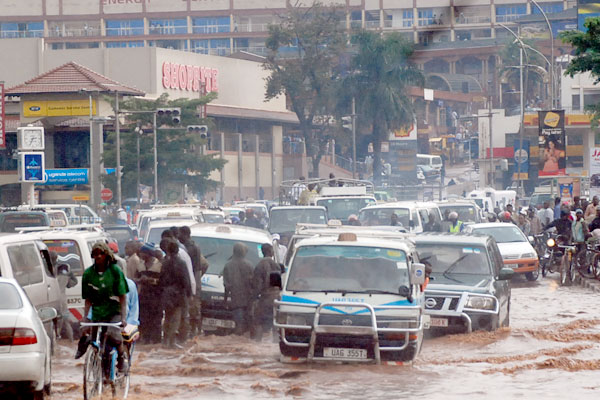
For Kampala, the warning carries particular significance.
Heavy rainfall can expose weaknesses in drainage systems, particularly where wetlands and natural water channels have been degraded, blocked or built upon.
Government’s own account of the first 100 days of the new administration says Kampala has expanded 52.23 kilometres of primary drainage channels as part of efforts to improve flood management. The same report says a 16-month rehabilitation programme is covering seven critical city roads.
But drainage infrastructure alone cannot eliminate flood risk.
Urban planning, wetland protection, solid-waste management and responsible construction all have a role to play.
Climate Warning For The Region
The warning is also part of a wider regional climate concern.
UNICEF said earlier this month that more than 162 million children in Eastern and Southern Africa live in areas exposed to the effects of the strengthening 2026/27 El Niño, with drought, extreme heat and flooding posing threats to nutrition, health, water, sanitation and education.
The situation illustrates why weather preparedness cannot be treated simply as a matter for meteorologists.
It is simultaneously an issue of public health, agriculture, education, infrastructure, food security and household income.
Farmers Need Information Before The Rain
For Uganda’s predominantly agricultural communities, accurate and timely weather information can be as valuable as physical infrastructure.
Farmers need to know when to plant, what crops may be vulnerable to excessive rainfall and where soil erosion or flooding could occur.
Early-warning information must therefore travel beyond government offices and reach farmers in languages and formats they can understand.
Radio, local leaders, community organisations, religious institutions and digital platforms can all contribute to that process.
Prevention Is Cheaper Than Disaster Response
One of the most important lessons from previous floods and landslides is that prevention is generally less costly than rebuilding after disaster.
A road washed away, a bridge damaged, a school flooded or a family displaced can require far greater expenditure than the preventive measures that might have reduced the risk.
Uganda therefore faces a relatively narrow window to prepare.
Clearing drainage channels, protecting wetlands, identifying vulnerable settlements, preparing emergency shelters, securing health supplies and communicating warnings are not merely administrative exercises.
They are investments in lives and livelihoods.
A National Test Of Preparedness
The coming rainy season will provide another test of Uganda’s disaster-management systems.
The most important question is not simply whether the rains will be heavy.
It is whether communities, local governments and national institutions will have acted early enough to reduce their consequences.
#UgandaToday #ElNino #ClimateChange #Floods #DisasterPreparedness #PhoenixNewsFeeds