
When Football Meets Plastic: The World Cup’s Reusable Bottle Question
+256 702 23 93 37: Oceana's argument is that large sporting events have the visibility, infrastructure and financial capacity to demonstrate another model — one based on refill, reuse, collection, cleaning and redistribution.


UgandaToday: When Football Meets Plastic: The World Cup’s Reusable Bottle Question
By UgandaToday
The FIFA World Cup has always been about more than football.
Every four years, the tournament becomes a global stage on which nations showcase their talent, cultures, technology, infrastructure and aspirations. But the 2026 edition has also raised a less glamorous question — and one that deserves attention long after the final whistle:
How much unnecessary plastic waste should the world’s biggest sporting spectacle generate?
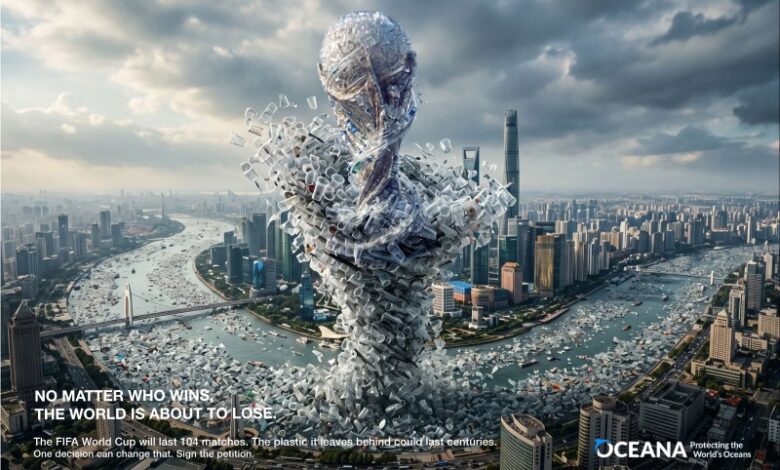
That question was thrust into the spotlight by Oceana, the international ocean-conservation organisation, after FIFA announced that fans would not be permitted to bring reusable water bottles into World Cup stadiums.
FIFA said the restriction was introduced for safety and security reasons. Under the policy applied at stadiums in the United States and Canada, fans were allowed to bring one soft, factory-sealed disposable plastic bottle of up to 590 millilitres, while hard-sided reusable bottles were prohibited. Some stadiums nevertheless provided water fountains.
For Oceana, however, the policy exposed a contradiction.
If reusable bottles are excluded for safety reasons while disposable bottles remain available, the environmental consequence can be a dramatic increase in single-use plastic consumption.
And at a World Cup scale, even a seemingly small decision can have enormous consequences.
A World Cup of Unprecedented Scale
The 2026 FIFA World Cup was the biggest edition of the tournament ever staged.
It brought together 48 teams for 104 matches across 16 host cities in Canada, Mexico and the United States.
By the tournament’s conclusion, FIFA reported that 6,810,966 fans had attended the 104 matches, with stadiums operating at an average 99.7 per cent capacity.
That scale provides the context for Oceana’s concern.
A bottle discarded after one drink may seem insignificant. Multiply that by millions of spectators, multiple matches and the enormous number of beverages consumed around stadiums and fan zones, and the issue becomes considerably larger.
Oceana warned that replacing reusable containers with disposable ones could result in millions of additional single-use plastic items entering the waste stream.
The organisation consequently called on FIFA to provide widely accessible, free water stations and reusable cups, while reversing its reusable-bottle restriction.
The Question Is Bigger Than One Bottle
The controversy is not really about whether a spectator can carry a particular type of bottle into a stadium.
It is about the design of major public events.
For decades, the dominant model has been straightforward: manufacture a container, fill it, sell it, consume its contents and throw the container away.
That model may be convenient, but convenience becomes a serious environmental challenge when multiplied by the millions.
Oceana’s argument is that large sporting events have the visibility, infrastructure and financial capacity to demonstrate another model — one based on refill, reuse, collection, cleaning and redistribution.
Its #ReuseForTheWin campaign argues that reusable beverage systems could prevent millions of plastic containers from entering the waste stream. The organisation has also pointed to evidence from other major sporting events suggesting that reuse systems can work at scale.
FIFA’s Own Sustainability Ambitions
There is another reason the debate deserves attention.
FIFA itself acknowledges that major football tournaments generate significant quantities of waste.
Its sustainability policy says the organisation seeks first to reduce waste generated upstream and, where that cannot be achieved, to reuse materials and favour recycled or recyclable products.
That ambition is not new.
At the 2022 World Cup in Qatar, FIFA reported that 77 per cent of stadium waste was reused, recycled or composted, while Coca-Cola’s beverage bottles at official venues were produced using 100 per cent recycled PET.
The lesson, therefore, is not that FIFA has ignored sustainability altogether.
Rather, the debate is about whether the next step should be to move beyond recycling and put much greater emphasis on eliminating unnecessary single-use materials in the first place.
Recycling deals with waste after consumption.
Reuse changes the system before waste is created.
That is a fundamentally different proposition.
The Sponsor’s Responsibility
The conversation also places the spotlight on major commercial partners.
Coca-Cola, one of FIFA’s longstanding World Cup partners, has a particularly visible role because beverages are central to the spectator experience.
Interestingly, FIFA and Coca-Cola themselves launched the “Every Throw-In Counts” campaign during the 2026 tournament, encouraging fans to participate in activities including recycling, using public transport and choosing reusable items.
That creates an intriguing question for the future:
Can the message of reuse become part of the physical design of the stadium experience rather than simply an instruction to fans?
In other words, should spectators be encouraged to make better environmental choices while the event infrastructure makes those choices difficult?
A genuinely sustainable stadium would ideally make the environmentally responsible option the easiest option.
The Stadium of the Future
Imagine arriving at a major football match carrying an approved reusable bottle.
Instead of throwing it away at the entrance, a spectator enters the stadium, locates a free refill station, fills the bottle and continues watching the game.
For beverages purchased inside the stadium, reusable cups could be collected after use, washed and returned to circulation.
The system would require investment and careful logistics.
But it would also create opportunities for jobs in collection, washing, sanitation, logistics and waste management.
Oceana Canada has argued that reusable systems can simultaneously reduce waste and create longer-term environmental and economic benefits. Its World Cup campaign estimated that fully implementing reuse at Toronto’s BMO Field and Vancouver’s BC Place could have avoided up to 2.3 million single-use items during the tournament.
That is the type of legacy that could outlive the tournament itself.
Africa Can Learn From the Debate
For Uganda and the wider African continent, this debate is particularly relevant.
Africa is increasingly becoming a destination for major sporting, cultural and entertainment events. Stadiums, fan zones, concerts, marathons, festivals and conferences bring together thousands — sometimes hundreds of thousands — of people.
The environmental question should therefore become part of event planning from the beginning.
When Uganda hosts a major football tournament or international sporting event, sustainability should not simply mean putting a few recycling bins around a stadium.
It should mean asking fundamental questions:
How much waste will the event generate?
Which materials can be eliminated altogether?
Where can refill stations be installed?
Can reusable cups and food containers replace disposable ones?
Who will collect, wash and redistribute them?
What happens to the waste after the final whistle?
These are not merely environmental questions. They are questions about urban planning, public health, business, employment and the quality of the legacy left behind by major events.
A Different Kind of World Cup Legacy
The 2026 World Cup has already entered sporting history.
It was the first 48-team edition, the largest World Cup by number of matches and the most widely attended tournament in FIFA’s history, according to FIFA’s final figures.
But perhaps the most important legacy will not be found in the record books.
It may be found in what future tournament organisers decide to do differently.
The debate sparked by Oceana offers a simple proposition: football can inspire better choices beyond the pitch.
The same sport capable of bringing billions of people together can also demonstrate how large gatherings can operate with less waste.
The question is no longer whether reusable systems are possible.
The more important question is whether organisers of the world’s biggest sporting events are prepared to make them the norm.
The final whistle may have sounded on the 2026 World Cup.
But the conversation about what football leaves behind has only just begun.
The Call
Oceana continues to campaign for reusable packaging and refill systems at major sporting events and is calling on FIFA and major sponsors to make reuse a greater part of future tournaments.
Readers interested in supporting the campaign can access Oceana’s petition here: Oceana’s Reuse campaign and petition