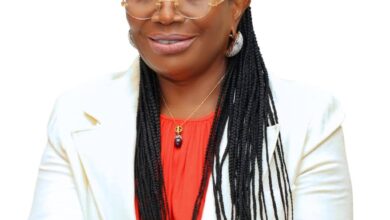
Uganda’s Human Rights Record Comes Under Commonwealth Spotlight As Botchwey Meets Opposition
+256 702 23 93 37: Secretary-General Shirley Ayorkor Botchwey In Uganda Amid Renewed Scrutiny Of Democracy And Post-Election Rights

UgandaToday: Uganda’s Human Rights Record Comes Under Commonwealth Spotlight As Botchwey Meets Opposition
Secretary-General Shirley Ayorkor Botchwey In Uganda Amid Renewed Scrutiny Of Democracy And Post-Election Rights
Uganda’s record on democracy, human rights and the rule of law has come under renewed international scrutiny following the visit of Commonwealth Secretary-General Shirley Ayorkor Botchwey, who is in the country for her first official visit since assuming the Commonwealth’s top administrative position.

Botchwey arrived in Uganda on October 7 for a three-day mission expected to include engagements with President Yoweri Kaguta Museveni, senior government officials, Parliament, the judiciary, political parties, independent institutions and civil society stakeholders.
The visit comes months after Uganda’s January 2026 General Elections, an electoral period that attracted concerns from international human rights bodies over alleged restrictions on political freedoms, arrests, disappearances, intimidation and the use of force against opposition actors.
The Commonwealth has previously expressed concern about Uganda’s human-rights environment. In a statement issued ahead of the January elections, Botchwey herself cited reports concerning restrictions on freedom of expression, association and peaceful assembly, as well as allegations of arbitrary arrests, abductions and the use of force against opposition gatherings.
Ssenyonyi Raises Human Rights Concerns
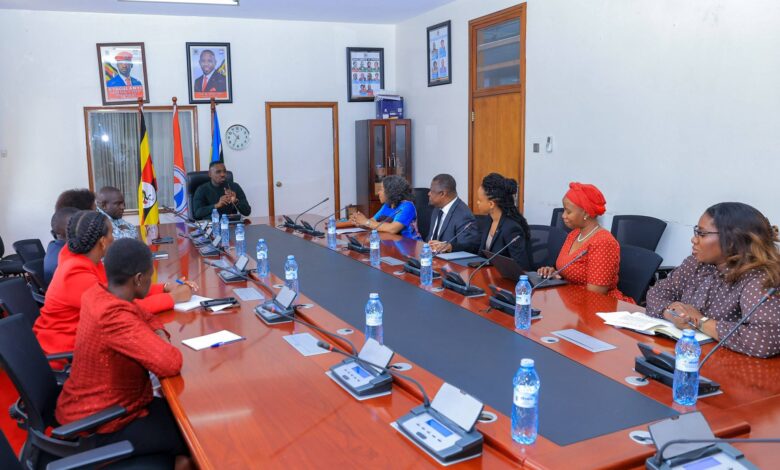
According to an account of his meeting with Botchwey, Leader of the Opposition Joel Ssenyonyi used the engagement to highlight concerns surrounding Uganda’s democratic and human-rights situation, particularly issues arising from the recent elections.
The meeting provides an important political dimension to Botchwey’s wider consultations because the Commonwealth has indicated that her Uganda visit is intended to involve a broad range of stakeholders rather than government alone.

The Commonwealth Secretariat says Botchwey will engage representatives of political parties, Parliament, the judiciary, independent institutions and other stakeholders as part of efforts to understand Uganda’s institutional environment and explore areas where the Commonwealth can provide support.
The Opposition’s concerns therefore form part of a wider conversation about how Uganda’s democratic institutions function, how political differences are managed and whether citizens can exercise their fundamental freedoms without intimidation or reprisals.
Commonwealth Charter Places Democracy At The Centre
The significance of the engagement lies partly in Uganda’s membership of the Commonwealth and its commitment to the Commonwealth Charter.
The Charter commits member states to democratic governance, human rights, freedom of expression, separation of powers, good governance and the rule of law.
It specifically recognises citizens’ right to participate in democratic processes through free and fair elections and states that governments, political parties and civil society have responsibilities to uphold democratic culture and practices.
The Charter also commits Commonwealth members to the protection and promotion of civil and political rights and recognises the rule of law as an essential protection for citizens.
This makes the current Ugandan discussions particularly significant.
Concerns Were Raised Before The January Elections
The concerns being discussed did not emerge only after the elections.
In December 2025, UN human-rights experts communicated concerns to the Ugandan Government over allegations including disproportionate use of force during electoral campaigns, enforced disappearances, threats and intimidation of journalists and human-rights defenders, and restrictions on press freedom.
The UN communication also cited reports of large numbers of opposition supporters being arrested during the electoral period.
The Commonwealth subsequently echoed some of these concerns in its own pre-election statement, urging Uganda’s authorities, political actors, security forces and citizens to exercise restraint and ensure that Ugandans could participate freely and safely in the electoral process.
A Conversation Between Government And Opposition
Botchwey’s meetings with different Ugandan stakeholders could therefore become an important opportunity for the country to address competing narratives surrounding the 2026 elections.
While government has maintained its own position on the conduct of the elections and national security, opposition leaders and rights advocates have continued to raise concerns about arrests, alleged abductions, restrictions on political mobilisation and the treatment of opposition supporters.
The Commonwealth’s approach is potentially significant because its Secretary-General is not visiting Uganda solely to meet government officials.
On October 7, Botchwey met President Museveni at State House Entebbe, where discussions covered Africa’s integration, trade, climate action, alternative energy, youth empowerment and Uganda’s cooperation with the Commonwealth.
She also met Parliament, where Deputy Speaker Thomas Tayebwa sought Commonwealth support for parliamentary capacity, digitalisation and stronger institutional effectiveness. Botchwey reportedly emphasised Parliament’s role in democratisation, accountability and the promotion of liberties.
The Commonwealth Is Watching More Than Elections
The wider significance of Botchwey’s mission extends beyond the 2026 elections.
The Commonwealth Secretariat says the visit is intended to explore how the organisation can help strengthen Uganda’s institutions and support resilience and sustainable development.
That means the discussions touch on the quality and independence of institutions, accountability, democratic participation and the ability of citizens to engage with government without fear.
The Commonwealth’s own Charter recognises the importance of an independent judiciary, separation of powers, transparent government and accountable leadership.
For Uganda, the question is therefore not simply whether elections have been held, but whether the country’s democratic institutions are sufficiently strong to guarantee citizens’ rights before, during and after elections.
Uganda Faces An Opportunity For Dialogue
Botchwey’s visit could consequently provide an opportunity for Uganda and its political actors to move beyond competing accusations and towards institutional dialogue.
For the Opposition, the Commonwealth platform offers an opportunity to put allegations of human-rights violations and restrictions on political freedoms before a senior international institution.
For government, the engagement provides an opportunity to explain its security, political and institutional decisions and demonstrate the mechanisms available for investigating allegations and protecting citizens’ rights.
And for the Commonwealth, the mission provides an opportunity to listen to different sides before determining how best to support Uganda as a member state.
What Comes Next?
Botchwey’s visit comes shortly before the Commonwealth Heads of Government Meeting (CHOGM) scheduled for November 1–4, 2026, in Antigua and Barbuda.
The Uganda mission therefore carries significance beyond the immediate meetings in Kampala.
The Commonwealth says it wants to deepen conversations with Uganda around shared priorities while strengthening institutions for the benefit of all Ugandans.
Whether the concerns raised by opposition politicians and other stakeholders will translate into concrete institutional reforms remains to be seen.
But one message from the Commonwealth Charter is unmistakable: democracy, human rights, good governance and the rule of law are not optional principles for Commonwealth members—they are among the values that bind the organisation together.
For Uganda, Botchwey’s visit has placed those commitments firmly back at the centre of the national conversation.
#UgandaToday #ShirleyBotchwey #Commonwealth #Uganda #HumanRights #Democracy