
Rwanda Opens Direct Yuan Payment Route As Bank Of Kigali Joins China’s CIPS Network
+256 702 23 93 37: The National Bank of Rwanda remains the country's central bank and monetary authority; the CIPS development concerns commercial-bank access to China's renminbi payment infrastructure, not adoption of the yuan as Rwanda's national currency.

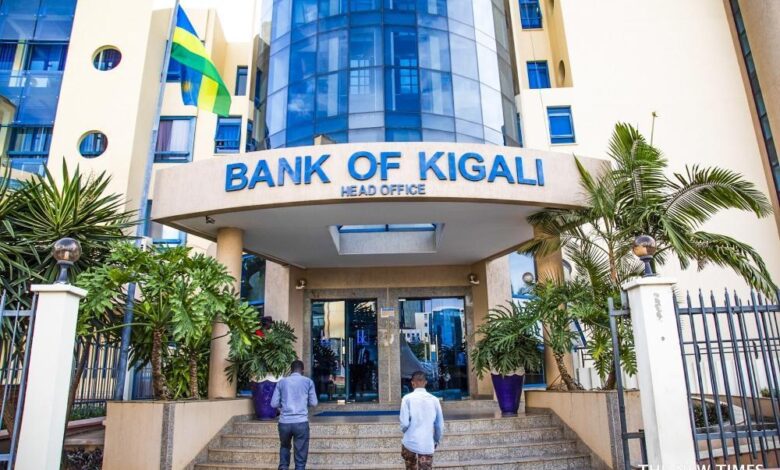
UgandaToday: Rwanda Opens Direct Yuan Payment Route As Bank Of Kigali Joins China’s CIPS Network
By Uganda Today News Desk
KIGALI, RWANDA: Rwanda has taken a significant step towards deepening its financial and commercial ties with China after Bank Of Kigali became the first bank headquartered in Rwanda—and the first bank headquartered in East and Central Africa—to join China’s Cross-Border Interbank Payment System (CIPS) as a direct participant.
The development is likely to make it easier for Rwandan businesses trading with China to make and receive payments directly in Chinese renminbi (RMB), commonly known as the yuan, reducing the need for some transactions to pass through intermediary currencies and correspondent banks.
Editor’s Note: Reports describing Rwanda as the first African country to accept the Chinese yuan in banking transactions are misleading. The more accurate development is that Bank Of Kigali is the first Rwanda-based and first East/Central African-headquartered bank to become a direct CIPS participant. South Africa’s Standard Bank became the first African bank authorised to offer CIPS transactions in 2025.


Bank Of Kigali Takes Historic Step
The agreement allowing Bank Of Kigali to join CIPS directly was signed on September 8, 2026, in Xiamen, China, during the second CIPS Cross-Border Bank-Enterprise Cooperation Event.
According to reports from Rwanda and the CIPS operator, the arrangement gives the Rwandan bank a direct connection to the Chinese payment infrastructure used for clearing and settling cross-border transactions denominated in renminbi.
The move makes Bank Of Kigali the first bank based in Rwanda and the first bank headquartered in East and Central Africa to participate directly in CIPS.
For Rwandan companies importing machinery, electronics, construction materials, vehicles and other products from China, the development could make payments more direct and potentially reduce transaction costs and delays.
What Is CIPS?
China’s Cross-Border Interbank Payment System, or CIPS, is the financial infrastructure developed to facilitate cross-border payments in renminbi.
Launched in 2015 under the oversight of the People’s Bank of China, CIPS enables participating financial institutions to clear and settle international payments in RMB.
By the end of August 2026, CIPS reported 211 direct participants and 1,642 indirect participants, with banking institutions in 192 countries and regions using the network for cross-border payment business.
The significance of CIPS is that it gives banks a more direct route for yuan-denominated payments, although it should not simply be described as a replacement for SWIFT. CIPS is principally a clearing and settlement infrastructure for RMB transactions, while SWIFT is primarily a global financial messaging network.
Rwanda Is Not Adopting The Yuan As Its National Currency
The latest development should also not be interpreted as Rwanda abandoning the Rwandan franc or formally adopting the yuan as a national currency.
The National Bank Of Rwanda remains the country’s central bank, while the Rwandan franc remains the national currency.
Rwanda’s foreign-exchange regulations recognise foreign currencies and permit authorised foreign-exchange transactions under the applicable rules. A 2025 amendment to Rwanda’s foreign-exchange regulations specifically permitted payment in foreign currency for imported or exported goods and services.
Therefore, the significance of the latest development lies primarily in cross-border trade settlement, rather than the introduction of the yuan as domestic legal tender.
China Has Become A Major Trading Partner
The timing of the development reflects the rapidly expanding commercial relationship between Rwanda and China.
China has become Rwanda’s largest source of imports. According to The New Times, Chinese imports were worth approximately US$415.89 million in the second quarter of 2026, accounting for nearly 26 per cent of Rwanda’s total imports during the period.
Rwandan exporters also increasingly depend on access to the Chinese market, particularly for commodities and agricultural products.
The stronger the commercial relationship becomes, therefore, the greater the need for efficient financial channels connecting businesses in the two countries.
From Dollars To Yuan: Why The Change Matters
Traditionally, an African company purchasing goods from China could convert its local currency into US dollars before the money was ultimately converted or settled in Chinese yuan.
Every additional currency conversion and intermediary can introduce costs, delays and foreign-exchange risks.
Direct RMB settlement offers an alternative.
A Rwandan importer may be able to pay a Chinese supplier in renminbi through a banking channel connected directly to China’s payment infrastructure.
For exporters, the system can similarly facilitate receipt of payments in RMB.
This could be particularly significant for small and medium-sized enterprises whose margins can be affected by banking fees, exchange-rate movements and delays in international settlement.
Rwanda’s Move Comes After South Africa’s Breakthrough
Rwanda’s development is part of a broader African shift towards greater use of the yuan in Africa-China trade.
In June 2025, South Africa’s Standard Bank became the first African bank authorised to offer transactions through CIPS. Its CIPS service subsequently went live, enabling African clients to make cross-border payments with China using RMB.
By July 2026, Standard Bank reported that it had processed more than CNY8 billion (about US$1.2 billion) through CIPS and had expanded access beyond South Africa to countries including Angola, Ghana, Kenya, Lesotho and Tanzania.
In June 2026, Standard Bank and China’s Industrial and Commercial Bank of China were also authorised to operate jointly as the Renminbi Clearing Bank of Africa, with operational capacity covering 19 African countries.
Rwanda’s decision therefore represents not the beginning of yuan-based African banking, but an important East and Central African expansion of an already growing financial trend.
Could This Reduce Africa’s Dependence On The Dollar?
The wider strategic question is whether increasing RMB settlement could gradually reduce African businesses’ dependence on the US dollar for trade with China.
The answer is likely to be gradual rather than immediate.
The dollar remains deeply embedded in international trade, foreign-exchange markets, reserves and global financial institutions. However, allowing African companies to settle directly in the currency of their trading partner can provide greater choice.
For Rwanda, where China is a major trading partner, the immediate benefit is practical: businesses gain another payment channel.
For China, expanding CIPS participation internationally supports the internationalisation of the renminbi.
And for Africa, multiple settlement options could give businesses greater flexibility in managing foreign-exchange exposure.
What It Means For Uganda And East Africa
Rwanda’s move should also attract attention in Uganda and across the East African Community.
China is a major supplier of machinery, electronics, vehicles, construction equipment and consumer goods to East Africa.
If more banks in the region develop direct RMB payment capabilities, businesses could increasingly have the option of paying Chinese suppliers without necessarily using the US dollar as an intermediary currency.
For Ugandan traders importing directly from China, such developments could eventually stimulate competition among banks offering China-related trade-finance and payment services.
However, the practical benefit will depend on transaction volumes, exchange rates, banking fees, liquidity, regulatory arrangements and how many commercial banks ultimately establish direct or indirect access to RMB settlement infrastructure.
A Financial Milestone, Not A Currency Revolution
Rwanda’s CIPS connection is therefore best understood as a financial infrastructure milestone rather than a currency revolution.
The country is not replacing the Rwandan franc with the yuan.
Rather, one of its leading commercial banks has gained a direct connection to China’s RMB settlement infrastructure at a time when bilateral trade is expanding.
The development illustrates a broader transformation in global finance: African countries and banks are increasingly seeking multiple channels through which they can conduct international trade.
For Rwanda, the immediate question will be whether the new connection delivers what businesses need most—faster payments, lower transaction costs, greater currency choice and more efficient trade with China.
If it does, Rwanda’s move could encourage other East African financial institutions to deepen their own RMB capabilities.
The National Bank of Rwanda remains the country’s central bank and monetary authority; the CIPS development concerns commercial-bank access to China’s renminbi payment infrastructure, not adoption of the yuan as Rwanda’s national currency.
Uganda Today Analysis
Rwanda’s latest banking development is significant precisely because it comes at the intersection of trade, technology and changing global financial architecture.
The most important story is not that Rwanda has “adopted the Chinese yuan”—it has not.
The important story is that a major Rwandan bank has secured a direct route into China’s RMB payment system, following a similar pioneering move by Standard Bank in South Africa.
As China continues to rank among Africa’s most important trading partners, the ability to settle transactions directly in yuan could become increasingly relevant to African businesses.
For East Africa, the question is no longer whether alternative international payment channels will emerge, but how quickly businesses, banks and regulators will adapt to them.
#UgandaToday #Rwanda #China #ChineseYuan #Renminbi #AfricaChinaTrade