Disability Is Not Inability: Woman’s Remarkable Independence In Daily Household Chores Inspires Thousands
+256 702 23 93 37: A Different Definition Of Ability The woman’s actions provide a simple but profound message.

UgandaToday: Disability Is Not Inability: Woman’s Remarkable Independence In Daily Household Chores Inspires Thousands
By Uganda Today Reporter
https://vt.tiktok.com/ZS9D9t9dADU7o-tIYgR/
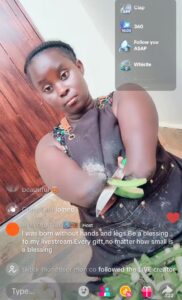
A Powerful Picture Of Determination
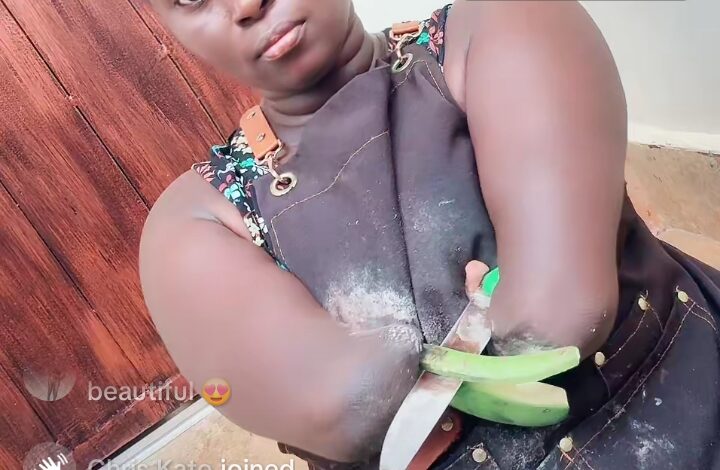
A video circulating on social media is drawing attention to a woman living with a physical disability who demonstrates an extraordinary level of independence while carrying out ordinary household chores.
The footage shows a woman who, despite her physical limitations, is able to undertake activities around her home without relying on another person to perform the tasks for her.
From cleaning, peeling Matooke and organising her surroundings to other routine domestic activities, her actions offer a powerful reminder that disability does not automatically mean dependence.
What makes the footage particularly compelling is not simply the chores themselves, but the determination, adaptation and confidence with which she approaches them.
Doing Things Differently, Not Giving Up
For many people living with disabilities, everyday activities can require techniques that differ considerably from those used by people without disabilities.
A task that might take another person only a few minutes can require considerable planning, balance, strength, patience or adaptation.
Yet disability-inclusive research and experiences from Uganda and elsewhere demonstrate that people with disabilities can develop highly effective ways of performing activities of daily living when they are given the opportunity, appropriate support and freedom to participate.
Research on disability inclusion in Uganda has documented people adapting their homes and daily routines to increase independence, while programmes aimed at inclusion have sought to challenge the assumption that persons with disabilities should simply be recipients of care.
The woman in the circulating video appears to embody that principle: the presence of a disability does not erase a person’s ability to contribute, work, care for a home or make decisions about how she lives.
Beyond Sympathy: Seeing Ability
One of the most important messages arising from such images is the need to move society’s understanding of disability beyond sympathy.
Persons with disabilities are sometimes viewed primarily through the lens of what they cannot do.
That approach can unintentionally create another barrier.
Instead of asking only, “How can we help this person?”, society should also ask, “What can this person do, and what can we do to remove the barriers preventing her from doing even more?”
A study on inclusion of children with disabilities in Central Uganda found that some families had previously overprotected children by preventing them from participating in household activities simply because they were considered disabled. Greater participation subsequently allowed them to take on responsibilities such as cleaning, washing clothes, preparing meals and shopping.
That lesson applies beyond childhood.
Independence grows when people are given the opportunity to try.
The Hidden Power Of Adaptation
The ability to perform domestic work independently should not necessarily be interpreted as proof that a person never needs assistance.
Rather, it demonstrates the importance of choice and autonomy.
A person with a disability may require assistance with some activities and be completely independent in others.
That distinction matters.
Disability advocates have long argued for environments, technologies and household arrangements that enable people to perform tasks safely and independently. Research involving people with physical disabilities in Uganda, for example, has identified the value of assistive devices and household adaptations in making activities such as cooking, cleaning and washing easier.
The woman featured in the video therefore offers an important lesson: sometimes what appears to be an impossible task becomes possible when a person discovers an alternative method of doing it.
A Challenge To Disability Stigma
The footage also arrives at an important moment for Uganda.
On October 6, 2026, communities around the world are observing World Cerebral Palsy Day, with disability organisations and families continuing to call for greater inclusion, accessibility and dignity.
In Uganda, recent community engagements in Mukono have highlighted continuing challenges faced by people with disabilities, including stigma, inaccessible services, limited educational opportunities and inadequate access to specialised healthcare.
The message from the viral video is therefore particularly relevant.
Inclusion is not simply about giving people with disabilities assistance. It is also about recognising their abilities and giving them space to exercise them.
Women With Disabilities Face A Double Burden
The story becomes even more significant because the subject is a woman.
Women already carry a substantial share of unpaid domestic and care work in Uganda. Oxfam in Uganda reports that women spend considerably more time on unpaid work than men, while research into Uganda and Kenya has highlighted the health and economic consequences of unequal domestic responsibilities.
Women with disabilities can face an additional layer of social expectations and discrimination.
They may be regarded as people who require permanent care rather than as women capable of making decisions, contributing to households, earning livelihoods and participating fully in society.
The woman in the video challenges that stereotype in a very simple but powerful way: she is getting on with life.
Independence Should Be Celebrated, But Not Exploited
There is, however, an important qualification.
Celebrating the woman’s independence should not become an excuse for society to withdraw legitimate support from people with disabilities.
Independence does not mean that a person must do everything alone.
Nor should persons with disabilities be pressured to prove their worth by undertaking physically demanding work without appropriate assistance.
The real objective should be supported independence—ensuring that people have access to assistive devices, accessible homes, healthcare, education, employment and social protection while retaining control over their own lives.
Ugandan disability-inclusion programmes have increasingly focused on skills, assistive devices, livelihood opportunities and individualised support precisely because empowerment is stronger when people have both opportunities and appropriate resources.
A Lesson For Parents And Families
The video also carries a message for families raising children with disabilities.
Protection is important, but overprotection can sometimes become another form of limitation.
Children and adults with disabilities should, wherever safely possible, be encouraged to participate in household activities and develop practical skills.
Doing so can build confidence, responsibility and self-esteem.
It can also change the family’s perception of disability—from seeing the individual as someone who must always be served to recognising that he or she is a contributing member of the household.
The Woman Behind The Viral Moment
The most important part of the story may ultimately not be the video itself, but the person behind it.
Who is she?
Where does she live?
What disability does she have?
How did she learn to perform the tasks shown in the footage?
What challenges does she face outside her home?
Does she work or operate a business?
What does she want society to understand about people living with disabilities?
These are questions Uganda Today should pursue before publishing a fully identified human-interest profile.
Her story deserves to be told in her own voice—not merely through a viral video.
A Different Definition Of Ability
The woman’s actions provide a simple but profound message.
A disability may change how a person performs a task. It does not automatically determine whether the person can perform it.
Her story should therefore not be presented merely as something unusual or sensational.
It should be presented as an opportunity to rethink how society sees disability.
The greatest achievement may not be that she can wash, clean, cook or perform other household activities.
It may be that she has refused to allow society’s assumptions about disability to define the boundaries of her life.
Disability is part of her story—but it does not have to be the whole story.


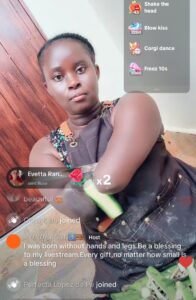
A woman living with a physical disability demonstrates independence while carrying out everyday household activities.
Disability And Independence


Disability inclusion is increasingly focused on enabling people to participate fully in household, economic and community life.
Adaptation And Self-Reliance
With adaptation, appropriate support and opportunity, people living with disabilities can develop effective ways of performing everyday tasks.