High Court, Butambala Court Proceedings Raise Fresh Questions Over Detention, Due Process and the Rule of Law
+256 702 239 337: Human rights organisations have repeatedly documented allegations of torture and incommunicado detention against various security agencies over the years. Ugandan authorities have consistently maintained that torture is prohibited under the Constitution and that any proven abuses are investigated.

UgandaToday: High Court, Butambala Court Proceedings Raise Fresh Questions Over Detention, Due Process and the Rule of Law
By Uganda Today Investigations Desk
A Tale of Two Courtrooms
Events that unfolded in Kampala’s High Court and the Chief Magistrate’s Court in Butambala have reignited debate over Uganda’s criminal justice system, with lawyers, opposition leaders and human rights advocates questioning the conduct of security agencies, the integrity of sworn court affidavits and adherence to constitutional safeguards.
Within hours, two separate court proceedings involving opposition figures—Dr. Kizza Besigye and former Butambala County MP Muhammad Muwanga Kivumbi—painted a troubling picture that critics say raises profound questions about accountability within Uganda’s security and justice institutions.
While one courtroom focused on the prosecution of veteran opposition leader Dr. Kizza Besigye, another witnessed the sudden appearance of Muwanga Kivumbi after nearly three weeks during which both the Uganda Police Force and the Uganda People’s Defence Forces (UPDF) had formally denied holding him.
High Court Security Presence Sparks Concern
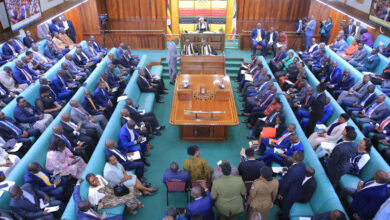
At the High Court in Kampala, proceedings involving Dr. Kizza Besigye were marked by unusually heavy security deployment.
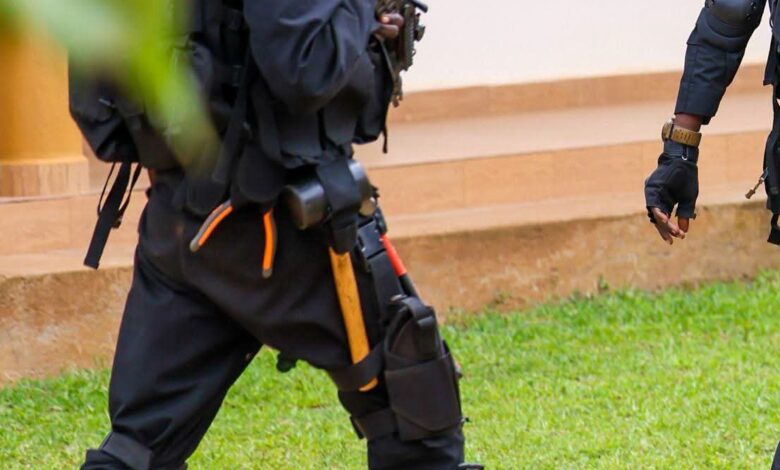
Opposition officials, including National Unity Platform (NUP) Secretary General David Lewis Rubongoya, alleged that operatives believed to belong to the Joint Anti-Terrorism Taskforce (JATT) entered the court premises while armed.
Rubongoya further claimed that one hooded operative was carrying equipment which he alleged had previously been associated by torture survivors with abuse during unlawful detention, including firearms and other implements. These allegations have not been independently verified, and no official explanation had been issued regarding the identity of the operatives or the equipment allegedly carried into court.
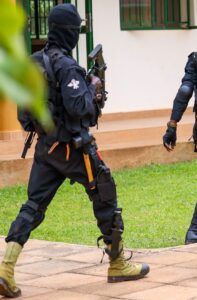
The claims have intensified public concern regarding security conduct within judicial premises, traditionally regarded as protected spaces where litigants, lawyers and judicial officers should operate free from intimidation.
Human rights organisations have repeatedly documented allegations of torture and incommunicado detention against various security agencies over the years. Ugandan authorities have consistently maintained that torture is prohibited under the Constitution and that any proven abuses are investigated.

Besigye’s Protestation Deepens Anxiety
Proceedings involving Dr. Besigye took place amidst protestations from Dr Kizza Besigye, who energetically banged the dock with unprecedented verve using his hands and paper files for over 10 minutes. This vigorous exercise made him collapse in court and rendered him unconscious. Besigye was protesting the court’s decision to proceed with prosecution without being represented by lawyers of his choice. After this bizarre incident, Besigye was whisked away to Luzira Prisons from where he was later transferred to Intensive Care Unit (ICU) at Mulago National Referral Hospital.
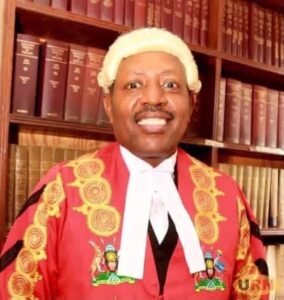
His supporters attribute his deteriorating health to prolonged incarceration and the stresses surrounding the criminal proceedings.
Government authorities have not publicly linked his medical condition to his detention, and the court proceedings continue under existing legal processes.
Nevertheless, his hospitalisation has added urgency to calls by opposition leaders and civil society organisations for closer judicial scrutiny of cases involving prolonged detention.
The 19-Day Mystery of Muhammad Muwanga Kivumbi
Perhaps the more perplexing legal questions emerged from the case of former Butambala County Member of Parliament Muhammad Muwanga Kivumbi.
Following his reported abduction, his lawyers filed a habeas corpus application before the High Court seeking orders compelling security agencies to produce him.
In response, both the Uganda Police Force and the Uganda People’s Defence Forces filed sworn affidavits denying that they had arrested, detained or were holding Muwanga Kivumbi.
According to court records relied upon by his legal team, the UPDF’s affidavit was sworn and filed only hours before developments took a dramatic turn.
From “Not in Custody” to Criminal Charges
Barely two hours after one of the sworn affidavits denying custody was filed, Muwanga Kivumbi resurfaced.
He was reportedly delivered to Nateete Police Station before being transferred to the Chief Magistrate’s Court in Butambala, where criminal charges were preferred against him.
The sequence of events has generated significant legal questions.
If police had formally informed the High Court that they were not detaining Muwanga Kivumbi, lawyers are now asking how the same institution was able to process his case, prepare criminal charges and present him before court almost immediately afterwards.
Legal analysts argue that criminal charges ordinarily require investigative files, witness statements and formal documentation generated by investigating officers.
The apparent contradiction between sworn denials of custody and the subsequent police-led prosecution is likely to become one of the central issues in ongoing legal proceedings.
Habeas Corpus Under the Spotlight
The developments have also renewed debate about the effectiveness of the writ of habeas corpus, one of the oldest legal protections against unlawful detention.
Lawyers acting for Muwanga Kivumbi had approached court precisely because his whereabouts were unknown.
If state agencies deny custody while a detainee later reappears in their criminal justice system, constitutional lawyers argue that such circumstances warrant careful judicial examination to establish where the individual was held, by whom, and under what legal authority.
They further contend that inconsistencies, if any, between sworn affidavits and subsequent events should be fully explained before court.
Questions Awaiting Official Answers
The proceedings leave several critical questions unanswered:
- If neither the Police nor the UPDF had Muwanga Kivumbi in custody, who detained him for 19 days?
- At what point did police assume custody of the former legislator?
- When were investigations conducted if security agencies maintained they had no knowledge of his whereabouts?
- When was the charge sheet prepared?
- Which investigating officer compiled the prosecution file?
- What explains the apparent contradiction between sworn affidavits and subsequent criminal proceedings?
These are questions that legal observers say deserve comprehensive answers, not only for the benefit of the accused but also to preserve public confidence in Uganda’s justice system.
A Test for Constitutional Institutions
The parallel court proceedings involving Dr. Kizza Besigye and Muhammad Muwanga Kivumbi illustrate the growing tension between national security operations and constitutional guarantees of due process.
For critics, the incidents demonstrate what they describe as increasing securitisation of political prosecutions.
Government officials, on the other hand, have consistently maintained that all suspects are processed within the law and that courts remain independent in determining criminal responsibility.
Ultimately, the judiciary may now find itself called upon to address not merely the criminal charges before it, but also the broader constitutional questions surrounding detention, disclosure, accountability and respect for the rule of law.
How those questions are answered could have significant implications for public confidence in Uganda’s justice system and the protection of fundamental rights guaranteed under the Constitution.