
Cayenne Pepper And Cancer: Can The Compound That Makes Chilli Hot Really Destroy Cancer Cells?
+256 702 23 93 37: Scientists are investigating capsaicin, the fiery compound in cayenne and other chilli peppers, for its ability to trigger cancer-cell death—but laboratory success is not yet a cancer cure


UgandaToday: Cayenne Pepper And Cancer: Can The Compound That Makes Chilli Hot Really Destroy Cancer Cells?
Scientists are investigating capsaicin, the fiery compound in cayenne and other chilli peppers, for its ability to trigger cancer-cell death—but laboratory success is not yet a cancer cure
The humble chilli pepper has long occupied a prominent place in African kitchens, adding heat, flavour and colour to food. But behind that familiar burning sensation is a powerful natural compound that has attracted increasing attention from cancer researchers: capsaicin.
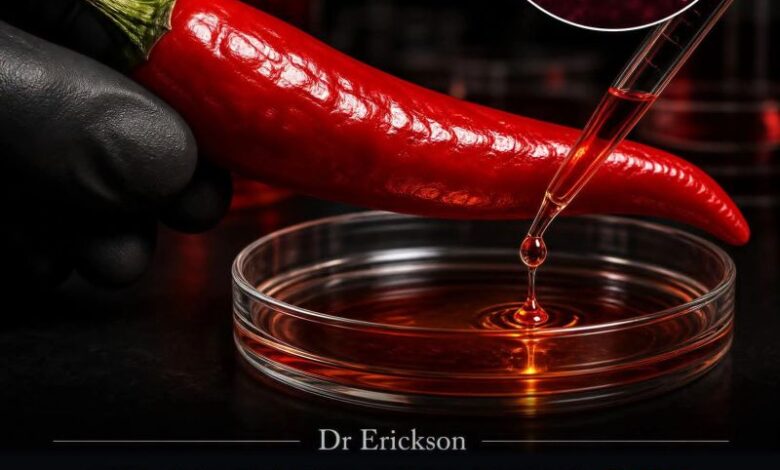
Capsaicin is the substance responsible for the characteristic heat of chilli peppers, including cayenne. Researchers have found that it can interfere with the growth and survival of cancer cells in laboratory experiments, sometimes triggering a process known as apoptosis, or programmed cell death.
That finding has fuelled claims on social media that cayenne pepper can “destroy cancer” in the human body.
The scientific reality, however, is considerably more interesting—and more cautious.
The Cayenne-Cancer Connection
Cayenne is a type of chilli pepper belonging to the Capsicum family. Its fiery character comes principally from capsaicin, which interacts with receptors involved in the sensation of heat and pain.
The National Cancer Institute identifies capsaicin as a component of plants including cayenne and red pepper. At present, its established medical applications are principally related to pain management rather than cancer treatment.
But cancer researchers have been interested in capsaicin because experiments have repeatedly suggested that it can interfere with several processes that cancer cells depend upon.
These include uncontrolled cell multiplication, cellular survival mechanisms, inflammation and signalling pathways involved in tumour development.
How Could Capsaicin Make Cancer Cells Die?
One of the most intriguing findings is that capsaicin can activate apoptosis.
Apoptosis is essentially the body’s built-in cellular suicide programme. Healthy bodies routinely use it to remove old, damaged or unnecessary cells.
Cancer cells, however, frequently develop mechanisms that allow them to evade this natural process.
Research suggests that capsaicin can interfere with those survival mechanisms.
A review of the scientific literature found evidence that capsaicin can activate apoptosis through several pathways, including effects involving the TRPV1 receptor, calcium signalling, mitochondrial dysfunction, reactive oxygen species and enzymes known as caspases.
In simpler terms, researchers are investigating whether capsaicin can push some cancer cells into a biological sequence that ends in their own destruction.
Melanoma Cells Under The Microscope
One study that has received attention examined capsaicin’s effect on human melanoma cells.
Researchers working with human melanoma cell lines A375 and C8161 found that capsaicin reduced cell viability and activated apoptosis. The researchers also observed activation of caspase-3 and cleavage of PARP—molecular events associated with programmed cell death.
An earlier study similarly found that capsaicin induced apoptosis in melanoma cells through mechanisms involving mitochondrial changes, cytochrome-c release and caspase activation.
These findings help explain why the chilli compound continues to attract scientific interest.
But there is an important distinction:
Killing cancer cells in a laboratory dish is not the same as eliminating cancer from a human patient.
The Crucial Difference Between A Laboratory And A Patient
This is where some internet claims about cayenne pepper go too far.
Cancer cells grown in a laboratory can be exposed directly to controlled concentrations of capsaicin. A human being, by contrast, has a complex digestive system, bloodstream, metabolism, immune system and organs that can alter how a substance is absorbed, distributed and eliminated.
Consequently, a concentration that kills cancer cells in a laboratory experiment does not automatically mean that eating cayenne pepper will produce the same concentration around a tumour inside the human body.
This distinction is fundamental to cancer research.
The National Cancer Institute states more broadly that there is currently no proof that any food, vitamin, mineral, dietary supplement, herb or combination of these can slow cancer, cure it or prevent it from returning.
Therefore, the scientifically responsible conclusion is not that cayenne pepper is a cancer cure.
It is that capsaicin is a promising compound being investigated for possible anticancer applications.
Capsaicin Appears To Affect More Than One Cancer Pathway
The scientific interest in capsaicin goes beyond melanoma.
Reviews of experimental research report anticancer effects involving prostate, pancreatic, colorectal, lung, breast, liver, gastric and other cancer models. Proposed mechanisms include interference with cell proliferation, oxidative stress, mitochondrial function, cell-cycle regulation and programmed cell death.
This multi-pathway activity is one reason scientists continue to investigate capsaicin and related molecules.
However, the results are not uniformly positive across every cancer model. The effects can vary according to the cancer type, cell characteristics, concentration and duration of exposure. Some laboratory studies have even found that certain cellular responses to capsaicin may protect cells rather than kill them.
That complexity makes further research essential.
Could Eating More Cayenne Treat Cancer?
This is the question many readers will understandably ask.
There is currently insufficient clinical evidence to say yes.
Eating cayenne as part of a normal, balanced diet is very different from administering purified capsaicin as an experimental pharmaceutical compound.
The National Cancer Institute’s current clinical-trial listing contains an active study of topical capsaicin—but importantly, that study is investigating capsaicin for chemotherapy-induced peripheral neuropathy, meaning nerve pain caused by cancer treatment, rather than using it to destroy tumours.
That distinction is critical.
Capsaicin already has established applications in pain relief. Its potential as an anticancer drug remains an area of research.
Cayenne May Be Food, But Capsaicin Is Pharmacologically Active
Another misconception is that because cayenne is a natural food, consuming large quantities must therefore be harmless.
That is not necessarily true.
Capsaicin can cause burning and irritation, and concentrated preparations can produce significant discomfort. Medical capsaicin products are therefore used according to specific instructions.
There can also be interactions involving supplements and medicines. The U.S. National Center for Complementary and Integrative Health, for example, notes that capsicum (cayenne) may lower blood sugar and could potentially cause blood sugar to fall too low when combined with diabetes medicines.
For someone undergoing cancer treatment, this is especially important because dietary supplements and herbal products can sometimes affect medicines.
The Bigger Scientific Question: Could Capsaicin Become A Cancer Drug?
This is perhaps the most exciting question.
Scientists are not necessarily trying to turn a plate of chilli into chemotherapy. They are investigating which molecular characteristics of capsaicin can be harnessed, modified or combined with other treatments to selectively attack cancer cells.
Some researchers have already investigated synthetic molecules based on the structure of capsaicin. One study involving a capsaicin-inspired compound found promising activity against melanoma cells and suggested that such molecules might eventually be developed as potential anticancer agents.
That is how modern drug discovery often works: a naturally occurring substance provides a clue, scientists identify its mechanism, and researchers then attempt to develop a safer, more effective and more targeted medicine.
So, Does Cayenne Pepper Destroy Cancer?
The answer requires separating scientific possibility from medical proof.
What research shows:
- Capsaicin is the major compound responsible for the heat of cayenne and many other chilli peppers.
- Laboratory studies show that capsaicin can inhibit the growth of some cancer cells.
- It can trigger apoptosis—the programmed death of cells—in several experimental cancer models.
- Researchers have identified several molecular pathways through which these effects may occur.
What research does not yet prove:
- That eating cayenne pepper can eliminate cancer from a patient’s body.
- That cayenne can replace chemotherapy, radiotherapy, surgery, immunotherapy or other established cancer treatments.
- That consuming large quantities of chilli will cause tumours to disappear.
- That the laboratory concentrations used in experiments can safely or effectively be reproduced simply by eating chilli.
That distinction could save lives.
A cancer patient should never abandon a proven treatment because of claims that cayenne pepper—or any other food—can cure cancer.
From Kitchen Ingredient To Potential Future Medicine
The story of cayenne and cancer is therefore not a story about a miracle cure.
It is a story about scientific discovery.
Something as ordinary as a chilli pepper contains a molecule capable of influencing sophisticated biological pathways. Researchers are now trying to understand whether that molecule, or improved compounds based upon it, can eventually be transformed into useful cancer therapies.
For now, cayenne remains an interesting component of a healthy diet for people who tolerate spicy foods—not a clinically established cancer treatment.
The chilli may indeed hold a clue.
Science, however, is still working out exactly what that clue means.
Laboratory research suggests capsaicin—the compound that gives cayenne and other chilli peppers their heat—can trigger the death of some cancer cells. But scientists caution that promising laboratory findings should not be mistaken for proof that eating chilli can cure cancer.
Capsaicin, the compound responsible for the heat in cayenne and other chilli peppers, is being investigated for its ability to trigger programmed cell death in cancer cells. However, laboratory findings have not yet established cayenne pepper as a cancer treatment.
Editorial Health Disclaimer
UgandaToday Health Note: This article is intended for public education and does not constitute medical advice. Current research into capsaicin and cancer is largely experimental, and cayenne pepper should not be used as a substitute for cancer diagnosis or medically recommended treatment. Patients undergoing cancer treatment should discuss supplements, herbal products and major dietary changes with their healthcare professionals.