The 1972 Heritage Pact: How A Global Promise Reached Uganda’s Tombs, Forests And Mountains
+256 702 23 93 37: Uganda has three properties on the World Heritage List, not 11. The other eight are on the Tentative List and have not thereby attained World Heritage status. The 154-site African figure and the 12 per cent share are UNESCO figures reported on 5 May 2026. The 2026 Kasubi and Rwenzori projects were launched in September; their stated objectives should not be presented as completed outcomes.

UgandaToday: The 1972 Heritage Pact: How A Global Promise Reached Uganda’s Tombs, Forests And Mountains
Fifty-four years ago today, UNESCO adopted an international convention that brought cultural treasures and natural wonders under one global protection framework. Uganda joined the agreement 15 years later. Today, with three listed sites, eight more on its tentative list and fresh conservation initiatives launched in 2026, the country faces a bigger question: how do we protect our heritage beyond the UNESCO badge?
Today In History: The Uganda Today Historical Perspective
16 November 1972 — Paris, France
A thatched royal tomb in Kampala, a forest sheltering endangered mountain gorillas in south-western Uganda and the snow-capped peaks of the Rwenzori Mountains may appear to have little in common.
One represents a kingdom’s living spiritual traditions. Another is a sanctuary of biodiversity. The third is a remarkable alpine ecosystem close to the Equator.
Yet all three belong to the same international conservation framework whose foundation was laid on 16 November 1972, when the United Nations Educational, Scientific and Cultural Organization (UNESCO) adopted the Convention Concerning the Protection of the World Cultural and Natural Heritage.
The convention brought cultural preservation and nature conservation together in one international treaty. It recognised that places of exceptional historical, cultural and natural importance could be part of a shared human inheritance, even while remaining under the sovereignty of the countries where they are found.
The agreement formally entered into force on 17 December 1975.
The Egyptian Rescue That Helped Inspire A Global Agreement
The idea behind the convention did not emerge in a vacuum.
One of the major events that helped inspire international cooperation was the threat posed to Egypt’s ancient temples by the construction of the Aswan High Dam.
In 1959, after appeals from the governments of Egypt and Sudan, UNESCO launched an international campaign to safeguard monuments threatened by the rising waters.
The temples of Abu Simbel and Philae were dismantled, moved to safer ground and reconstructed. The campaign cost approximately US$80 million, with about half the funding coming from 50 countries.
The successful rescue demonstrated that protecting an important cultural site could require resources, expertise and cooperation extending beyond national borders.
At the same time, a separate movement was advocating stronger international protection for exceptional natural environments.
These two conservation efforts eventually converged in the 1972 convention, establishing a framework that recognised both cultural and natural heritage.
Uganda Joined The Convention In 1987
Uganda did not join the agreement immediately after its adoption.
According to UNESCO’s official country record, Uganda accepted the World Heritage Convention on 20 November 1987.
That means the country will mark 39 years of participation on Friday, 20 November 2026 — just four days after today’s anniversary of the treaty’s adoption.
The agreement places important responsibilities on member countries. Article 4 states that the primary duty to identify, protect, conserve and transmit heritage to future generations belongs to the country in which that heritage is situated.
Article 6, meanwhile, recognises the responsibility of the international community to cooperate in protecting world heritage, while respecting national sovereignty and property rights.
In other words, UNESCO recognition does not transfer responsibility for Uganda’s heritage to an international organisation. The primary responsibility remains with Uganda.
Uganda’s Three Recognised World Heritage Properties
Uganda currently has three properties inscribed on UNESCO’s World Heritage List: one cultural property and two natural properties.

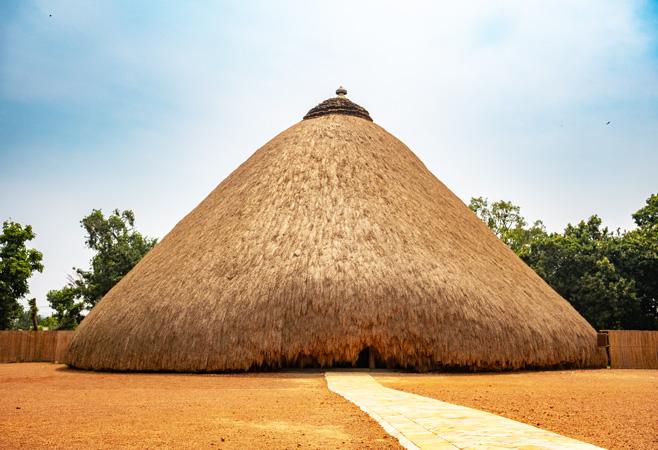
1. Tombs of Buganda Kings at Kasubi — 2001
This royal burial ground is a major spiritual centre for the Baganda. Its principal building, Muzibu Azaala Mpanga, is an outstanding example of traditional architecture using wood, reeds, thatch and other organic materials.
2. Bwindi Impenetrable National Park — 1994
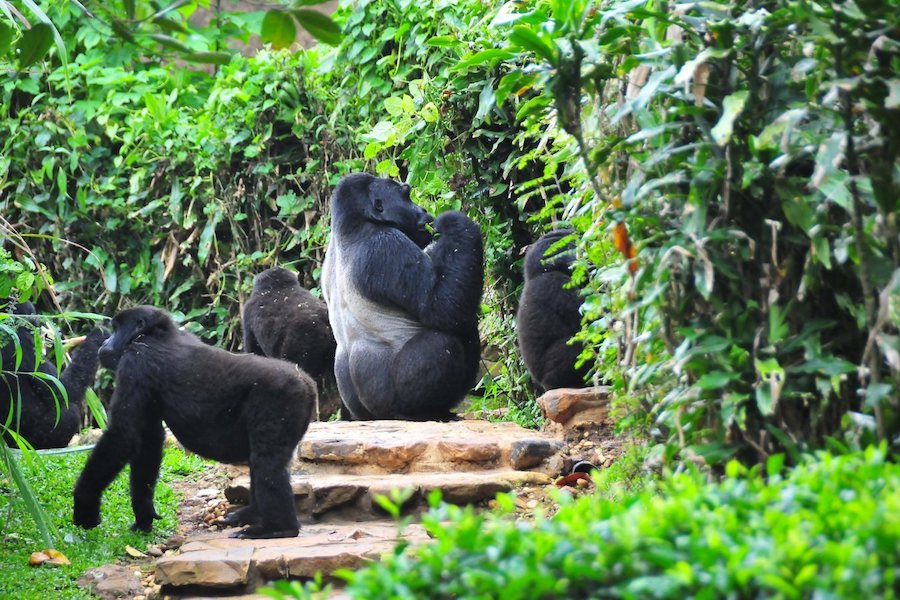
A biodiversity-rich forest in south-western Uganda, Bwindi is internationally recognised for its endangered mountain gorillas, exceptional plant diversity and importance to conservation in the Albertine Rift.
UNESCO World Heritage Centre

3. Rwenzori Mountains National Park — 1994
Known as the Mountains of the Moon, the Rwenzori range contains glaciers, waterfalls, alpine vegetation and Mount Margherita, Africa’s third-highest peak. It is also an important water catchment and cultural landscape.
UNESCO World Heritage Centre
These three properties demonstrate the breadth of Uganda’s heritage: royal history, living cultural traditions, biodiversity and extraordinary natural landscapes.
Eight More Ugandan Sites Await Consideration
The three properties on the World Heritage List do not represent the full extent of Uganda’s historical and natural wealth.
UNESCO’s official country record identifies eight properties on Uganda’s Tentative List. These are sites the country intends to consider for possible future nomination; inclusion on this list does not mean they have already been awarded World Heritage status.
They include:
-
Bigo bya Mugyenyi archaeological earthworks.
-
Ntusi’s ancient man-made mounds and basin.
-
Nyero and other geometric rock-art sites in eastern Uganda.
-
Mgahinga Gorilla National Park.
-
Mount Elgon Transboundary Ecosystem.
-
Geometric rock art in the Lake Victoria region of Kenya, Tanzania and Uganda.
-
Palabek Cultural Landscapes.
-
Kibiro Salt Producing Village.
UNESCO World Heritage Convention
This is an important distinction for the public. A site does not become historically or culturally insignificant simply because it has not been inscribed on UNESCO’s list.
Indeed, Article 12 of the convention expressly states that non-inclusion on the World Heritage List should not be interpreted as proof that a property lacks outstanding value.
Uganda therefore has a responsibility to protect its heritage even where international recognition has not yet been secured.
Legal Affairs
Kasubi: From National Tragedy To A Conservation Success
Uganda’s experience at Kasubi illustrates both the importance and the practical difficulties of heritage protection.
On 16 March 2010, fire destroyed the main thatched building at the royal burial site, causing devastating damage to an important cultural and spiritual landmark.
The property was subsequently placed on UNESCO’s List of World Heritage in Danger. This helped mobilise international support for its reconstruction and conservation.
The restoration programme was completed in 2023, and on 12 September that year the World Heritage Committee removed Kasubi from the danger list.
The work involved restoring Muzibu Azaala Mpanga and the guardian’s house, improving fire protection and training volunteer firefighters from the surrounding community. Traditional construction skills were also passed on to younger generations.
The achievement demonstrated that safeguarding heritage requires more than rebuilding a structure. It requires communities to participate in preserving the knowledge, skills and traditions that give a place its meaning.
A New Conservation Chapter Opened In Uganda In 2026
The story is continuing.
On 8 September 2026, UNESCO announced the launch in Kampala of two new projects targeting the long-term sustainability of Kasubi and the Rwenzori Mountains.
The Kasubi initiative, funded by Japan, is intended to strengthen disaster preparedness, site management, visitor experience, community participation and heritage-related livelihoods.
The Rwenzori initiative, funded by Norway, is a two-year project focusing on interpretation, storytelling and visitor management for community-based tourism.
It includes plans to document community stories, oral histories and cultural knowledge associated with the mountain landscape, while building the capacity of local people, including women and young people, to participate in tourism and conservation.
The Rwenzori project also responds to concerns about climate change, environmental degradation and the retreat of the mountain glaciers.
These initiatives are significant because they move beyond simply keeping sites physically intact. They seek to connect conservation with the communities whose lives, identities and livelihoods are linked to these places.
Africa Still Has A Heritage Recognition Gap
Uganda’s experience also reflects a wider continental challenge.
In a message issued for African World Heritage Day on 5 May 2026, UNESCO Director-General Khaled El-Enany reported that Africa had 154 properties inscribed on the World Heritage List.
That represented only 12 per cent of the world’s listed properties. Nine African countries still had no properties inscribed, while 16 African sites remained on the List of World Heritage in Danger.
The figures underline the need for more investment in heritage professionals, research, documentation, conservation and community participation.
They also point to an opportunity: Africa’s cultural and natural heritage can support education, employment, sustainable tourism, social cohesion and adaptation to climate change when properly protected and managed.
The Real Test Is What We Preserve For Future Generations
Fifty-four years after the adoption of the World Heritage Convention, Uganda’s challenge is not simply to increase the number of sites carrying the UNESCO label.
It is to ensure that the country’s heritage — listed or not — is properly documented, protected, funded and passed on to future generations.
The history of Kasubi shows what can happen when a treasured cultural site is threatened. The Rwenzori story demonstrates the growing importance of climate resilience. Bwindi reminds the country that biodiversity conservation must also take account of the communities living around protected landscapes.
The 1972 convention created a framework for international cooperation, but its success ultimately depends on what countries and communities do on the ground.
For Uganda, the greatest measure of heritage protection will not be the number of plaques or international designations. It will be whether future generations inherit the country’s history, traditions, landscapes and biodiversity in a condition that allows them to understand, value and protect them.
Editorial Accuracy Note: Uganda has three properties on the World Heritage List, not 11. The other eight are on the Tentative List and have not thereby attained World Heritage status. The 154-site African figure and the 12 per cent share are UNESCO figures reported on 5 May 2026. The 2026 Kasubi and Rwenzori projects were launched in September; their stated objectives should not be presented as completed outcomes.
#UgandaToday #PhoenixNewsFeeds #OperaNewsFeeds #TodayInHistory #UgandaHeritage #AfricanHeritage