Uganda’s Suspended Charcoal Ban: Balancing Forest Conservation, Household Survival And Industrial Demand
+256 702 23 93 37: The central argument is that Uganda needs a credible transition away from destructive charcoal production, not a prohibition that overlooks the country's energy needs, industrial applications and economic realities.

UgandaToday: Uganda’s Suspended Charcoal Ban: Balancing Forest Conservation, Household Survival And Industrial Demand
UGANDA TODAY | ENVIRONMENT, ENERGY AND PUBLIC POLICY
An Analytical Feature | By Uganda Today
Uganda’s debate over charcoal production and transportation exposes a difficult national dilemma: how can the country protect its rapidly diminishing forest resources without abruptly depriving millions of people of an affordable source of cooking energy and livelihoods?
The suspension of a charcoal ban, and the continuing debate over restrictions on production and transportation, raise fundamental questions about environmental protection, the cost of living, industrial requirements, enforcement of the law and the availability of alternative energy sources.
For households in Kampala and other urban centres, as well as communities in rural Uganda, charcoal remains an important cooking fuel. For producers, transporters, market vendors and retailers, it supports a chain of economic activity. At the same time, unsustainable charcoal production can accelerate deforestation, degrade ecosystems and contribute to climate change.
The challenge for policymakers is therefore not simply whether charcoal should be banned. It is whether Uganda can manage its production, transportation and consumption in a way that protects forests while giving households, businesses and workers realistic alternatives.
The central argument is that Uganda needs a credible transition away from destructive charcoal production, not a prohibition that overlooks the country’s energy needs, industrial applications and economic realities.

Parliament Steps In As Charcoal Enforcement Sparks Public Outcry
On October 14, 2026, Parliament intervened in the renewed enforcement of restrictions on charcoal burning and trade, directing that enforcement be suspended until the government presented a statement explaining the policy and the progress made in providing alternative sources of energy.
According to the Parliament of Uganda and the Uganda Broadcasting Corporation, Speaker Jacob Markson Oboth issued the directive during a plenary sitting after legislators raised concerns about the impact of the crackdown on households and the practical difficulties of enforcing the restrictions.
The restrictions stem from Presidential Executive Order No. 3, issued on May 19, 2023, which prohibited charcoal burning and trade in West Nile, Northern Uganda, Karamoja and the Teso sub-region. It is important to distinguish this geographically targeted directive from a nationwide prohibition on every form of charcoal production and sale.
The Speaker’s intervention was not an endorsement of environmentally destructive charcoal burning. Rather, it reflected concerns about enforcing a restrictive policy before affordable alternatives are sufficiently available.
The government was directed to explain what had been achieved in promoting alternative energy and how the transition could be implemented. The directive followed public alarm over the enforcement campaign, including reports of security agencies intensifying action against people transporting charcoal originating from the affected regions.
This distinction matters. Parliament’s suspension of enforcement should not automatically be interpreted as a repeal of the presidential executive order or a permanent legalisation of every charcoal-related activity. The precise legal effect, duration and scope of the suspension must be understood in light of the government’s subsequent statement and any further formal decisions.
The Question Of Parliament’s Authority
The parliamentary debate also exposed a disagreement about the legal foundation and implementation of the restrictions.
Igara County West MP Cohen Amanya questioned the legality of enforcing the ban without an appropriate law, while Leader of the Opposition Joel Ssenyonyi challenged the government’s preparedness to provide affordable alternatives.
Government Chief Whip Jane Ruth Aceng indicated that the matter required coordination among the relevant government agencies and a phased approach. Meanwhile, Minister of State for Energy and Mineral Development Phiona Nyamutooro outlined government initiatives involving liquefied petroleum gas (LPG), electric cooking, ethanol and biogas.
These interventions highlight three separate issues that must not be conflated:
-
Environmental policy: Government’s objective of protecting forests and wetlands from unsustainable exploitation.
-
Legal authority: The powers and instruments under which production, transportation and trade may be restricted.
-
Practical implementation: Whether households, institutions and businesses can obtain affordable substitutes before enforcement takes effect.
Parliament’s position therefore places the burden on government to demonstrate not only why restrictions are necessary, but also how the population will cope with their consequences.
Why Ugandans Are Protesting: Charcoal Is More Than A Commodity
For many Ugandans, charcoal is not a luxury. It is a practical response to limited access to affordable cooking energy.
In Kampala, charcoal is widely used by households, roadside food vendors, restaurants, boarding facilities and other businesses that prepare food in substantial quantities. In smaller towns, trading centres and rural communities, the fuel supports domestic cooking as well as a network of producers, transporters, wholesalers and retailers.
The latest national census and household-energy research underline the scale of the challenge. Uganda’s 2024 National Population and Housing Census reported that approximately 89 per cent of households relied on wood fuel, comprising firewood and charcoal, for cooking. Firewood alone accounted for about 62 per cent of households. These figures show why a rapid transition away from traditional biomass fuels cannot be treated as a simple administrative exercise.
The distinction between charcoal and firewood is particularly important. A policy that targets charcoal production may reduce one source of forest pressure, but it does not automatically eliminate the demand for wood. If households cannot afford alternative fuels, some may switch to firewood, potentially transferring rather than resolving the environmental problem.
The economic implications extend beyond domestic kitchens.
Charcoal production supports rural employment, while transporters, market vendors and retailers depend on the trade for income. A sudden disruption can affect entire communities, particularly where alternative livelihoods are limited.
Small restaurants and food vendors may also face higher operating costs if charcoal supplies become scarce or more expensive. Such increases can eventually be passed on to consumers through the prices of prepared food.
The public outcry should therefore be understood in the context of affordability, employment and the right of households to meet their basic needs. It does not necessarily mean that Ugandans reject environmental conservation. Many may support protecting forests while questioning whether the proposed restrictions are practical, fair and sufficiently supported by government.

The Industrial Question: Can Charcoal Production Be Abolished Completely?
One important aspect of the debate concerns the distinction between charcoal as a household cooking fuel and carbon-based materials used in industrial processes, metallurgy, laboratories and specialised manufacturing.
It would be misleading to suggest that every industrial activity requires ordinary wood charcoal, or that all industrial applications would collapse if household charcoal production were restricted. Different processes require different materials, and many have alternatives.
Nevertheless, charcoal and related carbon products have legitimate technical applications that policymakers should recognise when designing restrictions.
1. Metallurgy, Foundries And High-Temperature Processes
Charcoal has historically been used in ironmaking, metal smelting and blacksmithing because it can provide intense heat and, in certain processes, contribute carbon to the material being produced.
Scientific literature documents charcoal’s continuing relevance in metallurgical applications. Its properties, including relatively low sulphur content, can make it suitable for particular processes where fuel purity and the chemical composition of the resulting product matter.
In Uganda, the relevant policy question is whether any foundries, metalworking businesses or specialised manufacturers require particular grades of charcoal or other biomass-derived carbon materials.
Such demand should be established through consultation with industries rather than assumed to be extensive or used as a blanket justification for unrestricted production.
Where a genuine technical requirement exists, government could consider a traceable, licensed supply system that distinguishes legitimate industrial consumption from commercial charcoal originating from prohibited or illegally harvested sources.
2. Laboratory Testing And Quality Control
The term industrial testing covers many different activities. Laboratories may test fuels for moisture, ash content, fixed carbon, calorific value and other properties relevant to performance and quality.
Uganda’s own standards framework recognises charcoal as a material requiring technical specifications. The Uganda National Bureau of Standards lists US 765:2019, a standard covering the specification, sampling and test methods for lump charcoal derived from wood and other solid biomass intended to provide energy.
This is significant because it demonstrates that charcoal is not merely an informal commodity sold in sacks. It can also be a material subject to measurable quality requirements.
However, a laboratory testing a charcoal sample does not necessarily need large quantities of newly produced charcoal. Small reference samples may be sufficient, while certain industrial tests require specialised carbon materials.
A well-designed policy should therefore distinguish between the production of charcoal for commercial fuel markets, the collection of samples for testing and the manufacture or importation of specialised carbon products.
3. Activated Carbon And Filtration

Activated carbon is used to adsorb contaminants in water treatment, air purification and certain chemical and industrial processes. It is manufactured from carbon-rich feedstocks and processed to develop a highly porous structure.
Although wood charcoal can serve as a starting material for some activated-carbon products, ordinary cooking charcoal is not automatically suitable for these applications. The required purity, surface characteristics and performance depend on the product and its intended use.
This distinction is essential to the Ugandan debate. Restrictions on unsustainable charcoal burning should not inadvertently obstruct legitimate research, specialised manufacturing or the supply of approved industrial materials.
At the same time, industrial demand must not become a loophole through which illegally produced charcoal is transported under the guise of laboratory or manufacturing requirements.
The appropriate response is controlled access for demonstrable industrial needs, not an unrestricted exemption for anyone claiming to be supplying a factory or laboratory.
The Environmental Argument: Why Government Wants Restrictions

The environmental case for regulating charcoal production is compelling.
When trees are harvested faster than forests can regenerate, the consequences extend beyond the loss of individual trees. Forest degradation can affect wildlife habitats, soil stability, water catchments and the ability of landscapes to withstand climatic shocks.
The government has defended the restrictions as part of efforts to restore the natural environment, protect forests and wetlands, and address the effects of climate change.
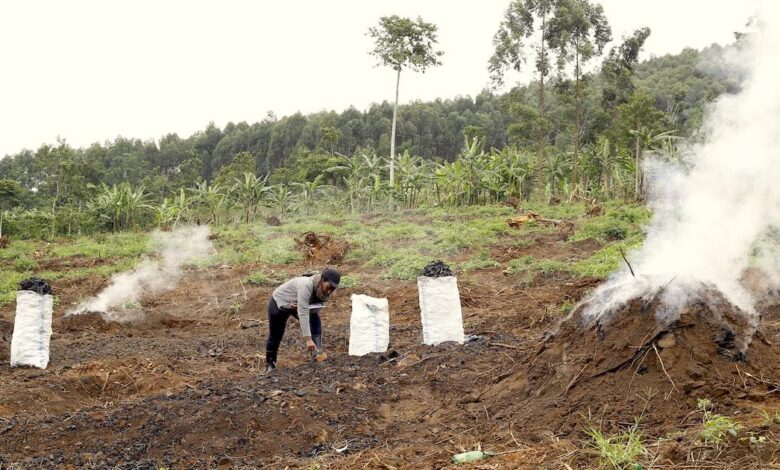
The problem is particularly acute where commercial production involves extensive tree cutting and inefficient traditional kilns. Such kilns can waste substantial quantities of wood while releasing smoke and other pollutants.
Nevertheless, it is important to distinguish between sustainable and unsustainable production.
Charcoal made from legally harvested wood, sustainably managed woodlots or appropriate agricultural residues is not environmentally equivalent to charcoal produced through the indiscriminate destruction of natural forests.
Likewise, a properly regulated producer operating under a sustainable management plan should not automatically be treated in the same way as a commercial operator clearing protected forestland.
The government’s challenge is to develop a credible system that establishes where the wood originated, whether harvesting was lawful, how it was converted into charcoal and where the resulting product is being transported.
Without such a system, a blanket crackdown risks penalising compliant operators while allowing well-connected illegal producers to evade accountability.
Transportation: The Difference Between A Bag For Home Use And Commercial Trafficking
The transportation question has become particularly contentious.
During the October 2026 enforcement campaign, police spokesperson Kituuma Rusoke reportedly warned that people transporting charcoal originating from the affected regions risked arrest. The restrictions have raised concerns about whether enforcement adequately distinguishes commercial consignments from charcoal intended for domestic consumption.
This is where clear regulations become indispensable.
A household transporting a small quantity of charcoal for personal use is not necessarily engaged in the same activity as a trader moving a lorry-load of charcoal produced through illegal forest clearing. Their circumstances, scale of activity and environmental implications differ considerably.
Yet, the origin of a consignment also matters. A commercial load cannot be presumed lawful simply because its owner claims that it is intended for domestic cooking or industrial use.
A workable system should specify:
-
What quantities may be transported for personal or household use, where such movement is legally permitted.
-
What documentation is required for commercial consignments.
-
How authorities will verify the origin and legality of charcoal.
-
Which exemptions, if any, apply to licensed industrial users, research institutions and authorised manufacturers.
-
How impounded goods will be handled and how people affected by enforcement can challenge wrongful seizure or arrest.
These safeguards would reduce confusion, discourage arbitrary enforcement and make it easier for security agencies to focus on serious environmental offences.
Most importantly, the public should receive clear, consistent guidance about what is prohibited, what remains lawful and what documentation is required.
Can Gas And Electric Cooking Replace Charcoal?
The Ministry of Energy and Mineral Development has identified LPG, electricity, ethanol and biogas among the alternatives it is promoting. Government has also pointed to electricity tariffs intended to encourage electric cooking and the distribution of LPG cylinders and accessories.
These are reasonable policy directions. However, announcing alternatives is not the same as making them affordable, accessible and dependable for ordinary Ugandans.
The initial cost of a gas cylinder and stove can be prohibitive for low-income households. Even where starter kits are provided free of charge, users must pay for refills. Electricity may offer a convenient alternative to some households, but the cost of appliances, wiring, reliable supply and cooking electricity remains relevant.
Biogas can be valuable for households, farms and institutions with adequate organic feedstock, water and space for a suitable installation. Yet it cannot be assumed to provide an immediate replacement for charcoal in every urban dwelling.
Government therefore needs to measure the success of its clean-cooking programmes by actual household adoption and continued use, not simply by the number of cylinders distributed or promotional campaigns conducted.
The census evidence underscores the scale of the task. If approximately 89 per cent of households rely on firewood or charcoal, the transition must reach people on modest incomes, not only those who can already afford modern cooking appliances and fuels.
A realistic strategy would include targeted subsidies, affordable refill arrangements, financing for efficient cooking appliances, public education and reliable distribution networks.
It should also promote improved cookstoves, sustainable charcoal production and biomass briquettes as possible transitional measures where appropriate. These options do not all qualify as clean cooking under the same health standards, and their environmental benefits depend on how they are produced and used. Nevertheless, they can form part of a broader transition strategy rather than leaving households with no practical option.
What Parliament And Government Should Do Next
As of October 18, 2026, the government is expected to report to Parliament on Wednesday, October 21, following the Speaker’s directive. That report presents an opportunity to replace uncertainty with a clear, evidence-based plan.
Uganda Today identifies six priorities that deserve consideration.
First, clarify the law. Government should explain the legal basis, geographic scope and practical application of Executive Order No. 3 of 2023, alongside the precise effect of Parliament’s temporary suspension of enforcement.
Second, publish evidence of progress. The Energy Ministry should provide verifiable figures on households reached by alternative-energy programmes, the geographical distribution of equipment, actual adoption rates and the affordability of ongoing fuel supplies.
Third, target destructive production. Enforcement should prioritise illegal tree felling, destruction of protected forests, unlicensed commercial production and unlawful transportation, rather than treating every charcoal user as an environmental offender.
Fourth, protect legitimate industrial activity. Government should consult manufacturers, foundries, laboratories and relevant technical institutions to determine their actual requirements and establish proportionate licensing and traceability arrangements.
Fifth, support affected workers. Communities whose incomes depend on charcoal production and trade need viable alternatives, including sustainable forestry, tree planting, agroforestry, briquette production and other locally appropriate enterprises.
Sixth, establish a phased transition with measurable targets. A credible programme should set clear milestones for expanding access to alternative energy, restoring forests, reducing illegal production and reviewing the affordability of household cooking fuels.
These measures would allow government to pursue environmental conservation without overlooking the economic consequences of enforcement.
Conclusion: Uganda Needs Regulation, Not Confusion
The suspended charcoal-ban enforcement has exposed a gap between environmental ambition and the everyday realities of energy access.
Uganda cannot afford to ignore deforestation, forest degradation and the health consequences associated with polluting cooking fuels. Nor can it assume that millions of households, small businesses and legitimate industrial users can abandon charcoal overnight without affordable substitutes.
The industrial question adds another dimension, but it should be handled carefully. Specialised carbon materials, laboratory testing and metallurgical applications may justify specific, traceable supplies; they do not provide a blanket defence for destructive charcoal production.
Similarly, Parliament’s intervention should not be read as permission to destroy forests indiscriminately. Its significance lies in demanding that government demonstrate preparedness, clarify the rules and account for the people expected to comply.
The most durable solution is a policy that distinguishes illegal production from sustainable supply, commercial trafficking from lawful movement, and ordinary cooking charcoal from specialised industrial materials.
Uganda must protect its forests while building an energy system that ordinary citizens can afford. The success of the policy will ultimately depend not on the number of charcoal bags seized or arrests made, but on whether forest destruction declines, household energy access improves and livelihoods are protected during the transition.
The question facing Uganda is no longer simply whether charcoal should be banned. It is whether the country can deliver a transition that is environmentally responsible, economically fair, technically informed and legally clear.
#UgandaToday #CharcoalBan #UgandaParliament #CleanCooking #ForestConservation #EnergyTransition