Two Faces Of Uganda–Türkiye Relations: PLU Protest In Kampala As Government Pursues Business Diplomacy
+256 702 23 93 37: The September 18 demonstration over Fred Lumbuye has brought renewed attention to the delicate balance between political pressure and Uganda’s long-standing trade, investment and diplomatic interests with Türkiye

UgandaToday: Two Faces Of Uganda–Türkiye Relations: PLU Protest In Kampala As Government Pursues Business Diplomacy
The September 18 demonstration over Fred Lumbuye has brought renewed attention to the delicate balance between political pressure and Uganda’s long-standing trade, investment and diplomatic interests with Türkiye
By Uganda Today Correspondent
On Friday, September 18, 2026, two very different images emerged around Uganda’s relationship with Türkiye.
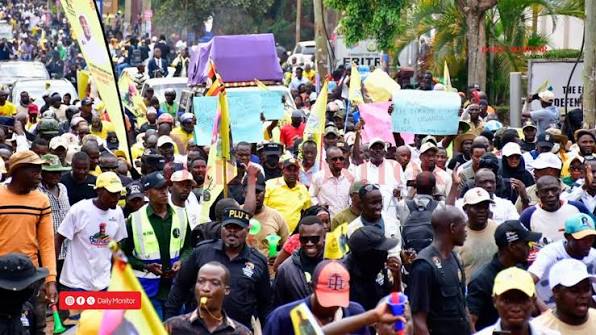
In Kampala, supporters of the Patriotic League of Uganda (PLU) marched to the Turkish Embassy in Kololo demanding that Ankara hand over Ugandan political commentator Fred Kajubi Lumbuye to face proceedings in Uganda.
At almost the same time, the broader Uganda–Türkiye relationship was being viewed through another lens: trade, investment, diplomacy and the search for business opportunities.
The juxtaposition is striking—not necessarily because the two activities were officially connected, but because they illustrate the competing pressures that can surround a bilateral relationship: political and security grievances on one side, and economic and diplomatic interests on the other.

The Kampala Demonstration
The PLU mobilisation began at Lugogo Cricket Oval, from where supporters proceeded through Kampala towards the Turkish diplomatic mission in Kololo.
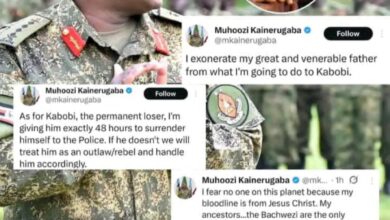
The demonstration was led by PLU Secretary General Fadil Twalla, following a directive from PLU chairman and Chief of Defence Forces Gen. Muhoozi Kainerugaba.
The protesters demanded that Türkiye extradite Lumbuye, who has lived in Türkiye for several years and continues to comment on Ugandan politics through social media.
Ugandan authorities and PLU have accused Lumbuye of offences including incitement, harmful propaganda and cyber-related crimes. Those allegations should, however, be distinguished from a judicial finding of guilt; international reporting on September 18 noted that Lumbuye’s legal status in Türkiye remained unclear, and the Associated Press said it had not obtained a comment from him.
Twalla told demonstrators that PLU’s grievance was directed at the handling of Lumbuye’s case rather than the Turkish people.
The protesters also questioned reports that Lumbuye’s lawyers had sought asylum in Türkiye.
According to Daily Monitor, Twalla argued that Uganda and Türkiye had longstanding relations in trade and investment and called for what he described as reciprocity in the relationship.
The Turkish Embassy had announced beforehand that it would close its Kampala offices on September 18 because of the planned demonstration.
When the protesters reached the diplomatic mission, they were reportedly advised to pursue their concerns through diplomatic channels rather than directly accessing the embassy.
That detail is significant because it placed the dispute back in the hands of the institutions formally responsible for managing relations between sovereign states.
But There Is Another Türkiye Story
The protest, however, represents only one part of the Uganda–Türkiye relationship.
Uganda has for years been seeking to expand its economic engagement with Türkiye, including trade, investment, infrastructure, tourism, agriculture and other areas of commercial cooperation.
Uganda’s diplomatic relations with Türkiye date back to 1969, while the Turkish Embassy in Kampala began operating in 2010. The current Turkish embassy states that bilateral relations encompass a range of areas and that its present ambassador is Mehmet Fatih Ak.
The Ugandan government has also increasingly placed economic and commercial diplomacy at the centre of its foreign-policy strategy.
In September 2026, the Ministry of Foreign Affairs held a national review of the Economic and Commercial Diplomacy programme, with officials stressing that diplomatic missions should help turn international engagements into exports, investment, employment and other measurable economic outcomes.
That broader policy objective gives added significance to Uganda’s engagement with Turkish business interests.


Kadaga has, however, recently been involved in Uganda’s engagement with Turkish business interests.
Publicly available material from her Istanbul visit shows that she met representatives of Turkish business groups, including the leadership of the Turkish-African Business Association (TABA). A contemporaneous social-media post from Kadaga described the meeting as successful.
That engagement is therefore relevant to the larger story of Uganda’s efforts to use political and diplomatic contacts to generate commercial opportunities.
It is worth stressing, however, that the evidence reviewed for this article places Kadaga’s Istanbul business engagement months before the September 18 PLU demonstration, rather than establishing that she was in Türkiye on the very day of the protest.
From Demonstrations To Boardrooms
This creates an intriguing contrast.
On one side, Ugandans were physically outside Türkiye’s diplomatic mission demanding action against a Ugandan national living in Türkiye.
On the other side of the bilateral relationship, Uganda has been seeking Turkish investors, traders and businesses.
The two approaches pursue very different immediate objectives.
The PLU approach is pressure-oriented. Its stated objective is to persuade Türkiye to take action over Lumbuye and, in PLU’s view, to demonstrate respect for Uganda’s sovereignty and legal processes.
The economic-diplomacy approach is engagement-oriented. Its objective is to identify areas where Ugandan and Turkish interests can produce trade, investment and commercial partnerships.
Neither necessarily erases the other.
A country can have a political disagreement with another government while maintaining trade and investment relations. Equally, economic cooperation does not automatically remove disagreements over security, extradition, asylum or the conduct of individuals living abroad.
The challenge for diplomacy is how to manage those differences without allowing one area of the relationship to unnecessarily undermine another.
Why The Contrast Matters
The timing of the Kampala protest comes at a sensitive moment in Uganda–Türkiye relations.
The dispute involving Lumbuye has been accompanied by broader public disagreements involving Gen Muhoozi Kainerugaba and Turkish interests.
The September 18 protest was not an isolated spontaneous gathering. PLU had been preparing for it for days, with a September 10 mobilisation meeting involving regional and sub-regional coordinators.
The demonstration therefore represented a deliberate political mobilisation around an issue that PLU regards as important.
But Uganda’s relationship with Türkiye is considerably larger than the Lumbuye question.
It includes commercial interests, diplomatic representation, investment opportunities and security considerations.
Türkiye is also an increasingly significant actor in East African affairs, particularly in Somalia, where Ankara has developed substantial diplomatic, economic and security relationships.
That wider regional context makes the management of Uganda–Türkiye relations important beyond the immediate dispute.
The Economic Stakes
Uganda’s own economic diplomacy strategy recognises that embassies and foreign missions are increasingly expected to function not merely as traditional diplomatic posts but also as channels for trade and investment.
A September 2026 government review reported that Uganda had identified dozens of investment, trade and climate-financing opportunities through its missions abroad and was seeking stronger systems for converting such opportunities into actual economic outcomes.
Türkiye therefore represents a market and investment relationship that operates independently of any single political dispute.
Uganda has previously promoted its coffee, agricultural products, tourism, manufacturing and other investment opportunities to Turkish businesses.


Ugandan and Turkish participants at a previous Uganda–Türkiye trade and investment engagement. Such fora have been used to promote commercial cooperation between the two countries.
Diplomacy After The Demonstration
Perhaps the most consequential aspect of September 18 was what happens after the demonstration.
PLU said its delegation wanted Türkiye to act on Lumbuye’s case. Turkish officials, according to reports from the demonstration, directed the matter towards formal diplomatic channels.
That effectively returns the matter to Uganda’s foreign-policy institutions.
This is important because diplomatic relations between states are normally conducted through governments and recognised diplomatic channels, rather than through political movements confronting foreign missions.
The demonstration may therefore be understood as an expression of political pressure, while the subsequent handling of the matter becomes a question for Uganda’s diplomatic and legal institutions.
That distinction will matter if Kampala wants simultaneously to pursue its concerns over Lumbuye and protect the economic relationship with Ankara.
One Relationship, Two Very Different Messages
The images of September 18 consequently tell two different stories about Uganda’s relationship with Türkiye.
The first is a picture of political frustration—PLU supporters marching through Kampala and demanding the return of a Ugandan political critic.
The second is the longer-term picture of economic diplomacy—Ugandan leaders travelling to Türkiye and other countries seeking investors, markets and business partnerships.
Neither picture, by itself, completely describes the relationship.
Uganda’s challenge is how to reconcile the two.
A bilateral relationship can contain disagreements while still producing business opportunities. But sustained economic cooperation generally requires predictable diplomatic relations, while diplomatic disputes can create uncertainty for investors and businesses even when the underlying commercial interests remain strong.
For Uganda, the Lumbuye question has therefore become more than a dispute over one individual.
It has become a test of how the country balances sovereignty, justice, political mobilisation, diplomacy, trade and investment when those interests appear to pull in different directions.
And that is perhaps the most important story behind the photographs from Kampala on September 18: the same Uganda that was protesting at Türkiye’s diplomatic door is also seeking Turkish capital, markets and business partnerships.
The question now is how the two sides of that relationship will be managed.

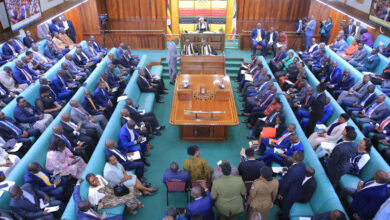
Ugandan and Turkish officials during bilateral engagement at Uganda’s diplomatic mission in Ankara—an illustration of the institutional channels through which the two countries manage their wider relationship.
EDITOR’S NOTE
Uganda Today distinguishes between allegations and established facts. The allegations against Fred Lumbuye reported by Ugandan authorities and PLU have not been presented here as findings of guilt. His legal status in Türkiye was reported as unclear by the Associated Press on September 18, 2026.
#UgandaToday #PhoenixNewsFeeds #OperaNewsFeeds #UgandaTurkeyRelations #EconomicDiplomacy #PLU