

UgandaToday: The Myth of Stability in Uganda
A Weekly Conversation Review About Uganda’s Past, Present and Future
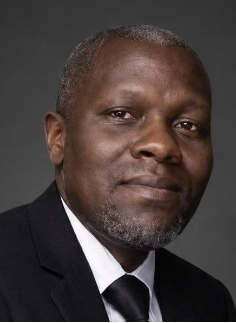
By Kriss Namakola
Editor’s Preamble: Introducing a New Weekly Conversation on UgandaToday
UgandaToday is pleased to introduce a new weekly opinion and analysis series, “The Myth of Stability in Uganda: A Weekly Conversation About Uganda’s Past, Present and Future,” featuring excerpts and condensed essays drawn from the work of Ugandan author and human rights and democracy advocate Kriss Namakola.
The series seeks to create space for sustained reflection on Uganda’s political history, institutions, governance, economy, democracy and national future.
Rather than presenting a single conclusion to readers, the weekly essays will examine historical events and contemporary political realities and invite readers to interrogate the arguments, evidence and assumptions behind them.
The series is adapted from Namakola’s 2026 book, The Myth of Stability: The Invisible Cost of Museveni’s One-Man Rule in Uganda and the Hoax of Peace. Published descriptions of the book indicate that it examines Uganda’s political development from the colonial period through independence, military rule and the consolidation of executive authority, with particular attention to institutions, civil-military relations, electoral processes, public finance and the political economy of the modern state. (Google Books)
The complete historical analysis and extended arguments remain in the book. UgandaToday’s weekly series will bring selected themes from that work to a wider audience in accessible, focused instalments.
Readers can follow the continuing conversation on UgandaToday every week.
The Myth of Stability
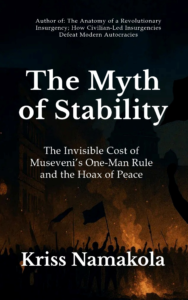
When I published The Myth of Stability: The Invisible Cost of Museveni’s One-Man Rule and the Hoax of Peace, I knew that placing the book on Amazon and other online bookstores would not, by itself, create the conversation I believed Uganda needed.
Books often reach those already looking for them. Their arguments remain confined between two covers, discussed within a limited circle, while the questions that gave birth to them continue to shape the lives of millions.
A book about the condition and future of a country should not remain accessible only to those who can find it, purchase it and commit themselves to reading more than two hundred thousand words.
I have therefore decided to open this book carefully, deliberately and publicly.
This is what I am planning: What if I publish one condensed essay every week, drawn from a chapter in the book, The Myth of Stability, but rewritten for this series?
These essays will not reproduce the entire book. Certainly not.
The complete historical evidence, extended analysis and broader prescriptions will remain in its pages. But each weekly instalment will give readers a substantial encounter with one of its central arguments.
Every instalment must earn attention on its own. Each will examine an event, an institution, a political decision or a national failure that helped produce the Uganda in which we now live.
The series is an invitation to think seriously about Uganda, not merely to choose sides.
The Journey Ahead
The investigation will begin before independence, because Uganda’s present political condition did not begin in 1986.
It will examine the colonial state Britain assembled from societies with different political traditions, economic systems and relationships to centralised authority.
It will revisit the constitutional bargains surrounding independence, the crisis of 1966, the abolition of kingdoms, the charisma of Obote and the rise of Idi Amin, the violent aftermath of his removal, the disputed election of 1980 and the war that carried the National Resistance Movement to power.
From there, the series will enter the architecture of the present state: the Movement system, the militarisation of civilian government, the commercialisation of elections, the expansion of patronage, the erosion of professional administration, the kandooya and “white drone” abduction architecture, and the gradual transfer of effective power from visible institutions to informal networks.
I will attempt to examine how corruption has affected service delivery in hospitals, schools, roads, water, electricity and employment, not as a collection of isolated scandals, but as part of the operating logic of the state.
We will investigate the economy Uganda has built and the economy it has repeatedly failed to build.
Agriculture, industrialisation, debt, energy, education, infrastructure and the destruction of merit within public service will all come under examination.
The series will also confront foreign involvement.
Uganda’s usefulness as a military and security partner has shaped how Western governments interpret, and sometimes excuse, its domestic political conduct.
Regional interventions have brought diplomatic influence, military experience and international legitimacy. They have also helped insulate the government from pressure that would be applied to a less useful ally.
The government will be examined without euphemism, but the opposition will not be romanticised either.
Its internal divisions, strategic failures, dependence on personalities and repeated inability to convert public frustration into durable national organisation must also be confronted.
Citizens cannot be removed from the analysis either.
A political culture built around ethnic refuge, transactional elections, public resignation and private accommodation cannot be blamed exclusively on those occupying State House.
Power shapes society, but society also learns how to survive power and, sometimes, how to reproduce its habits.
This will not be a weekly exercise in outrage.
Uganda has no shortage of outrage.
What it lacks is sustained analysis connecting yesterday’s decisions to today’s institutions and today’s institutions to tomorrow’s dangers.
Taking the Country’s Temperature
Before beginning that historical journey, it is necessary to establish the baseline.
The post-1986 Uganda has been presented to the world as one of Africa’s great post-conflict recoveries.
We are variously told that the country emerged from dictatorship, economic collapse and civil war; that under the NRM, Uganda restored a measure of economic order, defeated or contained major insurgencies, became an important regional security actor and opened its borders to refugees fleeing neighbouring conflicts.
President Yoweri Museveni has governed since January 1986.
That extraordinary continuity has become virtually synonymous with stability.
To many foreign governments, Uganda is a dependable ally in a dangerous region. Its military has served in Somalia, Congo, Sudan, Liberia and the Central African Republic, while supporting the wider war on global terror, including operations linked to Iraq and Afghanistan.
Its government has positioned itself as a mediator, security partner and barrier against disorder and extremism.
To a domestic population taught to remember Amin, Obote, roadblocks, scarcity and state-sponsored killing, continuity can appear preferable to uncertainty.
These are not imaginary achievements.
Any serious assessment must acknowledge them.
But acknowledgment is not surrender of judgment.
The first question of this series is therefore deceptively simple:
What precisely do Ugandans mean when they say their country is stable?
If stability means that Uganda is not currently experiencing nationwide civil war, then the claim contains truth.
If it means the same government has maintained control for four decades, the evidence is indisputable.
If it means Kampala remains useful to powerful foreign capitals, that too is clear.
But those definitions measure the survival of a government.
They do not necessarily measure the strength of a state.
A stable state is not one in which a leader becomes indispensable.
It is one that can function when leaders change.
Its laws do not depend upon presidential preference. Its courts can resolve politically dangerous disputes. Its civil service can act without waiting for a telephone call from above.
Its military protects the constitutional order rather than the political future of an individual or faction.
Its citizens can replace their government without fearing that the country itself will disintegrate.
By that measure, Uganda’s stability remains a myth.
Uganda has demonstrated that one political order can survive for a remarkably long time.
But it has not demonstrated that power can pass peacefully beyond the man around whom that order was constructed.
That distinction is the fault line running beneath the national calm.
The Invisible Cost
The cost of personal rule is normally measured through stolen money: inflated contracts, ghost employees, abandoned projects, supplementary budgets and public funds disappearing into politically protected networks.
Those losses matter, but they are only the visible portion.
The greater cost is institutional.
When loyalty becomes more valuable than competence, the country loses capable people.
When every important institution learns to anticipate the wishes of one centre of power, initiative dies.
When public officials are retained because they are politically useful cadres rather than administratively effective professionals, failure becomes permanent.
When Parliament, the courts, the police, the civil service and the Electoral Commission lose public confidence, the country also loses the mechanisms through which conflict can be resolved peacefully.
The cost is also economic.
Businesses learn that access may matter more than innovation. Investors calculate political connections alongside commercial risk.
Young people study for an economy that cannot absorb them.
Public borrowing expands, but productive capacity does not expand at the same rate.
Economic growth can appear in national statistics while insecurity deepens inside ordinary households.
The cost is also psychological.
Citizens begin to treat public institutions as hostile territory.
They expect bribery, delay and arbitrary treatment.
They lower their expectations of government, retreat into private survival and call that retreat peace.
Most dangerously, the cost is generational.
A large share of Uganda’s population was born long after the violence used to justify the existing political order.
Young Ugandans do not remember Amin’s roadblocks or the Luwero War.
They compare their lives not only with Uganda’s past but also with the world displayed on their phones.
A government cannot indefinitely answer demands for employment, dignity and political participation with memories belonging to another generation.
Pressure does not disappear because it is contained.
It accumulates.
Peace, Silence and the Unanswered Question
The end of large-scale warfare deserves recognition.
But the absence of war is not the highest form of peace available to a nation.
Peace should also mean confidence in the law.
It should mean that political disagreement does not threaten a person’s liberty, employment or physical safety.
It should mean that property can be defended against the powerful, elections can produce political change and public institutions can settle disputes before those disputes reach the street or the barracks.
A population can be silent without being reconciled.
It can be orderly without being represented.
It can fear disorder so deeply that it tolerates decay.
Silence can therefore be mistaken for consent, just as continuity can be mistaken for stability.
The ultimate test will be succession.
What happens when the president is no longer available to arbitrate disputes inside the ruling party, security establishment, business networks and state bureaucracy?
Which institution possesses enough independence and public legitimacy to manage a contested transfer?
Will the Constitution determine the outcome?
Will the Electoral Commission be believed?
Can the judiciary command acceptance from the losing side?
Will the military defend the process, influence it or decide it?
My synopsis is this:
Collapse is not inevitable. But neither is a peaceful transition.
The danger lies precisely in pretending that the question has already been settled.
Why This Conversation Must Begin Now
Over the coming weeks, I will argue that Uganda’s apparent stability conceals a profound institutional fragility.
I will present the evidence, examine competing explanations and propose alternatives.
I invite you to challenge the analysis.
You should interrogate the facts, dispute the conclusions and contribute evidence of your own.
Let us keep the debate going.
“Let’s have all our heads in one thinking cup.”
What you should not do is hide behind slogans.
“Peace” is not an answer to every failure of government.
“Democracy” is not proven by conducting elections whose institutions lack public confidence.
“Development” is not measured by commissioned projects alone.
“Opposition” is not a governing programme.
“Revolution” is not a permanent title deed to the state.
Uganda deserves a political conversation more demanding than the contest between official propaganda and partisan outrage.
That conversation must begin by understanding the machinery we inherited.
I want to opine that the system governing Uganda today may not have emerged from empty grounds in January 1986.
The NRM inherited a country already shaped by centralised control, unequal administration, territorial bargaining, regional specialisation and coercive government.
The National Resistance Movement altered that machinery, expanded it and perfected many of its instruments.
It might not have invented its foundations.
But it perfected them.
Next week, the historical investigation begins with the state Britain constructed, not simply to unite different peoples, but to administer them from a narrow centre of authority.
To understand why Uganda’s peace depends so heavily upon the man at the centre, one must first understand the country that was constructed to be governed from the centre.
Next Week
Containerizing the State: The Country Britain Built to Be Controlled
This is a weekly series adapted from The Myth of Stability: The Invisible Cost of Museveni’s One-Man Rule in Uganda and the Hoax of Peace by Kriss Namakola.
The complete historical evidence, extended analysis and reform proposals are available in the book.
Purchase the book: Amazon – The Myth of Stability by Kriss Namakola
A free e-book version is also available on Amazon.
Follow the continuing series: UgandaToday – ugandatoday.co.ug
Subscribe to receive next week’s instalment.
About the Author
Kriss Namakola is an advocate for human rights and democracy living in Dallas, Texas.
According to published biographical information accompanying the book, Namakola writes on political theory, democracy, human rights and political change, and has drawn on experiences in Uganda and international security environments in developing his analysis of political power and governance. (Google Books)