
Besigye’s Courtroom Collapse: Medical Expert Raises Questions on Custodial Healthcare and Emergency Response
+256 702 239 337: What Happens When the Brain Is Deprived of Oxygen? Illustrate: 0–1 minute: Oxygen interruption begins. 2–4 minutes: Brain cells start sustaining injury. 4–6 minutes: Risk of permanent brain damage rises sharply. Immediate priorities: Airway, Breathing, Circulation (ABC), CPR if indicated, oxygen, rapid transport.

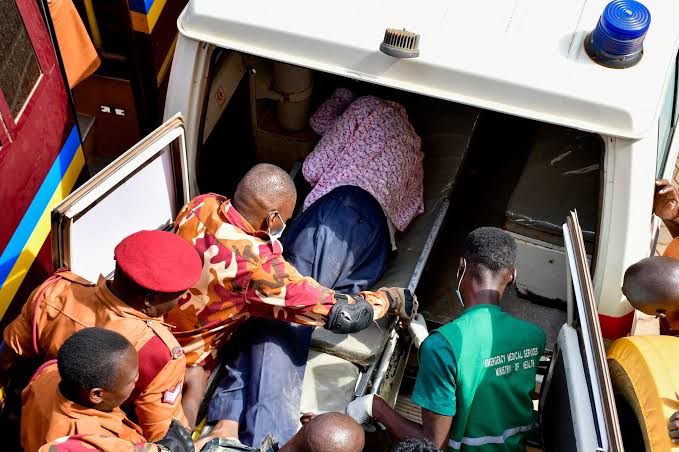
UgandaToday: Besigye’s Courtroom Collapse: Medical Expert Raises Questions on Custodial Healthcare and Emergency Response
By UgandaToday Editorial Team
The dramatic collapse of veteran opposition politician Dr. Kizza Besigye during recent court proceedings has reignited national debate over custodial healthcare, emergency medical preparedness, detainees’ rights, and the responsibilities of the State towards people in its custody.
While the incident has triggered intense political reactions, medical practitioner Dr. Drew Ddembe argues that the episode should equally serve as a wake-up call about Uganda’s emergency healthcare systems and the obligations authorities have whenever an individual under state custody develops a medical emergency.
According to Dr. Ddembe, the incident extends beyond politics and raises broader questions about emergency medicine, constitutional obligations, and the country’s preparedness to save lives during critical moments.
A Long Political Journey Marked by Repeated Arrests
Dr. Besigye, now aged 70, has remained one of President Yoweri Museveni’s most prominent political challengers for more than two decades.
Throughout that period, he has experienced multiple arrests, prosecutions, periods of detention and confrontations with security agencies—events that have frequently attracted local and international attention.
Dr. Ddembe argues that years of legal battles, repeated incarceration and prolonged political pressure have inevitably taken both psychological and physical tolls on the former presidential candidate.
He further contends that the latest courtroom collapse cannot be viewed in isolation from this broader historical context.
The Courtroom Collapse
According to Dr. Ddembe’s account, Besigye collapsed after appearing physically exhausted during court proceedings.
He argues that the loss of consciousness pointed to a medical emergency requiring immediate intervention rather than confusion or delay.
The physician criticises what he describes as an inadequate emergency response, saying every minute counts whenever oxygen delivery to the brain is interrupted.
“The first few minutes determine survival,” he argues.
Why Oxygen Matters During a Medical Emergency
One of the central themes in Dr. Ddembe’s analysis is the importance of oxygen in sustaining life.
He explains that the brain is the body’s most oxygen-dependent organ.
Medical science shows that when oxygen supply is interrupted, brain cells begin suffering irreversible injury within minutes.
Without prompt intervention, prolonged oxygen deprivation may lead to:
- Permanent brain injury;
- Organ failure;
- Cardiac arrest;
- Long-term neurological disability; and
- Death.
For that reason, emergency responders are trained to restore breathing and circulation immediately before transporting a patient.
Emergency Response Begins Before Reaching Hospital
Dr. Ddembe stresses that effective emergency medicine starts at the scene of collapse—not after arrival at hospital.
He notes that internationally recognised emergency response systems emphasise:
- Immediate assessment of airway, breathing and circulation;
- Basic Life Support (BLS);
- Cardiopulmonary Resuscitation (CPR) where necessary;
- Use of Automated External Defibrillators (AEDs) when indicated;
- Oxygen administration;
- Rapid communication with equipped emergency departments.
According to him, delays during those first critical minutes can significantly worsen a patient’s chances of recovery regardless of how advanced subsequent hospital treatment may be.
Questions Over Emergency Preparedness
Beyond Besigye’s individual case, Dr. Ddembe raises wider concerns regarding Uganda’s emergency medical infrastructure.
He argues that the country continues to face significant challenges, including:
- Limited emergency ambulance capacity;
- Inadequate pre-hospital emergency care;
- Shortage of trained emergency medical personnel;
- Delays caused by traffic congestion;
- Uneven access to specialised emergency departments.
In his view, strengthening emergency medicine should become a national public health priority rather than remaining an issue discussed only after high-profile incidents.
The Legal Duty of Care
Dr. Ddembe also discusses what legal scholars commonly refer to as the State’s “duty of care” towards individuals held in custody.
Under both domestic legal principles and international human rights standards, governments have an obligation to safeguard the health and welfare of detainees.
This includes ensuring timely access to medical treatment whenever a detainee becomes ill or suffers a medical emergency.
Dr. Ddembe argues that any perceived delays, restrictions on access to medical professionals, or inadequacies in emergency response deserve careful public and legal scrutiny.
Government authorities have previously maintained that detainees receive medical care within existing institutional procedures.
Healthcare Beyond Politics
Although Besigye’s case has generated intense political debate, Dr. Ddembe believes the larger issue concerns every Ugandan.
He argues that emergencies do not discriminate between politicians and ordinary citizens.
Whether someone suffers a stroke, heart attack, road crash or collapse in custody, survival depends largely on the speed and quality of the first medical response.
He cautions against assuming that overseas treatment can compensate for failures during the first few minutes following collapse.
Medical evidence consistently shows that early intervention remains the most important determinant of survival.
Broken Promises or Opportunity for Reform?
Dr. Ddembe concludes by comparing the day’s situation with aspirations contained in the National Resistance Movement’s original Ten-Point Programme, which pledged improved social services, restoration of democracy, security and accountable governance.
He argues that recent events expose gaps between those historical commitments and present-day realities, particularly regarding healthcare and detainees’ welfare.
Whether one agrees with his political conclusions or not, his analysis highlights broader institutional questions about emergency preparedness, constitutional rights and public health systems.
A National Conversation Beyond One Individual
Besigye’s collapse has become more than a single courtroom incident.
It has sparked renewed discussion about:
- Standards of emergency medical response;
- Healthcare in custodial settings;
- The constitutional rights of detainees;
- Uganda’s emergency health infrastructure;
- Accountability during medical emergencies.
As investigations, legal proceedings and public debate continue, medical experts say the episode should encourage reforms that strengthen emergency healthcare systems for every Ugandan—not only those whose cases attract national headlines.