
Environmental Governance: Can Uganda Turn Good Policies Into A Healthier Country?
+256 702 23 93 37: A recent environmental-governance discussion published on LinkedIn by environmental commentator Shubham K argues that healthy ecosystems depend not only on good intentions but on effective policies, capable institutions, reliable data, public participation, accountability and ecosystem protection.

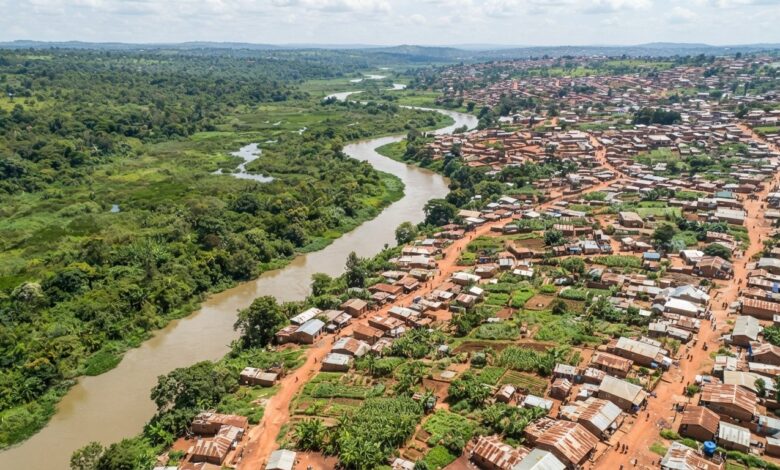

UgandaToday: Environmental Governance: Can Uganda Turn Good Policies Into A Healthier Country?
From Laws And Policies To Real Action, Uganda’s Environmental Future Depends On Strong Institutions, Reliable Data, Community Participation And Accountability
By Uganda Today
Environmental protection is no longer simply a question of planting trees, cleaning cities or warning communities against wetland destruction.
Increasingly, the bigger question is how a country governs its environment.
Who makes environmental decisions?
Who implements them?
Who monitors compliance?
Who provides the data on which decisions are based?
And, perhaps most importantly, who is held accountable when environmental laws and regulations are ignored?
These questions are at the heart of a growing global conversation about environmental governance.
A recent environmental-governance discussion published on LinkedIn by environmental commentator Shubham K argues that healthy ecosystems depend not only on good intentions but on effective policies, capable institutions, reliable data, public participation, accountability and ecosystem protection.
For Uganda, the argument is particularly relevant.
The country already has an extensive environmental legal and institutional framework. The National Environment Management Authority (NEMA) is the principal agency mandated to coordinate, monitor, regulate and supervise environmental management, working alongside ministries, departments, agencies, local governments and other stakeholders.
The challenge, therefore, is increasingly about turning the framework into measurable results on the ground.
Uganda Already Has The Laws
Uganda’s National Environment Act, 2019 provides a comprehensive framework for environmental management.
Among other provisions, the law requires environmental considerations to be incorporated into development activities and establishes institutional arrangements for environmental governance.
The legislation also provides specific protection for wetlands, requiring relevant lead agencies, in collaboration with NEMA, to ensure that wetlands are conserved for the common good of Ugandans.
It further provides for environmental and social impact assessment for activities likely to adversely affect wetlands.
NEMA lists a broader body of environmental legislation covering wildlife, forestry, water, mining and other areas of natural-resource management.
This means Uganda’s environmental challenge cannot simply be explained by the absence of laws.
The more difficult question is whether existing laws, regulations and institutional responsibilities are being implemented consistently and effectively.
The Six Pillars Of Environmental Governance
The environmental-governance model highlighted in the LinkedIn discussion can provide a useful framework for examining Uganda’s situation.
1. Strong Policies And Laws
Environmental laws establish the rules under which development should take place.
For Uganda, the National Environment Act and related regulations provide mechanisms for environmental assessment, pollution control, waste management, ecosystem protection and compliance.
NEMA currently lists regulations covering areas including waste management, air quality, environmental and social assessment, oil spills, effluent discharge and climate-change mechanisms.
But legislation is only the beginning.
The effectiveness of environmental governance ultimately depends on implementation.
2. Effective Institutions
Environmental management is not the responsibility of one institution alone.
NEMA’s institutional framework brings together central government, local governments and several lead agencies, including the National Forestry Authority, Uganda Wildlife Authority, Wetlands Management Department and Directorate of Water Resources Management.
This makes coordination critical.
A wetland, forest, river or wildlife habitat does not exist within the boundaries of a single government department.
Environmental governance therefore requires institutions to work together rather than operate in isolation.
NEMA’s current five-year strategic plan places environmental governance and coordination among its central priorities, alongside compliance, ecological integrity, environmental education and institutional capacity.
3. Reliable Data And Transparency
Good environmental decisions require good information.
How much forest has been lost?
Which wetlands are under the greatest pressure?
Where are pollution levels increasing?
Which ecosystems are recovering?
Which environmental projects are complying with their approved conditions?
Without reliable data, environmental management can easily become reactive rather than preventive.
Uganda’s National State of the Environment Report 2024 emphasises the importance of integrating climate-change adaptation into national and local development planning and strengthening community engagement through education and participatory planning.
The availability of environmental information also allows citizens, researchers, journalists, investors and communities to scrutinise environmental decisions.

4. Public Participation
Environmental governance cannot succeed through government enforcement alone.
Communities live alongside wetlands, forests, rivers, lakes, mountains and wildlife.
They are often the first to experience environmental degradation and, equally importantly, can become powerful partners in conservation.
Uganda’s biodiversity strategy places community participation among its priorities, alongside conservation, sustainable use of natural resources, climate adaptation and integration of biodiversity into national planning.
Public participation should therefore move beyond occasional sensitisation campaigns.
Communities need meaningful opportunities to participate in decisions affecting the natural resources on which their livelihoods depend.
5. Accountability And Enforcement
Perhaps the most difficult test of environmental governance is enforcement.
Rules have little deterrent value if violations are rarely detected or consequences are uncertain.
Uganda’s National State of the Environment Report 2024 records environmental enforcement activities involving NEMA and its Environment Protection Force. It reports that, by March 2024, 250 criminal cases had been handled, compared with 69 in FY2021/22 and 112 in FY2022/23. Many of the cases involved wetland degradation and encroachment, noise pollution and projects commenced without the required environmental and social impact assessment.
These figures demonstrate both the scale of enforcement activity and the continuing pressure on Uganda’s environmental resources.
The objective of enforcement, however, should ultimately be prevention as much as punishment.
6. Ecosystem Protection
Forests, wetlands, rivers, lakes, soils and biodiversity are not merely environmental assets.
They support agriculture, water supplies, livelihoods, tourism, public health and climate resilience.
Uganda has recently reported progress in wetland restoration. NEMA said in February 2026 that national wetland coverage had increased from 8.9% in the early 2020s to 13.9% by 2025, with thousands of wetlands gazetted and restoration and demarcation activities continuing.
Such developments illustrate an important principle: environmental governance should be measured not simply by the number of policies produced, but by whether ecosystems and communities experience tangible improvements.
Development And Environmental Protection Should Not Be Enemies
One of the most important questions for Uganda is how to reconcile economic transformation with environmental sustainability.
Roads must be built.
Industries must operate.
Cities must expand.
Homes must be constructed.
Agriculture must grow.
Energy infrastructure must be developed.
The answer cannot simply be to stop development.
Instead, environmental governance should ensure that development decisions take environmental risks and long-term sustainability seriously.
Uganda’s National Environment Act requires approaches that increase both environmental and human resilience to climate-change impacts to be prioritised in public and private projects.
This makes environmental assessment an important part of responsible development rather than an obstacle to development.
From Policy To Implementation
The central lesson from the environmental-governance debate is straightforward:
A country can have excellent environmental policies and still experience environmental degradation if implementation is weak.
The journey from policy to environmental impact requires a chain of action:
Policy → Science And Data → Implementation → Monitoring → Public Participation → Accountability → Measurable Environmental Outcomes.
Breaking any link in that chain weakens the entire system.
Uganda’s current NEMA strategic plan recognises this broader challenge. Its five-year programme seeks, among other objectives, to reduce degraded wetlands, increase compliance, strengthen environmental mainstreaming, improve farmer resilience to climate change and reduce greenhouse-gas emissions. The plan is projected to require approximately Shs295 billion, with NEMA reporting a funding gap of about Shs24 billion.
That funding question is itself part of environmental governance.
Institutions cannot be expected to enforce laws, collect data, monitor ecosystems and engage communities effectively without adequate resources and technical capacity.
The Role Of Citizens
Environmental governance should not be viewed as a government-only responsibility.
Businesses, investors, farmers, cultural institutions, religious organisations, civil society, schools, universities, journalists and individual citizens all have roles to play.
A business that complies with environmental requirements contributes to governance.
A community that protects a wetland contributes to governance.
A journalist who investigates environmental degradation contributes to accountability.
A local government that integrates environmental considerations into planning contributes to governance.
A citizen who reports environmental violations contributes to enforcement.
In this sense, environmental governance is ultimately about the relationship between institutions, citizens and nature.
A Healthier Uganda Requires Governance That Works
Uganda possesses many of the building blocks required for effective environmental management: legislation, regulatory institutions, technical agencies, environmental standards and national strategies.
The next challenge is ensuring that these systems work together effectively.
The environmental-governance debate therefore raises a question that Uganda must continue to confront:
Are we measuring environmental success by the number of policies and programmes we announce, or by the condition of the forests, wetlands, rivers, soils, biodiversity and communities those policies are supposed to protect?
The answer will determine whether environmental governance remains a collection of laws and institutions—or becomes a practical mechanism for building a cleaner, healthier and more resilient Uganda.
Uganda Today believes environmental journalism has a critical role to play in this conversation: informing citizens, scrutinising implementation, highlighting successful conservation initiatives and giving communities a platform to discuss the environmental challenges affecting their lives.