Uganda’s Long Presidency And The Question Of National Dignity
+256 702 23 93 37: Four Decades Of Museveni: A Political Exception In East Africa Museveni came to power in January 1986 following the five-year NRA bush war. The State House account records that he has remained president since then, and in May 2026 he was sworn in for a seventh term covering 2026–2031.

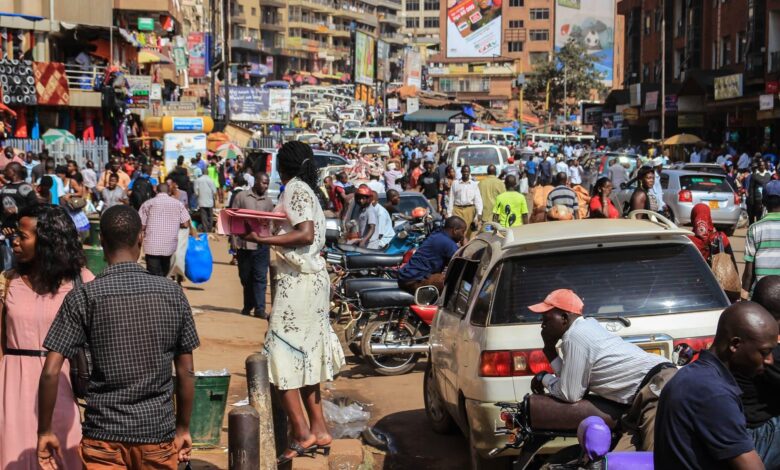

UgandaToday: Uganda’s Long Presidency And The Question Of National Dignity
By Uganda Today Political Desk
A claim in the following link, https://vm.tiktok.com/ZSqVJY94e/ circulating on social media has opened an interesting political debate about Uganda: How should a country assess the dignity, respect and standing of its people when its political system has been dominated by the same president for four decades?
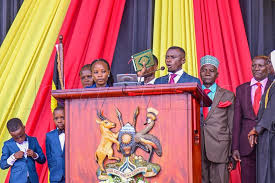
The discussion is particularly relevant in 2026, when President Yoweri Kaguta Museveni begun his seventh consecutive presidential term after taking the oath of office on May 12. Museveni has been Uganda’s president since January 1986.
Four Decades Of Museveni: A Political Exception In East Africa
Museveni came to power in January 1986 following the five-year NRA bush war. The State House account records that he has remained president since then, and in May 2026 he was sworn in for a seventh term covering 2026–2031.

That makes Uganda’s presidency one of the longest-running political presidencies in contemporary Africa.
It is also important to distinguish length of service from the broader performance of a political system.
Supporters of Museveni’s government frequently point to the relative political stability Uganda has experienced since the turbulent years preceding 1986, as well as infrastructure development, economic expansion and Uganda’s continued role in regional affairs.
The government’s own account of the post-1986 period emphasises restoration of security, state institutions and what it describes as people-centred governance.
But longevity itself cannot establish whether citizens enjoy greater dignity, political freedom or respect.
Those are questions that require different measurements.
What Does “Dignity” Actually Mean?
The word dignity can mean many things in political conversation.
It can refer to personal safety, freedom from arbitrary treatment, access to justice, economic opportunity, the ability to speak freely, access to public services, equality before the law and the ability of citizens to participate meaningfully in determining who governs them.
On some measures, Uganda’s picture is encouraging.
A 2026 Afrobarometer report found that 79% of Ugandans said they trusted their relatives, while majorities expressed tolerance towards people of different religions, political parties and ethnicities. The survey also found that 53% trusted fellow citizens.
Another Afrobarometer survey published in December 2025 found that 73% of Ugandans preferred democracy to other forms of government, while 83% preferred choosing leaders through regular, open and fair elections.
These figures are significant because they demonstrate that Ugandans continue to attach considerable value to political participation and democratic institutions.
But International Assessments Tell A Different Part Of The Story
There is another side to the debate.

Freedom House’s 2026 assessment gives Uganda 33 out of 100 for overall freedom and classifies the country as “Not Free”. It cites concerns about political rights, electoral conditions, freedom of assembly, media freedom and rule of law.
The International IDEA Democracy Tracker’s latest country profile places Uganda at 117th of 173 countries for representation, 124th for rights, 115th for rule of law and 104th for participation in its 2025 global category rankings.
Reporters Without Borders’ 2026 World Press Freedom Index places Uganda at 131st out of 180 countries, although this is an assessment of press freedom rather than the dignity of Ugandans generally.
Human Rights Watch has likewise reported concerns over restrictions on political opposition, journalists, protesters and freedom of expression.
These assessments do not settle the political argument. They demonstrate why the phrase “Uganda is number one internationally in respect and dignity” requires a clearly identified source before it can responsibly be presented as a fact.
Stability And Freedom: Can Both Be Measured?
This is perhaps the more important political question.
A government may argue that political stability is itself a foundation of human dignity. Citizens need security to work, invest, educate their children and build businesses.
Uganda’s post-1986 political history certainly contains a strong argument about continuity and stability.
At the same time, critics argue that stability should not be measured only by the absence of war or by continuity of government. They contend that citizens also require strong institutions, accountable leadership, independent courts, free media and meaningful political competition.
That tension is visible in Uganda today.
Afrobarometer found that 92% of Ugandans surveyed said they were free to choose whom to vote for without feeling pressured, while 81% said they were free to speak their minds. Yet the same survey found that only about half regarded Uganda as a full democracy or a democracy with minor problems.
Both findings can exist simultaneously.
A country can have citizens who experience considerable social freedom in their daily lives while its political institutions face serious questions about accountability and competition.
The Museveni Question Is Therefore Bigger Than Museveni
Uganda’s political conversation should perhaps move beyond the simple question of whether President Museveni has stayed too long or whether his longevity is justified.

The deeper question is:
What institutions will Uganda leave behind when the Museveni era eventually ends?
After four decades, the presidency has become inseparable from Uganda’s modern political history.
The country has experienced an entire generation growing up under one president. Many Ugandans below the age of 40 have never known another occupant of State House.
That makes succession, institutional strength, constitutionalism and peaceful political transition questions of national importance—not merely questions concerning the incumbent or the opposition.
The beginning of Museveni’s seventh term therefore provides an opportunity for Uganda to examine what it means to protect the dignity of citizens beyond individual political personalities.
The Real Test Of National Dignity
Ultimately, national dignity cannot be established by a social-media ranking alone.
It should be visible in the everyday experience of the citizen: the farmer who can sell produce at a fair price, the young person who can find meaningful work, the entrepreneur who can operate without unnecessary obstruction, the journalist who can investigate freely, the opposition politician who can compete within the law, the accused person who receives due process and the ordinary citizen who can challenge government decisions through functioning institutions.
Uganda has undoubtedly travelled a long political journey since 1986.
President Museveni’s supporters see that journey as one of stability, development and national transformation. International democracy and human-rights organisations identify continuing concerns about political freedoms, accountability and institutional checks on power. Those perspectives should be considered separately rather than collapsed into a single verdict.
The most important question for Uganda today may therefore not be how long one president has ruled, but how successfully the country can build institutions capable of protecting the dignity of every Ugandan—during the Museveni era and after it.
That, ultimately, is a test that belongs not to one president, one party or one opposition group, but to the Ugandan state itself.

#UgandaToday #PhoenixNewsFeeds #OperaNewsFeeds #UgandaPolitics #Museveni #Uganda