Where Is Muhammad Muwanga Kivumbi?
+256 702 239 337: One Week After His Re-Arrest, Silence Deepens Uganda's Rule of Law Questions

UgandaToday: Where Is Muhammad Muwanga Kivumbi?
One Week After His Re-Arrest, Silence Deepens Uganda’s Rule of Law Questions
By UgandaToday Investigations Desk
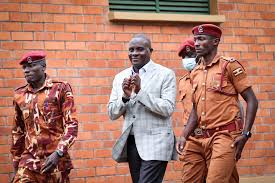
Exactly one week after National Unity Platform (NUP) Vice President for Buganda, Muhammad Muwanga Kivumbi, was reportedly re-arrested a day after securing bail from the International Crimes Division of the High Court, the question echoing across Uganda’s political landscape remains the same:
“Where is Muhammad Muwanga Kivumbi?”
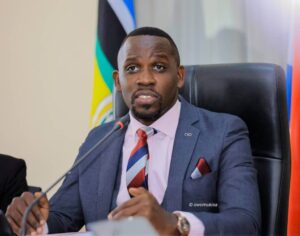
It is a question first posed on the floor of Parliament by Leader of the Opposition Joel Ssenyonyi, but one that has since grown into a national constitutional concern touching on due process, accountability and the rule of law.
A Bail That Lasted Barely 24 Hours
Kivumbi had spent months on remand before obtaining bail from the International Crimes Division.
According to his lawyers and NUP officials, he was travelling from Butambala back to Kampala the following day when armed security operatives allegedly intercepted his vehicle in Mpigi District and took him away in what witnesses described as a white Toyota Hiace commonly known as a “drone.”
Since then, neither his family nor lawyers have publicly confirmed where he is being held. Government has repeatedly told Parliament it would provide an explanation, but by the end of the first week, definitive answers remained elusive.
Parliament’s Constitutional Question
Speaking in Parliament, Joel Ssenyonyi reminded government that Article 23 of Uganda’s Constitution requires that every arrested person be informed immediately of the reasons for arrest, detained only in a legally recognized place of detention and presented before a competent court within 48 hours unless released earlier.
His question was straightforward:
“Where is Muhammad Muwanga Kivumbi?”
Government, through senior ministers, promised to return with a report after consulting security agencies.
When Court Orders Are Followed by Fresh Arrests
Kivumbi’s case has revived debate over a practice that has increasingly generated controversy in Uganda—rearresting suspects immediately after courts grant them bail.
Opposition leaders argue that such actions undermine judicial authority by rendering court decisions ineffective.
Government has generally maintained that security agencies retain the power to investigate fresh offences where lawful grounds exist. However, legal experts have consistently argued that any subsequent arrest must still comply fully with constitutional safeguards, including prompt disclosure of the place of detention and timely production before court.
A Pattern That Continues to Raise Questions
Kivumbi’s disappearance from public view has inevitably drawn comparisons with previous high-profile cases in which opposition figures or government critics alleged prolonged incommunicado detention.
Among the most widely discussed are:
- Kakwenza Rukirabashaija, who alleged he was detained and tortured before later leaving Uganda.
- Edward Ssebuufu, whose detention drew widespread domestic and international concern after photographs showing him in custody were publicly circulated.
- Erias Lukwago, whose recent detention also reignited debate over treatment of opposition leaders.
In each instance, public attention focused not only on the legality of detention but also on the treatment of detainees and whether constitutional protections were being fully respected.
The ‘Basement’ Narrative
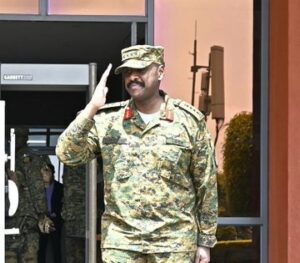
A recurring feature of Uganda’s recent political discourse has been references by Muhoozi Kainerugaba to what he has described on social media as his “basement.”
The CDF has, on several occasions, published photographs of detainees under military custody, including images showing individuals partially clothed or in vulnerable conditions.
Those images have attracted criticism from lawyers, civil society organisations and human rights defenders, who argue that publicly displaying detainees in such circumstances risks undermining their dignity and the constitutional presumption of innocence.
Security authorities have generally defended military operations as lawful measures undertaken in the interest of national security. Human rights organisations, however, have repeatedly called for investigations into allegations of unlawful detention and mistreatment, while urging compliance with Uganda’s Constitution and international human rights obligations.
The Constitution Versus Fear
Beyond the individual circumstances of Kivumbi’s disappearance lies a broader constitutional debate.
If Parliament itself cannot readily establish the whereabouts of a former Member of Parliament and serving opposition vice president, critics ask what protections remain available to ordinary Ugandans.
Human rights lawyers note that constitutional government depends not merely on lawful arrests but also on transparency regarding detention, access to legal counsel and judicial oversight.
When uncertainty persists over the whereabouts of detainees, they argue, public confidence in legal institutions is inevitably weakened.
Uganda’s International Image
The timing is equally significant.
Uganda continues to seek international investment while promoting itself as a stable constitutional democracy.
Persistent reports of enforced disappearances, incommunicado detention and questions over compliance with court orders inevitably attract scrutiny from diplomatic missions, development partners and international human rights organisations.
Whether justified or disputed, such reports influence perceptions about governance, judicial independence and investor confidence.
A Test for State Institutions
Ultimately, the Kivumbi case is becoming about more than one politician.
It has become a test of:
- Parliament’s oversight role.
- Government’s accountability.
- Respect for judicial decisions.
- The independence of security agencies.
- Public confidence in constitutional governance.
The coming days will determine whether government provides a clear legal account of Kivumbi’s detention or whether the unanswered question raised in Parliament continues to resonate across the country.
For now, Uganda still waits.
Where is Muhammad Muwanga Kivumbi?
“The question before Uganda is no longer merely where Muhammad Muwanga Kivumbi is. It is whether constitutional safeguards apply equally to every citizen, regardless of political affiliation.”