A Photograph, A Political Memory: The Kayiira–Muhoozi Image and Uganda’s Unfinished Historical Conversation
+256 702 239 337: A photograph as political archive Uganda’s political history is often narrated through speeches, battles, constitutions, and state transitions. Yet photographs can sometimes capture a quieter truth — moments of proximity between figures who would later occupy very different places in the national story.
“A resurfaced archival image that has revived debate about political memory and historical continuity in Uganda.”
“A resurfaced archival image that has revived debate about political memory and historical continuity in Uganda.” Andrew Kayiira and Muhoozi Keinerugaba
UgandaToday: A Photograph, A Political Memory: The Kayiira–Muhoozi Image and Uganda’s Unfinished Historical Conversation
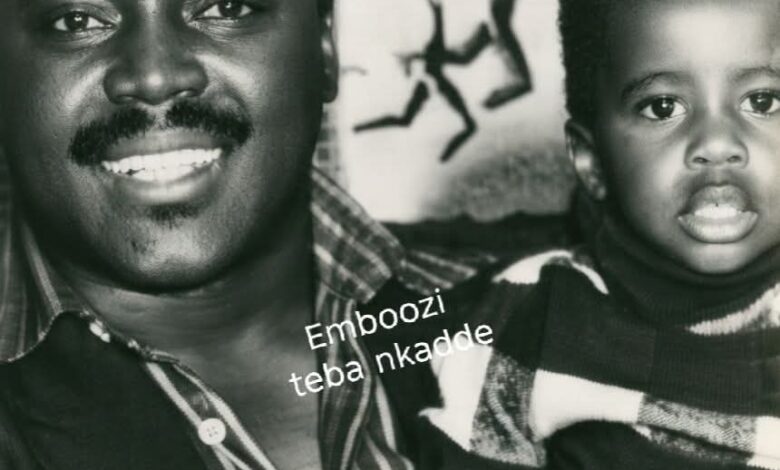
A black-and-white photograph circulating on social media has reignited debate about Uganda’s political memory. The image is purported to show the late rebel leader Andrew Lutakome Kayiira holding a young Muhoozi Kainerugaba, son of President Yoweri Museveni.
While the exact date, location, and circumstances of the photograph have not been independently verified, its circulation has stirred more than nostalgia. It has reopened questions about political alliances, historical transitions, and the often complicated relationships that shaped modern Uganda.
A photograph as political archive
Uganda’s political history is often narrated through speeches, battles, constitutions, and state transitions. Yet photographs can sometimes capture a quieter truth — moments of proximity between figures who would later occupy very different places in the national story.
If authentic, the image appears to place Kayiira and the Museveni family within a political moment when Uganda’s future was still unsettled. For many observers, the photograph is not merely a family portrait. It is a reminder that the country’s political actors once inhabited overlapping circles before later becoming separated by ideology, conflict, and power.
Andrew Kayiira and the politics of resistance
Andrew Lutakome Kayiira remains one of the most consequential yet contested figures of Uganda’s post-independence politics.
Born in 1945, Kayiira emerged as a central political and military actor during the turbulent years that followed the fall of Idi Amin. He became associated with the Uganda Freedom Movement, a rebel group that operated particularly in central Uganda during the early 1980s.
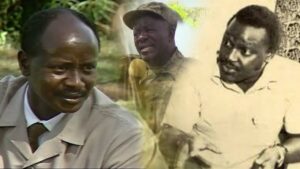
“Andrew Kayiira (right) remains one of Uganda’s most consequential and debated political figures of the post-independence era.”
His politics carried both national and Buganda-specific resonance. To many in Buganda, Kayiira represented resistance, political assertion, and the demand for greater recognition of regional political grievances during a period of national instability.
After the 1986 capture of power by the National Resistance Movement, Kayiira briefly joined the new administration. That development reflected the fluidity of Uganda’s transition, where former rivals and parallel liberation actors found themselves navigating a new political order.
Yet the arrangement proved short-lived. On March 7, 1987, Kayiira was assassinated in Kampala under circumstances that remain unresolved. His death became one of Uganda’s enduring political mysteries and continues to generate debate among historians, political observers, and sections of the public.
Muhoozi Kainerugaba and the politics of succession
For Muhoozi Kainerugaba, the historical meaning of the image lies in the striking contrast between childhood proximity and present political prominence.
Muhoozi has become one of the most visible figures in contemporary Ugandan public life. Rising through the ranks of the Uganda People’s Defence Forces, he has commanded elite military formations and increasingly occupies space within national political debate.
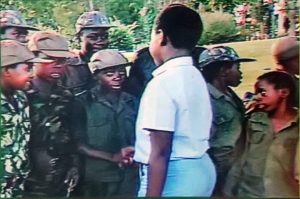
“The then young Muhoozi Kainerugaba has become a central figure in contemporary debates on Uganda’s political future.”
In recent years, his public statements, political messaging, and growing political following have positioned him as a central figure in conversations about Uganda’s future leadership and the broader question of succession within the ruling establishment.
Where Kayiira symbolized armed resistance in an earlier era, Muhoozi today represents continuity within state power — a transition from insurgent politics to institutional authority.
The paradox of Uganda’s political generations
The image’s strongest political force may lie in its symbolism of generational transition.
Kayiira belonged to a generation shaped by armed contestation, liberation movements, and the struggle to redefine state power after the collapse of earlier regimes. Muhoozi belongs to a generation that has matured inside an established state structure — one where questions are less about capturing power than about succession, legitimacy, and continuity.
That contrast mirrors Uganda’s broader political journey.
The photograph therefore becomes more than an archival curiosity. It becomes an invitation to examine how political memory is constructed, inherited, and sometimes contested.
Buganda, memory, and unresolved history
In Buganda, Kayiira’s name still carries emotional and political weight. His memory remains linked to debates about autonomy, justice, and political representation.
The continued circulation of his image — especially alongside a figure now central to state power — reveals how unresolved historical questions remain active in public consciousness.
Uganda’s political past is not sealed in archives. It continues to surface through photographs, testimonies, anniversaries, and popular debate.
Why the image matters now
At a moment when Uganda is increasingly debating generational transition, elite continuity, and the future direction of national leadership, the resurfacing of the purported Kayiira–Muhoozi photograph has arrived with unmistakable political timing.
It reminds the country that today’s political actors are often connected to yesterday’s unfinished histories.
And perhaps that is the photograph’s deepest meaning: not merely who appears in it, but what it quietly reveals about the long and layered story of power in Uganda.
UgandaToday is published by CMK Media Solutions. UgandaToday is your trusted source for news and analysis.
Partner with Uganda Today where your story matters in shaping the social and economic dynamics of the country.
Let’s help you grow your brand and keep your audience informed.
Website:https://www.ugandatoday.co.ugWhatsApp: +256 702 239 337
X (formerly Twitter):@uganda43443 |
Email:ugandatodayedition@gmail.com
P.O.BOX 184351 Kampala.
Uganda