“This Criminality Must Stop”: Bobi Wine Condemns Fatal Shooting As Uganda Debates The Future Of National Cleaning Day
+256 702 23 93 37: Uganda can demand cleanliness without demanding confrontation. It can enforce lawful regulations without unnecessary brutality. And it can mobilise citizens without making them afraid of the very institutions created to protect them.

UgandaToday: “This Criminality Must Stop”: Bobi Wine Condemns Fatal Shooting As Uganda Debates The Future Of National Cleaning Day
By Uganda Today News Desk
Uganda’s National Cleaning Day initiative, launched with the stated objective of improving sanitation and restoring cleanliness in communities, has come under renewed scrutiny following the fatal shooting of a boda-boda rider at Ndejje Kanaaba.
The incident has triggered a wider national debate about how the exercise should be implemented, particularly where enforcement involves police and other security agencies.
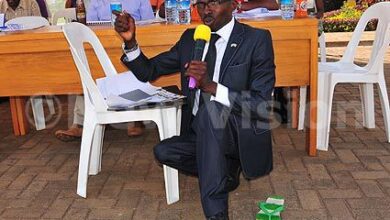
National Unity Platform (NUP) President Robert Kyagulanyi Ssentamu, popularly known as Bobi Wine, has described the developments as “criminality” and called for an end to what he considers excessive and violent enforcement.
“This criminality must stop!” Kyagulanyi said in a social-media statement, recalling what he described as brutality and maiming of citizens during the first cleaning campaign.
He argued that the latest incident represented an escalation, pointing to the death of a citizen during the enforcement of the second exercise.
Citizen Shot Dead During Cleaning Exercise
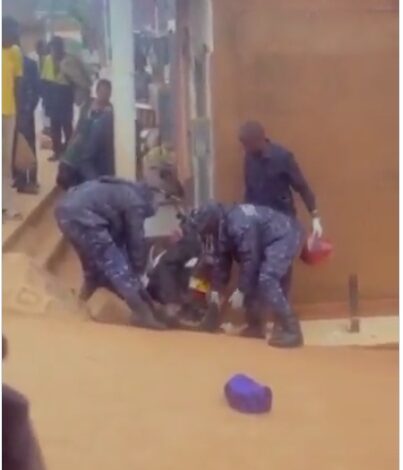
The fatal incident occurred at Ndejje Kanabba in Makindye-Ssabagabo during the second monthly National Cleaning Day exercise.
The Uganda Police Force said officers had been deployed to provide security during the exercise when a confrontation involving a boda-boda rider occurred.
Police identified the deceased as Kizito Ronald Jjuuko and said a police constable attached to Ndejje Police Station allegedly shot him.
The officer was subsequently arrested as investigations into the circumstances surrounding the shooting continued.
Police have maintained that the use of force by officers must be lawful, necessary and proportionate, making the incident a significant test of that principle.
Conflicting Accounts Surround The Shooting
The circumstances immediately preceding Jjuuko’s death remain the subject of competing accounts.
According to accounts cited by Kyagulanyi and others, security personnel were compelling boda-boda riders to stop and participate in the cleaning exercise, with the situation allegedly escalating before the shooting.
Parliament has also heard allegations that Jjuuko was responding to a medical emergency when he encountered security personnel.
However, police have not confirmed all of those claims and have instead said that preliminary information indicated the rider attempted to force his way through a secured area.
The distinction is important.
While the death itself has been confirmed and a police officer arrested, the precise circumstances that led to the shooting remain a matter for investigation.
Kyagulanyi: “This Criminality Must Stop”
Kyagulanyi has used the incident to renew his criticism of the manner in which the cleaning campaign is being enforced.
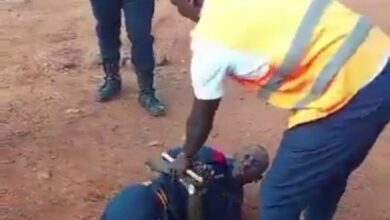
He recalled the first National Cleaning Day, alleging that citizens were brutalised and maimed during enforcement.
For the NUP leader, the Ndejje shooting demonstrates what he regards as a dangerous progression from physical confrontations to the loss of life.
His intervention has consequently moved the debate beyond sanitation and into questions of policing, human rights, proportionality and government accountability.
The central question is becoming increasingly difficult to avoid: Can an exercise designed to improve public health be successfully implemented through methods that leave citizens feeling threatened or unsafe?
Parliament Demands Answers
The incident has also attracted parliamentary attention.
Katikamu County South MP Hassan Kirumira called for investigations into the shooting and urged government to support and compensate the deceased’s family.
According to Parliament, Kirumira raised concerns about the circumstances under which live ammunition was allegedly used during enforcement of a sanitation programme.
He also called for clearer guidelines governing National Cleaning Day and better communication to citizens regarding movement restrictions and exemptions.
The Third Deputy Prime Minister, Rukia Nakadama, told Parliament that government was investigating the matter and would report its findings.
The parliamentary intervention has added institutional pressure for the circumstances surrounding Jjuuko’s death to be established conclusively.
The Sanitation Objective Remains Important
Despite the controversy, the fundamental objective behind National Cleaning Day remains important.
Uganda’s rapidly growing towns and cities face persistent challenges involving garbage disposal, blocked drainage channels, poor sanitation and indiscriminate dumping.
A coordinated national effort to encourage communities to clean their surroundings can therefore have substantial public-health and environmental benefits.
The problem is not necessarily the idea of a national cleaning campaign.
The greater question is how that campaign is organised and enforced.
A programme designed to bring communities together risks losing public support if citizens associate it primarily with confrontation, arrests, beatings or restrictions on movement.
How Can National Cleaning Day Be Handled Better?
The Ndejje tragedy provides an opportunity for government to reconsider the operational model and develop an approach that places citizens at the centre of the programme.
1. Make Community Participation The Starting Point
National Cleaning Day should primarily be a community mobilisation programme rather than a security operation.
Local councils, cultural institutions, religious leaders, schools, markets, business associations, boda-boda associations and civil-society organisations can be brought into the planning process.
When communities understand that they own the programme, participation is more likely to be voluntary and sustainable.
Security personnel should principally provide protection and maintain order rather than become the face of the cleaning campaign.
2. Sensitise Citizens Well Before The Exercise
Government should provide clear information several days before each cleaning day.
Citizens should know:
- The exact date and hours of the exercise.
- Areas covered.
- What activities are expected.
- Whether movement is restricted.
- Which categories of people are exempt.
- How emergency movements will be handled.
- Where citizens can obtain clarification or assistance.
Information should be communicated through radio, television, social media, local leaders, public-address systems and community meetings.
People are more likely to comply with rules they understand.
3. Establish Clearly Marked Emergency Passages
One of the most important lessons from the Ndejje incident is the need for practical mechanisms for people who genuinely need to travel during restricted periods.
Instead of forcing every traveller to explain themselves in the middle of a confrontation, government could establish designated emergency routes and clearly marked checkpoints.
Medical emergencies should receive immediate priority.
Police officers at checkpoints should also be given clear procedures for verifying legitimate emergencies without escalating situations.
4. Use Non-Violent Enforcement As The Default
Where citizens fail to comply with lawful instructions, the first response should be communication, persuasion and de-escalation.
Security personnel should be trained to deal with resistance without immediately resorting to physical force.
The use of firearms should remain subject to Uganda’s laws and established police rules governing the use of force.
A person refusing to sweep a road should not automatically become a security threat.
The enforcement response should always be proportionate to the alleged violation.
5. Separate Cleaning Teams From Armed Security Personnel
A visible separation between sanitation workers and armed security personnel could significantly change the public perception of the exercise.
Local authorities and community volunteers could lead the actual cleaning activities, while police remain available nearby for genuine security concerns.
This would help ensure that National Cleaning Day is seen as a public-health and environmental initiative rather than a security operation.
6. Give Boda-Boda Riders And Other Transport Groups A Seat At The Table
Boda-boda riders are among the groups most affected by movement restrictions.
Rather than communicating directives to them only on the morning of the exercise, authorities should engage boda-boda associations before each cleaning day.
Their leaders could help explain the rules to riders and develop practical arrangements for emergencies, passengers, medical referrals and other essential journeys.
The same approach could apply to taxi operators, traders, private motorists and other groups whose activities may be affected.
7. Create An Independent Complaints And Monitoring Mechanism
Government should establish a mechanism through which citizens can report alleged abuse during the exercise.
Complaints should be independently reviewed, particularly where allegations involve excessive force by security personnel.
Where an officer violates the law, disciplinary or criminal proceedings should follow.
Conversely, where citizens deliberately attack officers or obstruct lawful operations, the law should also apply.
Accountability should therefore operate in both directions and without political discrimination.
8. Publish Clear Results After Every Exercise
Government could publish a brief monthly National Cleaning Day report showing:
- Areas cleaned.
- Amounts of waste collected.
- Number of participating communities.
- Major sanitation problems identified.
- Complaints received.
- Security incidents recorded.
- Injuries or fatalities, if any.
- Corrective measures taken.
Such transparency would enable citizens to assess whether the programme is actually achieving its objectives.
9. Review The Movement Restrictions
Government should consider whether blanket movement restrictions are necessary for every area and every circumstance.
Where restrictions are necessary, they should be narrowly tailored, clearly communicated and accompanied by practical exemptions.
A sanitation programme should not inadvertently prevent people from accessing hospitals, caring for vulnerable relatives, responding to emergencies or carrying out other essential activities.
What Security Agencies Must Consider
The presence of police during a national public programme is not inherently problematic.
Security personnel can play an important role in preventing disorder, protecting participants and responding to emergencies.
The challenge is ensuring that security deployment does not overshadow the purpose of the exercise.
The Ndejje shooting demonstrates why officers deployed to such programmes need specific briefings on de-escalation, human rights, lawful use of force and the particular circumstances of sanitation operations.
The guiding principle should be simple:
A cleaning exercise is not a battlefield.
The Government Has An Opportunity To Rebuild Confidence
The death of Kizito Ronald Jjuuko has created understandable public concern.
But it also provides government with an opportunity to improve the programme before future exercises are conducted.
The most effective response would not necessarily be to abandon National Cleaning Day.
Instead, government could use the lessons from the first two exercises to redesign the programme around community ownership, voluntary participation, effective communication, proportional enforcement and transparent accountability.
That would preserve the valuable sanitation objective while reducing the possibility of unnecessary confrontation.
The Bigger Question: Cleanliness Or Compliance?
At the heart of the controversy is a fundamental distinction.
Uganda needs cleaner communities.
But cleanliness should ultimately be measured by cleaner streets, functioning drainage systems, responsible waste disposal and healthier communities—not by the number of people forced onto roadsides to sweep under the watch of armed personnel.
A successful National Cleaning Day should leave citizens feeling that they have contributed to improving their neighbourhoods.
It should not leave families mourning.
Accountability Must Now Follow The Ndejje Shooting
The police arrest of the officer allegedly involved in Jjuuko’s shooting is an important development, but the public will expect a complete and credible investigation.
Investigators must establish what happened before the shooting, why the confrontation escalated, whether the deceased was attempting to access an exempted service, whether proper procedures were followed and whether the force used was justified.
The findings should be made public.
If an officer acted unlawfully, appropriate legal action should follow.
If the investigation establishes a different account, that too should be clearly communicated to the public.
Transparency will be crucial in preventing speculation and restoring confidence.
A Cleaner Uganda Without Fear
Robert Kyagulanyi’s declaration that “this criminality must stop” has injected a political dimension into an already sensitive public debate.
But beyond the political contestation lies a broader issue that affects every Ugandan.
The country needs clean and healthy communities.
The government has a legitimate responsibility to promote sanitation.
Citizens equally have responsibilities to dispose of waste responsibly and participate in improving their communities.
But the success of the programme will ultimately depend on whether government can transform National Cleaning Day from an exercise perceived as being driven by coercion into one embraced as a shared national responsibility.
The Ndejje tragedy should therefore become a turning point.
Uganda can demand cleanliness without demanding confrontation. It can enforce lawful regulations without unnecessary brutality. And it can mobilise citizens without making them afraid of the very institutions created to protect them.
The challenge now before government is to ensure that the next National Cleaning Day is remembered not for another confrontation, injury or death, but for communities coming together peacefully to make Uganda cleaner.