
UgandaToday:Tanzanian President’s Family Appointments Stir Regional Concern
KAMPALA | Uganda Today — A Ugandan professional who spent eight years living and working in Tanzania has expressed deep concern over what he describes as a worrying drift in a country long admired for its stability, cohesion, and institutional discipline.
The writer, who served as the Uganda Railways Corporation Resident Representative in Tanzania, says recent political decisions by President Samia Suluhu Hassan mark a stark departure from the governance culture that once distinguished the East African nation.
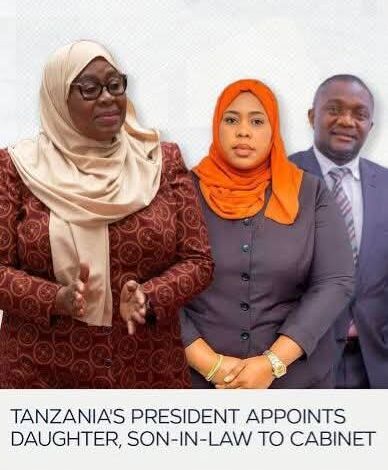
President Samia Appoints Daughter and Son-in-Law to Cabinet
On Monday, President Samia appointed her daughter, Wanu Hafidh Ameir, as Deputy Minister of Education, and her son-in-law, Mohamed Mchengerwa, as Minister of Health.
The appointments have since triggered widespread debate within Tanzania and across the region, with critics warning that the decision risks undermining the credibility of a government that has long prided itself on merit-based public service.
Concerns Over Nepotism and Erosion of Public Trust
The Ugandan former envoy argues that while the competence of the two appointees may not necessarily be in doubt, the symbolism and implications of elevating close relatives to high public office cannot be ignored.
He warns that such actions may:
Destabilize political credibility
Encourage corruption and patronage networks
Alienate citizens who expect fairness and professionalism
Erode public trust in state institutions
“These developments are disappointing for those of us who lived in Tanzania and witnessed its commitment to strong, impartial governance,” he noted.
Lessons From Uganda’s Own Struggles With Nepotism
The writer draws parallels with Uganda, where accusations of nepotism remain a persistent theme in political discourse. Uganda’s experience, he says, should serve as a cautionary tale for Tanzania, especially as public institutions across the region grapple with demands for transparency and accountability.
He argues that anything that weakens meritocracy — or creates the perception of political favoritism — risks long-term consequences for governance and service delivery.
A Dark Week for East Africa?
Describing it as “a sad week for East Africa,” the former envoy laments that Tanzania, once viewed as a regional model for political maturity and institutional integrity, may be slipping into a trend that has troubled several other African nations.
The ripple effects of such political decisions, he warn, could undermine not only Tanzania’s internal stability but also broader regional confidence in governance standards.
For more East African politicaul updates and analysis, visit Uganda Today.